 PADEL RULES
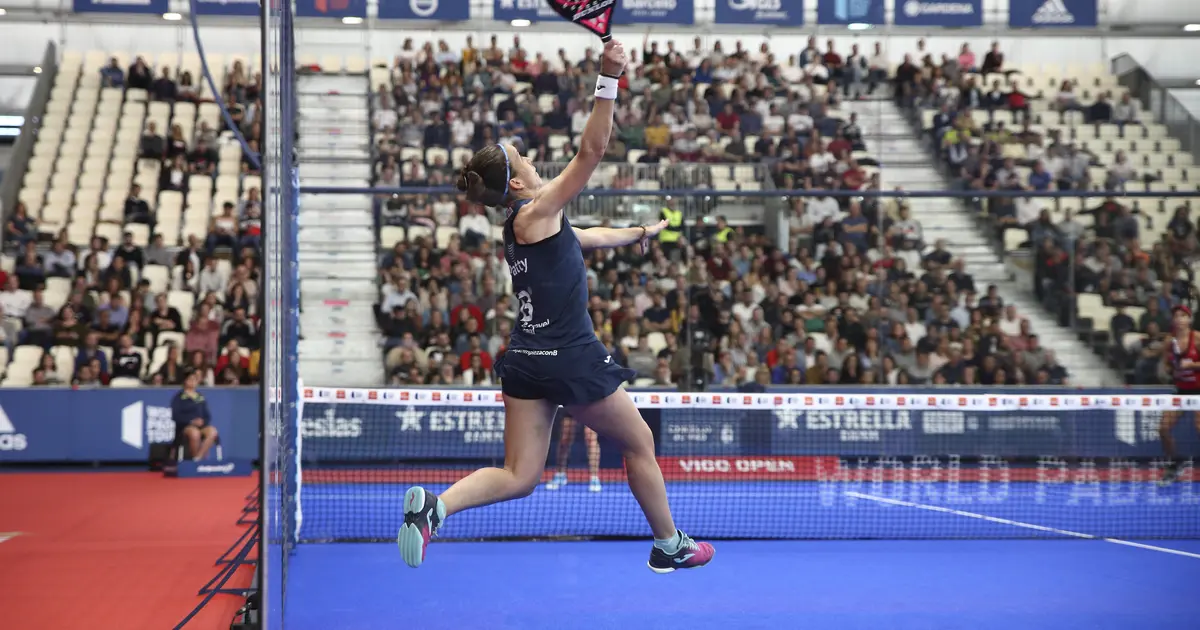
How to Play Padel: Rules, Scoring & First-Game Tips for Beginners
8 min read
You have booked a padel court, you have three friends, and you have never held a padel racket. This guide covers everything you need to know in the next ten minutes — equipment, your first serve, and where to stand between rallies.
For a broader look at the sport, see What is Padel?. For a concise rule reference to pull up mid-game, see Padel Rules for Beginners.
What You Need to Bring
Racket. Most clubs rent padel rackets for three to five euros per session, so you do not need to buy one yet. If you want your own, start with a round-shaped racket (larger sweet spot, more forgiveness) in the 350 to 365 gram range. Budget fifty to eighty euros for a solid beginner model. See Best Rackets for Beginners for specific picks.
Shoes. The one thing worth getting right. Padel courts use artificial grass with fine sand infill, and smooth soles slip on it. Herringbone-soled padel shoes or clay-court tennis shoes grip properly. Running shoes will slide — the most common cause of ankle injuries for first-timers.
Balls. Padel balls look like tennis balls but have lower internal pressure — about 4.6 to 5.2 psi versus 6 to 7 psi for tennis. They bounce lower and move slower. Most clubs provide balls with the booking. A tube of three costs five to eight euros if you need your own.
Clothing. Anything comfortable for sport. No dress code in recreational padel.
What the Court Looks Like
The playing area is 20 metres long and 10 metres wide — it will feel small compared to a tennis court. That is the point. The walls keep the ball in play, so you do not need the acreage.
Here is what you will see:
- Glass walls behind you on each end, rising about 4 metres, with metal mesh fencing above.
- Side walls of glass with fencing above. Small gates in the sides let you exit the court to chase down lobs that clear the back wall — this is legal play.
- A net across the middle, lower than tennis: 88 cm at the centre, 92 cm at the posts.
- Lines on the floor: a service line about 3 metres from the net on each side, and a centre line dividing each service area into two boxes.
For exact measurements, see Court Dimensions.
How to Start the Match
Padel is always doubles — two against two. Here is the sequence:
- Decide teams. Two players per side.
- Spin a racket or toss a coin. The winner chooses to serve first or picks a side. The loser takes whatever remains.
- Take positions. The server stands behind the service line on the right side. The server’s partner stands at the net. The receiver stands diagonally opposite the server; the receiver’s partner is at the net on their side.
The server begins from the right-hand box and alternates sides after each point.
How to Serve
The serve is where most beginners feel uncertain, so here is the step-by-step technique:
- Stand behind the service line, between the centre line and the side wall.
- Hold the ball at about waist height. Drop it — do not throw it upward.
- After the ball bounces once, strike it with a smooth, controlled underhand swing. The point of contact must be at or below your waist. Overhand serves are always a fault.
- Aim the ball diagonally over the net into the opposite service box.
Your first serves should be slow and deliberate. A serve that lands in the box is infinitely better than a fast one that clips the net. You get two attempts — if both miss, it is a double fault and your opponents win the point.
Common beginner mistakes: bouncing the ball too hard so it rises above hip height, aiming for corners instead of the middle of the box, and rushing the swing. Take your time.
For the complete serve regulations including foot faults and lets, see Serve Rules.
What Happens During a Rally
Once the serve lands in the box and the receiver returns it, normal play begins. There are four things you need to know:
One bounce maximum. You must hit the ball before it bounces twice on your side. You can also volley — hit it out of the air before any bounce — from anywhere on your side.
Walls are in play. After the ball bounces once on the floor on your side, it can ricochet off the back glass or side walls and remain live. You play it from there just as you would any other shot. This is what makes padel unique.
Give yourself time on wall balls. The ball loses speed and changes angle off the glass. First-timers instinctively rush toward the back wall — do not. The ball will come to you. Let it travel off the glass, read its trajectory, then swing.
Mesh means out. If an opponent’s shot hits the wire fencing before touching the floor, the point is yours. But if it hits the glass first and then the fencing, it is still in play.
For the full rules on wall and fencing contact, see Wall Play.
Scoring — Keep It Simple
Padel uses tennis scoring:
- Points within a game: 0 (love), 15, 30, 40, game.
- At 40-40: Under the 2026 FIP rules, a Star Point is played. The receiving team chooses which side to receive on, and whoever wins that single point wins the game. This replaced the older deuce-advantage format.
- Games within a set: First to 6 games wins the set, provided you lead by 2. At 6-6, a tie-break decides it.
- Sets within a match: Best of 3 sets for most recreational and competitive play.
The server calls the score before each point — their team’s score first. So if you are serving and you have won one point while your opponents have won two, you call “15-30.”
Do not overthink scoring. It becomes automatic after a few games. For a deeper explanation, see Scoring System and Star Point Rule.
Where to Stand Between Shots
Positioning wins more points in padel than shot power ever will.
At the net = offence. The team standing two to three metres from the net controls the point. You can volley downward, cut off angles, and pressure opponents into mistakes. Both partners should aim to be at the net together, standing slightly apart to cover the full width.
At the baseline = defence. If a lob pushes you behind the service line, you are retrieving. Play a controlled shot — usually a lob — to buy time to move forward again.
Move as a pair. When one partner gets pushed back, the other drops back too to avoid a gap through the middle. When one moves forward, the other follows. Think of an invisible rope connecting you.
Whoever holds the net position longest usually wins the point.
Five Things to Do in Your First Match
- Keep the ball in play. Consistency beats power. If you can return the ball five times in a row, you will win most recreational points by default.
- Move forward after a good shot. Any time you force your opponents deep, take a step or two toward the net. Claim the territory.
- Let wall balls come to you. Do not chase the ball into the glass. Stand a metre or so off the back wall and let it rebound to a comfortable hitting position.
- Communicate with your partner. Call “mine” or “yours” on every ball that lands between you. Collisions and confusion are the top source of lost points for new pairs.
- Enjoy the rallies. Padel produces longer exchanges than tennis. The walls keep the ball alive, which means more running, more variety, and more of the back-and-forth that makes racket sports fun.
Five Things Not to Do
- Do not hit hard. Placement beats pace. A controlled shot to the corner is worth more than a smash into the net.
- Do not stand still. Move side to side with your partner. Planted feet leave gaps.
- Do not ignore the wrist strap. It is mandatory under FIP rules. Attach it before the first point — a flying racket is a genuine safety hazard.
- Do not attempt fancy wall shots yet. Master basic groundstrokes and volleys first. The wall shots come naturally once you understand how the ball behaves off glass.
- Do not serve overhand. Always a fault. The ball must be struck at or below waist height.
Your First Session at the Club
Most padel clubs offer beginner-friendly options:
- Introductory lessons with a coach (30 to 60 minutes covering grip, serve, and rally basics). See Your First Padel Lesson for what to expect.
- Social mix-in sessions where players of different levels rotate partners.
- Equipment hire at the front desk — no need to buy anything upfront.
Start by practising the serve and cross-court groundstrokes. Once you can rally for four or five shots consistently, introduce wall play. The back glass will feel unfamiliar for the first few sessions. That is normal.
For on-court manners, see Padel Court Etiquette. For a side-by-side comparison with tennis, see Padel vs Tennis.
Get the Free Beginner Guide PDF
Rules, scoring & first-lesson tips — one printable PDF for new players.
No spam. Unsubscribe anytime. By submitting you agree to our Privacy Policy. We use double opt-in for confirmation (GDPR compliant).
Stay in the loop
Get padel rule updates and tournament news — no spam.
More in Beginner Guides
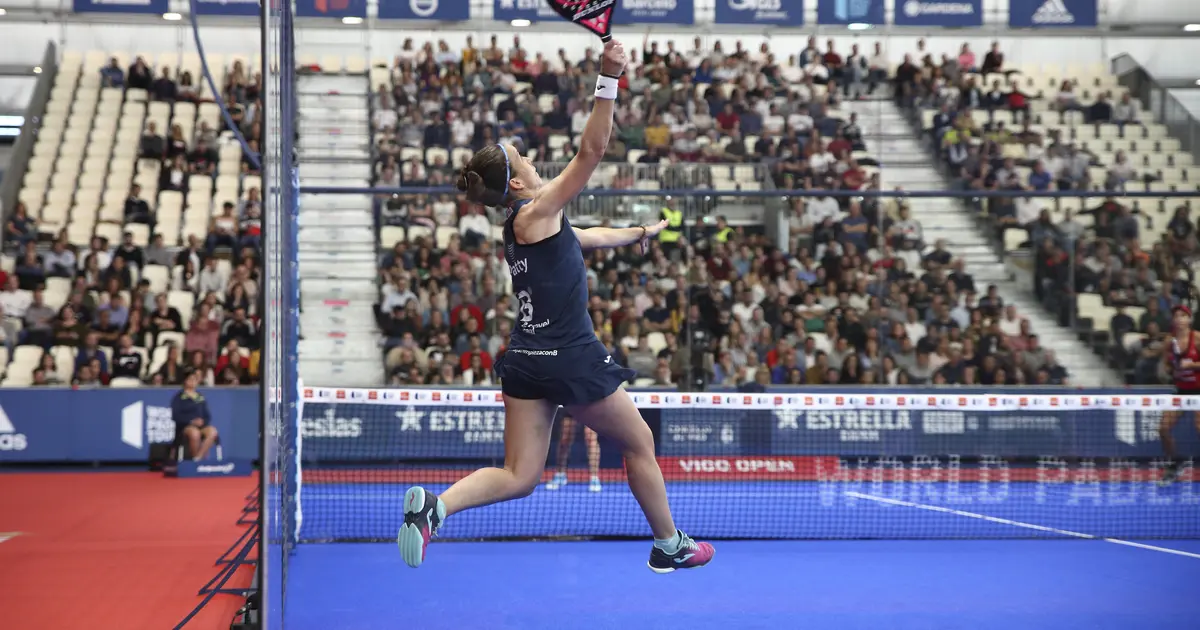
Can You Play Padel Alone? Solo Practice Options and Drills
Can you play padel alone? Padel is a doubles sport, but you can practise solo with wall drills, ball machines, and specific exercises.
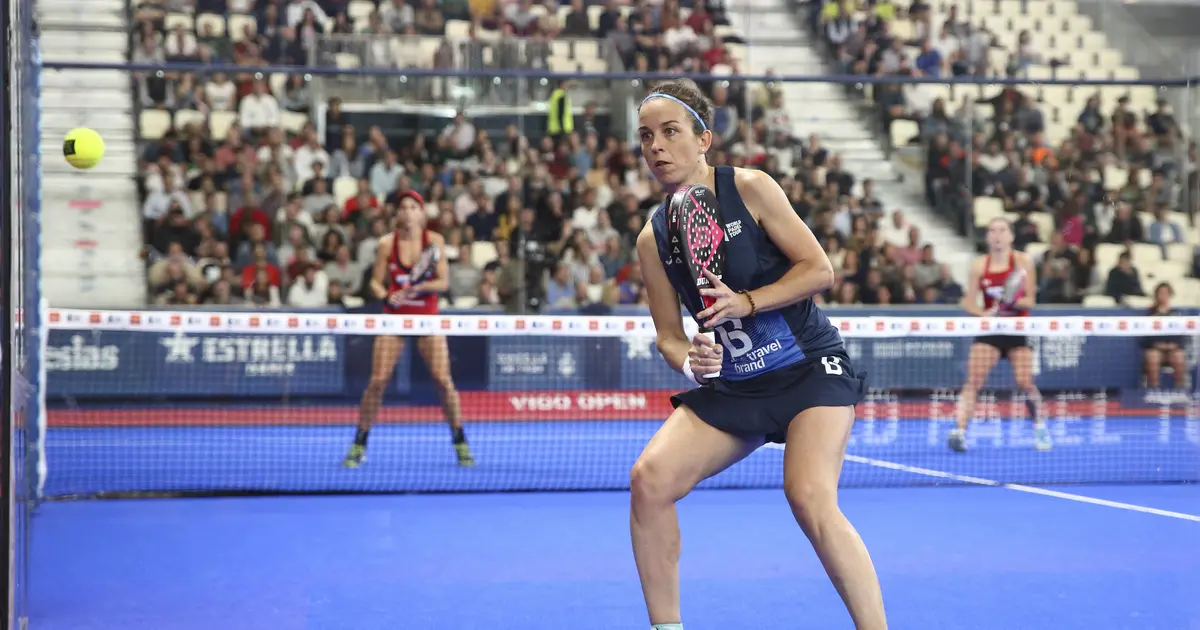
Padel Doubles Tactics — Strategy Guide for All Levels
Master padel doubles tactics with this strategy guide. Covers court positioning, attacking from the net, defending from the baseline, and key shot.

How Long Does a Padel Match Last? Average Duration and Format
How long does a padel match last? Most padel matches last 60–90 minutes. Learn about set format, tie-breaks, and what affects match duration.
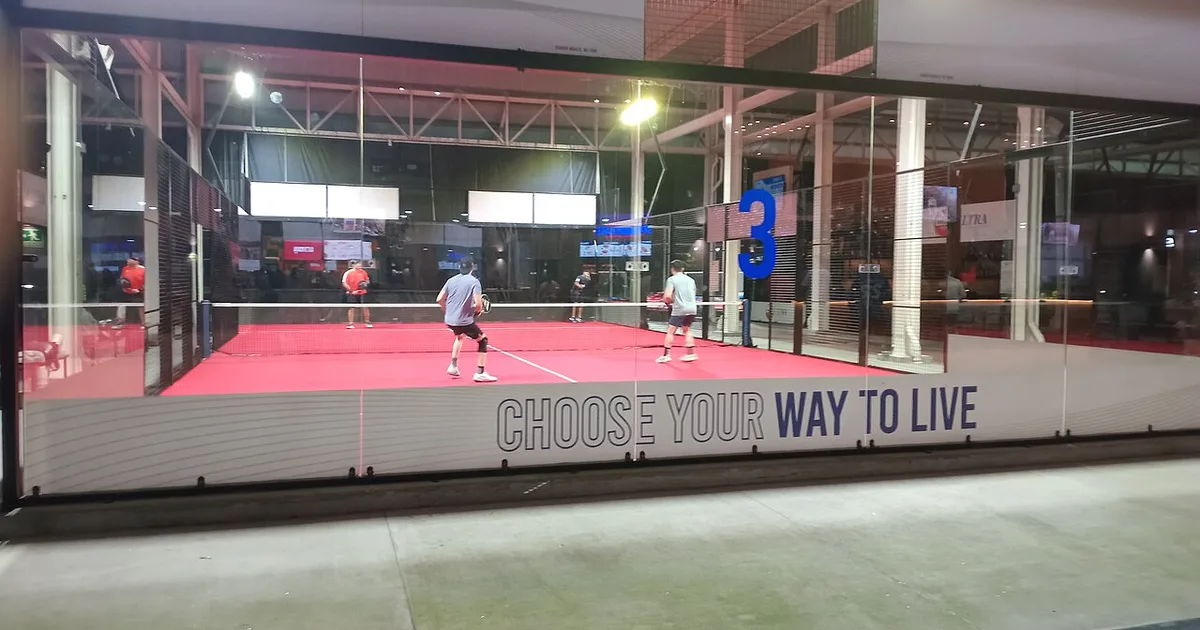
How to Find and Book a Padel Court
Learn how to find and book a padel court near you using Playtomic, Matchi, Google Maps, and club websites. Includes tips for first-timers on pricing, equipment hire, and what to expect.