 PADEL RULES

Padel Scoring System Explained — Points, Sets & Tie-Breaks (2026)
7 min read
Quick Answer
Padel uses tennis-style scoring: 15, 30, 40, game — then sets (first to 6 games, tie-break at 6-6). At deuce (40-40) teams choose before the match: classic advantage, the 2026 Star Point system, or a single golden point where the receiver picks which side to return from.
Padel borrows its scoring system from tennis, but the details matter — especially at deuce, where the sport now offers three distinct rule options. This guide covers every scoring scenario you will encounter, from the opening serve to a final-set super tie-break.
How Game Scoring Works
Each game follows the familiar tennis progression:
- 0 points = “Love”
- 1 point = 15
- 2 points = 30
- 3 points = 40
- 4th point (with the lead) = “Game”
The serving team’s score is always announced first. If Team A is serving and leads 30-15, the chair umpire (or the server in club play) calls “30-15.”
A Game Played Out
Imagine Team A is serving. The first point is a clean volley winner — the score is 15-0. Team B answers with two consecutive points: 15-15, then 15-30. Team A finds a lob winner to level at 30-30, then an ace takes it to 40-30 — game point. But Team B digs out a passing shot to make it 40-40: deuce.
What happens next depends on the deuce rule agreed before the match.
The Three Deuce Options
Under the FIP Rules of Padel 2026 Edition (Rule 4), three options exist for resolving a game tied at 40-40. The format must be agreed before the first point of the match.
1. Advantage Mode (Classic)
This is the traditional rule, widely used in club and league play.
- The team that wins the next point after deuce gains “Advantage.”
- If the same team wins the following point, they take the game.
- If the opposing team wins, the score returns to deuce.
- The game continues until one team wins two consecutive points from deuce.
Example: The score reaches 40-40. Team A wins the point — “Advantage A.” Team B fights back — “Deuce” again. Team B wins the next — “Advantage B.” Team B converts — “Game B.” In theory, a game under advantage mode could last dozens of deuces.
2. Star Point Mode (New for 2026)
Introduced at the FIP General Meeting in Acapulco, November 2025, the Star Point took effect from January 2026 as a middle ground between advantage mode and the golden point. It works in three stages:
- First deuce: The chair umpire announces “Deuce 1.” The next point gives one team “Advantage 1.” If they convert, it is game over. If they lose the advantage, the score returns to “Deuce 2.”
- Second deuce: Same structure — winner gets “Advantage 2.” Convert and it is game; lose and it goes to “Deuce 3.”
- Third deuce: A single deciding Star Point is played. The receiving team chooses whether to receive on the right or left side of the court but cannot switch positions to do so. In mixed doubles, the receiver must be the same gender as the server.
Worked example: Score reaches 40-40 for the first time — “Deuce 1.” Team A wins the point — “Advantage 1 Team A.” Team B breaks back — “Deuce 2.” Team B wins the next — “Advantage 2 Team B.” Team A saves it — “Deuce 3.” Now a single Star Point decides the game. Team B elects to receive on the left side, and they win the rally — “Game Team B.”
Quick comparison: Advantage mode can extend a game indefinitely. Star Point caps it at three deuces. Golden Point ends it at one.
See The Star Point Rule Explained for a full breakdown including the mixed-doubles provisions.
3. Golden Point Mode
Before the Star Point existed, the golden point was the main alternative to advantage scoring.
- At 40-40, a single deciding point is played immediately.
- The receiving team chooses whether to receive on the right or left side but cannot change positions.
- In mixed doubles, the receiver must be the same gender as the server.
The golden point produces fast finishes, but critics argued it left too much to chance. The Star Point was introduced specifically to address this while still keeping match durations predictable.
Set Scoring and Edge Cases
A set is won by the first team to reach 6 games with at least a 2-game lead. That lead requirement creates several common scenarios:
- 6-4, 6-3, 6-2, 6-1, 6-0 — straightforward set wins.
- Score reaches 5-5 — neither team has a 2-game lead, so play continues. The next game makes it 6-5 or 5-6. At 6-5, the trailing team must win to force 6-6; otherwise the set ends.
- Score reaches 6-6 — a tie-break is played.
Tie-Break Rules
When a set reaches 6-6, a tie-break decides it. Tie-break scoring differs from regular games:
- Points are counted numerically — 0, 1, 2, 3, 4, 5, 6, 7 — not 15, 30, 40.
- First to 7 points wins, but only with a 2-point margin. If the tie-break reaches 6-6, play continues until one team leads by 2 (for example 8-6, 9-7, or even 14-12).
- Service rotation: The player whose turn it is to serve starts the tie-break and serves 1 point (from the right side). After that, service alternates every 2 points. Players change ends every 6 points.
The team that did not serve first in the tie-break serves first in the following set.
See tie-break rules for full details on service order and end changes during a tie-break.
Match Formats
Best of Three Sets (Standard)
The standard padel match is best of three sets. A team wins the match by taking two sets. This format is used across Premier Padel, national federations, and most club competitions.
Super Tie-Break (Match Tie-Break)
Some tournaments replace the third set with a super tie-break — first to 10 points, win by 2. This is commonly used in amateur tournaments and time-limited events. Service rotation follows the same pattern as a standard tie-break (1 point, then alternating every 2).
Mini Sets
In time-limited formats — round-robin group stages or corporate events — organisers may use mini sets where the first team to 4 games wins the set, with a tie-break at 4-4. Mini sets keep matches under 30 minutes, practical for events with many teams and limited court time.
See alternative scoring methods for official FIP-permitted format variations.
How Padel Scoring Compares to Tennis
Padel and tennis scoring are nearly identical: the same 15-30-40 game structure, 6-game sets, and tie-break format. The key differences:
- Deuce options — tennis almost exclusively uses advantage scoring at the amateur and professional level. Padel offers three choices (advantage, Star Point, golden point), giving organisers flexibility to control match length.
- No advantage set — some tennis Grand Slams historically played the final set without a tie-break, leading to marathon sets. Professional padel always uses a tie-break at 6-6 or a super tie-break to replace the deciding set.
For a full side-by-side comparison, see Padel vs Tennis — Key Rule Differences.
Tips for Players
For beginners: Do not overcomplicate scoring when you are starting out. The server calls the score before each point — their team’s score first. If you lose track during a game, agree on the last undisputed score with your opponents and play from there. Every club player has been there.
From the pro tour: In Premier Padel, most matches last 45 to 60 minutes. Tie-breaks are often the most intense passages — during the 2025 season, approximately 30% of sets went to a tie-break. Managing the mental pressure in tie-breaks is a skill every competitive player needs to develop.
For a full summary of everything that changed in the January 2026 FIP revision, see Padel Rules 2026 — What Changed.
New to padel? See What is Padel? for a beginner’s overview.
Related Padel Rules
Stay in the loop
Get padel rule updates and tournament news — no spam.
More in Basic Rules

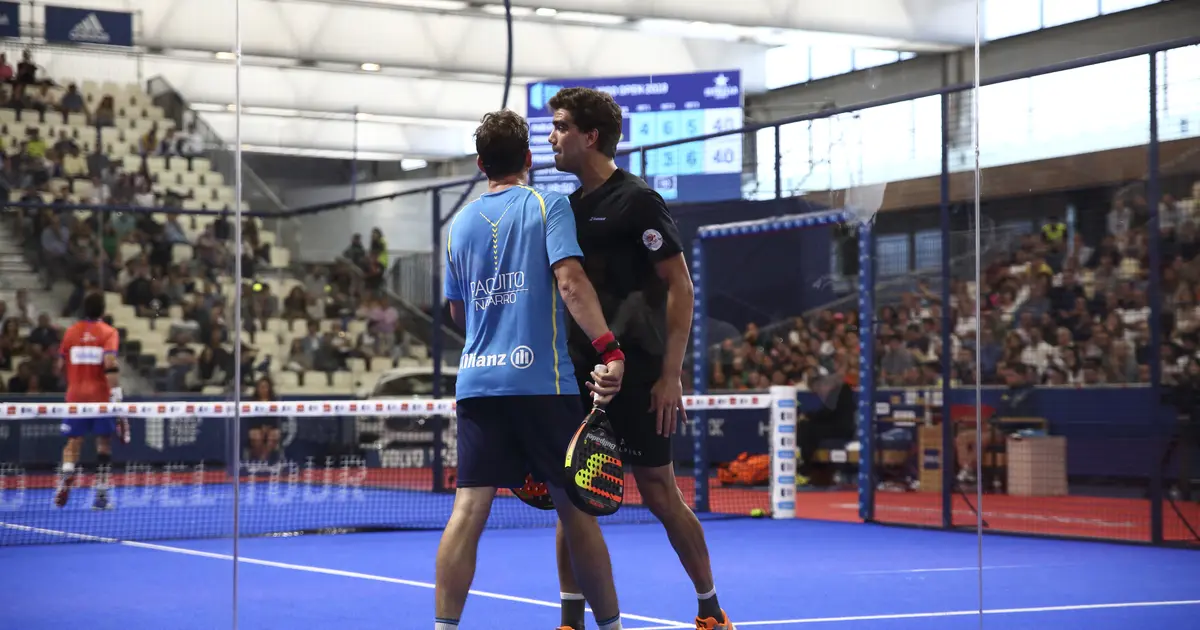
What Happens If the Ball Hits a Player in Padel?
If the ball hits a player's body in padel, that player's team loses the point — with limited exceptions. Full FIP rule breakdown with scenarios.
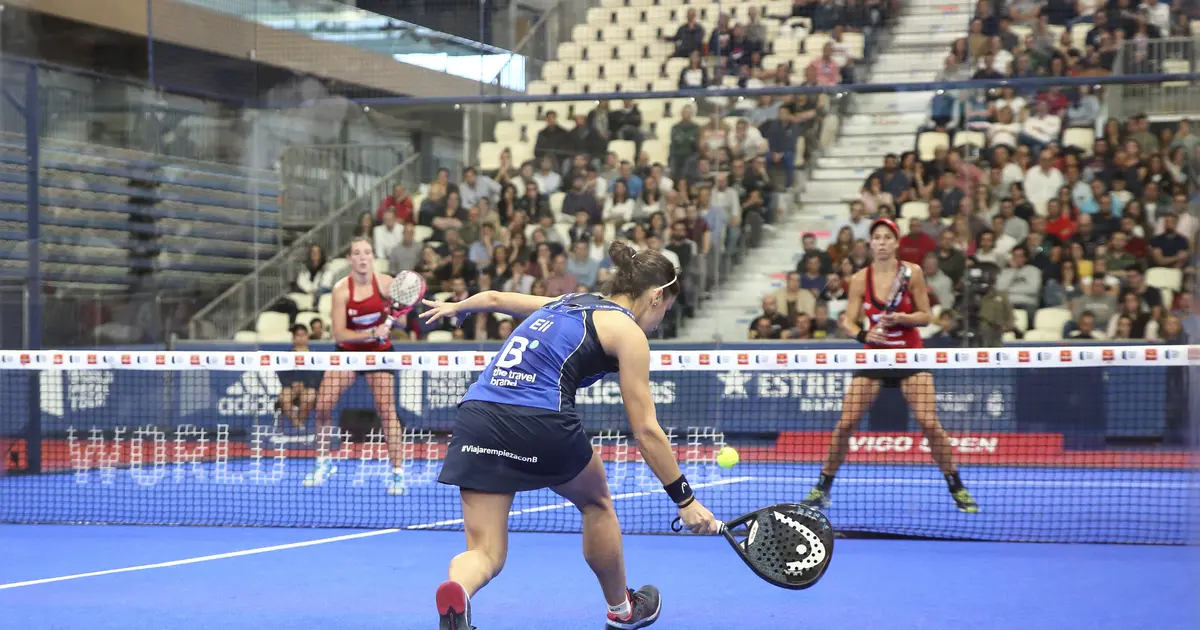
What Happens When the Ball Goes Out of the Court in Padel?
When the ball leaves the padel court through an open door or over the fence, the point may continue if a player can retrieve it.
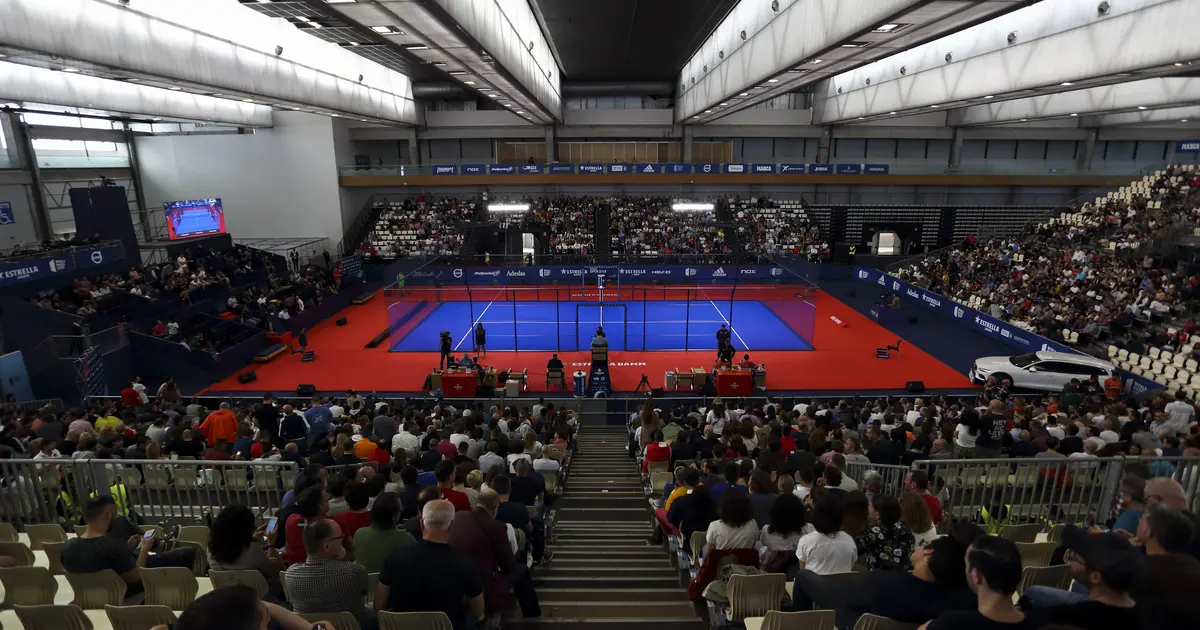
Can the Ball Bounce Twice in Padel?
No — if the ball bounces twice on your side of the court, you lose the point. Learn the one-bounce rule, wall rebounds, and the exceptions every padel.
Padel Fault Rules and Lets
A fault is an invalid serve — two faults lose the point. A let means the serve is replayed with no penalty. Covers every fault type and the let rule with real-match scenarios.