 PADEL RULES
Gameplay Rules
Browse all 6 articles in Gameplay Rules
Understanding how a padel game actually flows — from the first serve to the final point — is what separates players who know the rules from players who feel confident on court. Padel gameplay rules govern everything that happens once the ball is in play: serving, rallies, scoring, wall interactions, and what counts as a point. This section covers all of it, grounded in the official FIP 2026 regulations.
How a Match Begins
Every padel match starts with a coin toss. The winning team chooses to serve first or to pick their end of the court. The serving team designates which player serves the opening game, and that player serves the entire game. The opposing team then chooses their first server, and the rotation continues in fixed order throughout the set.
Serving Rules
The padel serve is underhand — non-negotiable under FIP rules. The server stands behind the service line, bounces the ball, and strikes it at or below hip height. The ball must clear the net and land in the diagonally opposite service box. If it touches the side wall after landing in the box, the serve is legal. If it hits the wire fencing or back glass before bouncing in the box, it is a fault.
Each server gets two attempts. A double fault costs the point. A let is called when the ball clips the net cord and still lands in the correct box — the serve is replayed. The receiver must let the ball bounce once before returning; volleying a serve is not allowed.
Ball in Play: Rally Mechanics
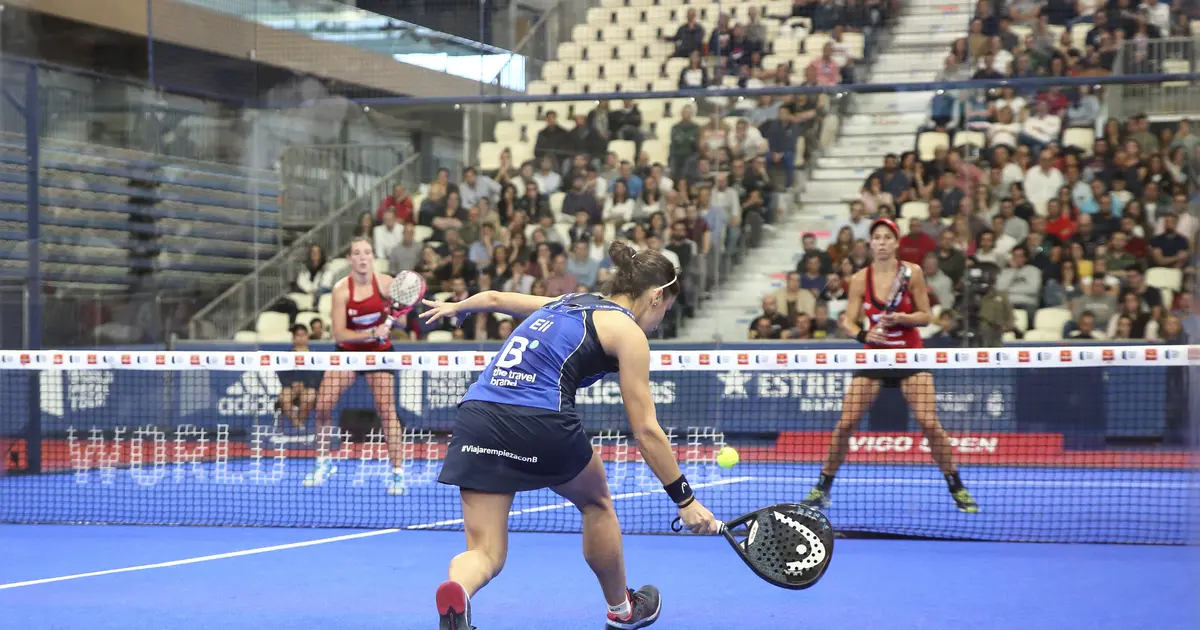
Once the serve is returned, the rally begins. The ball must bounce once on the ground before it can be played off the walls. After that single bounce, the ball can hit the back glass, side walls, or any combination, and you can still play it — as long as it has not bounced a second time on the floor.
This is the fundamental mechanic that makes padel unique. A shot that looks unreachable can come off the back wall at a playable angle. Players may volley before the ball bounces at any time during a rally, except on the serve return.
How the Walls Work
The walls are in play on your own side of the court only. After the ball bounces once on your side, it can hit any wall surface and you can still play it. But when hitting to your opponents’ side, the ball must cross the net and bounce on the floor first — a shot that hits their wall before bouncing is their point.
The spectacular exception is out-of-court play. If the ball bounces on your side and flies over the side fencing, you can run through the side gates and play it back from outside the court, as long as it has only bounced once. The 2026 FIP rules expanded the safety corridor for this play.
Scoring: Points, Games, Sets, Tiebreaks
Padel uses the same scoring as tennis within each game: 0, 15, 30, 40. At deuce (40-40), the 2026 FIP Star Point rule applies in most competitive formats — a single decisive point replaces the traditional advantage format. The receiving team chooses which side to receive on.
A set is won by the first team to six games with at least a two-game lead. At 6-6, a tiebreak is played: points counted 1, 2, 3 and so on, first to seven by two. Service alternates every two points, and teams switch ends every six points. Most matches are best of three sets. Some tournaments use a match tiebreak — first to ten by two — instead of a third set.
Let and Fault Calls
A let occurs when a rally is interrupted by outside circumstances — a stray ball, an obstruction, or a net-cord serve that lands in. The point is replayed in full, with two serves if it was a first serve.
A fault on serve means the ball missed the correct box, touched fencing before bouncing, or was struck above hip height. Foot faults count too. One fault moves to the second serve; two faults lose the point.
During rallies, a point ends when the ball bounces twice on one side, a player touches the net, a player hits the ball before it crosses to their side, or the ball strikes a player’s body.
What Counts as a Point
A point is won when opponents cannot return the ball legally: double bounce on their side, their shot out of bounds without bouncing on your side first, hitting into the net, touching the net, or the ball striking a player before bouncing. Balls landing on any line are in.
Wall interactions add complexity. If your shot bounces on the opponents’ floor and then flies over their fencing off the glass, they can still play it from outside the court. The point only ends on a second ground bounce or a fault.
2026 FIP Context
The 2026 regulations introduced the Star Point at deuce to reduce match duration, updated safety corridor dimensions for out-of-court play, and added language around electronic line-calling technology anticipating wider adoption across Premier Padel events and national federations. These rules apply from club matches to tour finals.
Explore the articles below to dive deeper into every aspect of padel gameplay.
Gameplay Rules Articles
6 articles in Gameplay Rules
No articles found for your search.