 PADEL RULES
Padel Wall Play Rules & Technique: The Definitive Guide
8 min read
Wall play is the rule that makes padel padel. Without it, you’d have tennis on a smaller court with a funny racket. With it, you have a sport where the back glass is your best defensive friend, the side wall creates angles that don’t exist in any other racket sport, and shots that would be clean winners in tennis become the start of the most exciting rallies in padel.
This guide covers the official wall play rules under the FIP Rules of Padel 2026, how ball behavior changes across glass and mesh surfaces, and practical technique for every skill level. For a step-by-step breakdown of how to develop these skills on court, see our wall play technique guide.
The Core Wall Play Rule
After the ball bounces once on the floor on your side, it can hit any wall — back glass, side glass, side mesh — and remain in play. You hit it back over the net from wherever the rebound takes it.
The order matters: the ball must bounce on the floor first, then walls are fair game. A ball that hits a wall before bouncing on the floor (from the opponent’s shot) is out — the point goes to you.
There is no limit to how many walls the ball can hit after the floor bounce. Ball bounces on floor, hits back glass, deflects into the side wall, and you play it? Perfectly legal.
For the full list of scenarios that end a point, see ways to lose a point.
The Second Bounce Rule — Walls Do Not Reset It
This catches even experienced players. After the ball bounces on the floor once, it can hit as many walls as physics allows, but if it touches the floor a second time before you hit it, the point is over.
Walls keep the ball in play vertically — they redirect it, change its speed, alter its angle — but they do not give you an extra ground bounce. One floor bounce is all you get.
For the complete breakdown of when the ball is live, see ball in play.
Glass vs. Mesh — How Material Changes Your Shot
Padel courts are not uniform surfaces. The walls are built from two distinct materials, and reading the difference between them is what separates intermediate players from beginners.
Glass Walls (Back Wall and Lower Side Panels)
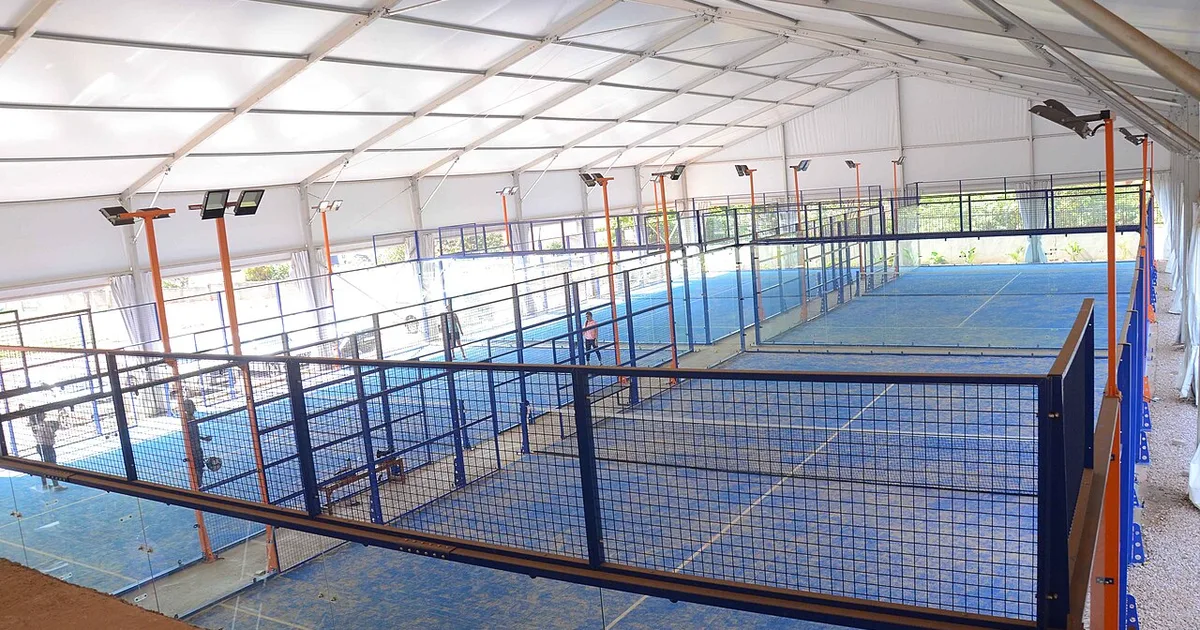
The back wall is 3 meters of tempered glass. The lower portions of the side walls are glass too. This is a hard, smooth surface. The ball rebounds fast with a predictable angle — roughly the same angle it came in at, like a billiard cushion. Speed is largely preserved through the bounce.
Positioning principle: stand 1.5 to 2 meters from the glass, not right up against it. You need space to read the rebound angle and set up a proper swing. Players who crowd the back glass end up jammed with no room to generate controlled racket speed.
Mesh Fencing (Above the Glass and Upper Side Walls)
Above the 3-meter glass line, the court transitions to flexible wire mesh. The ball dies into the mesh — it comes back slow, low, and unpredictable. The mesh absorbs the ball’s energy instead of returning it. When a ball hits mesh, it drops almost vertically with minimal horizontal momentum.
Positioning principle: when a ball is heading for the mesh, move close to it. You are effectively preparing for a drop shot that the wall is playing on you.
The Transition Zone
Where the glass meets the mesh — at the 3-meter height mark on the back wall — balls can clip the metal frame and bounce in unexpected directions. Reading material transitions is an intermediate skill that only develops through court time.
Wall Play by Skill Level
Beginner Wall Play
Your first goal: stop avoiding the back wall. When the ball bounces and heads toward the glass behind you, do not try to hit it before it reaches the wall. Let it hit the glass, watch where it rebounds, then play it. The wall returns the ball to a hittable position — fighting it is fighting your own teammate.
Stand 1.5 to 2 meters from the back wall. This gives you space to see the rebound and set up your swing. Start with simple straight shots off the back glass — no angles, just send it back over the net with control.
The three most common beginner mistakes: standing too close to the glass so the rebound jams you, rushing the shot before the rebound settles because panic takes over, and trying to hit hard off the wall instead of controlling the ball back into play. If you are new to padel, start with our padel rules for beginners overview, then come back here to work on wall technique.
Intermediate Wall Play
At this level, the back wall stops being a survival tool and becomes an offensive platform. A ball that comes off the glass at a comfortable height is a set-up for a lob or a passing shot — not just a desperate return.
Learn the side-wall angle. If you hit the ball into the side glass at a 30 to 45 degree angle, it redirects sharply into your opponent’s court. This is the foundation of the bandeja and the vibora, two of padel’s most important overhead shots.
Read the spin. A ball with topspin shoots off the glass faster and higher than you expect. A sliced ball skids low and stays close to the wall. Adjust your positioning based on what is coming before the ball arrives.
Practice the back-wall-to-lob sequence. Let the ball rebound off the back glass, then lob it deep over the opponent who is pressing at the net. This is the single most important defensive pattern in padel — the one that keeps you in points when the opponents own the net position. For how this fits into broader match strategy, see how to play padel.
Advanced Wall Play
The contrapared (counter-wall). You hit the ball into your own back wall so it rebounds over the net. The ball travels back-wall to net with an unusual trajectory that wrong-foots opponents. This is a signature shot of top professionals like Arturo Coello, who uses it to convert defensive positions into attacking opportunities.
Double-wall combinations. Back glass to side glass, then your shot. The ball changes direction twice, making it extremely hard for opponents to read your return. At the highest level, players deliberately engineer these sequences rather than simply reacting to them.
Out-of-court play. When the ball bounces on your side and flies over the back fence, exit through the side doors and hit it back over the net or around the side net post. At Premier Padel events, this happens multiple times per match. For the full rules, see out-of-court play.
Wall Play Shots Explained
Bajada: playing the ball as it descends from the back glass, before it reaches a comfortable height. An aggressive interception that pressures opponents with pace and timing.
Contrapared: hitting the ball into your own back wall so it rebounds over the net. Effective because opponents expect you to hit toward them, not away into your own wall.
Vibora: a side-wall overhead with topspin and sidespin. The ball kicks off the glass at a sharp angle, bouncing aggressively away from opponents. One of the most feared shots in professional padel.
Bandeja: a defensive overhead played with slice, designed to land deep and kick into the opponent’s back glass. Slower than a vibora, used to maintain net position while neutralizing a lob.
When Walls Are Not in Play
For clarity, here are the situations where walls do not keep the ball alive:
- Before the first floor bounce on the receiving side. If the opponent’s shot hits your wall without bouncing on the floor first, that ball is out. You win the point.
- After the second floor bounce. No matter how many walls the ball contacted between floor bounces, the second ground bounce ends it.
- If the ball hits the ceiling or overhead structure. In indoor venues, ceiling contact is a let or loss of point depending on the specific situation. The ball must stay below the overhead structures.
- If the ball exits the court entirely without bouncing first. A shot that clears the back fence without bouncing on your side is out — the point goes to you.
The 2026 rules update clarified several edge cases around wall play and out-of-court scenarios.
Squash Players: What Transfers and What Does Not
Squash players adapt fastest to padel walls because they already understand reading rebounds and positioning relative to a back wall. The key difference: in squash, you play toward the front wall; in padel, you play over the net. The rebound angles are similar but the target direction is completely different. Squash instincts get you to the ball — padel training teaches you where to send it.
Related Padel Rules
Stay in the loop
Get padel rule updates and tournament news — no spam.
More in Basic Rules
What Happens If the Ball Hits a Player in Padel?
If the ball hits a player's body in padel, that player's team loses the point — with limited exceptions. Full FIP rule breakdown with scenarios.
What Happens When the Ball Goes Out of the Court in Padel?
When the ball leaves the padel court through an open door or over the fence, the point may continue if a player can retrieve it.
Can the Ball Bounce Twice in Padel?
No — if the ball bounces twice on your side of the court, you lose the point. Learn the one-bounce rule, wall rebounds, and the exceptions every padel.
Padel Fault Rules and Lets
A fault is an invalid serve — two faults lose the point. A let means the serve is replayed with no penalty. Covers every fault type and the let rule with real-match scenarios.