 PADEL RULES
Padel for Juniors: FIP Age Categories & How to Start (2026)
8 min read
Settling an argument? Send this rule to your padel group.
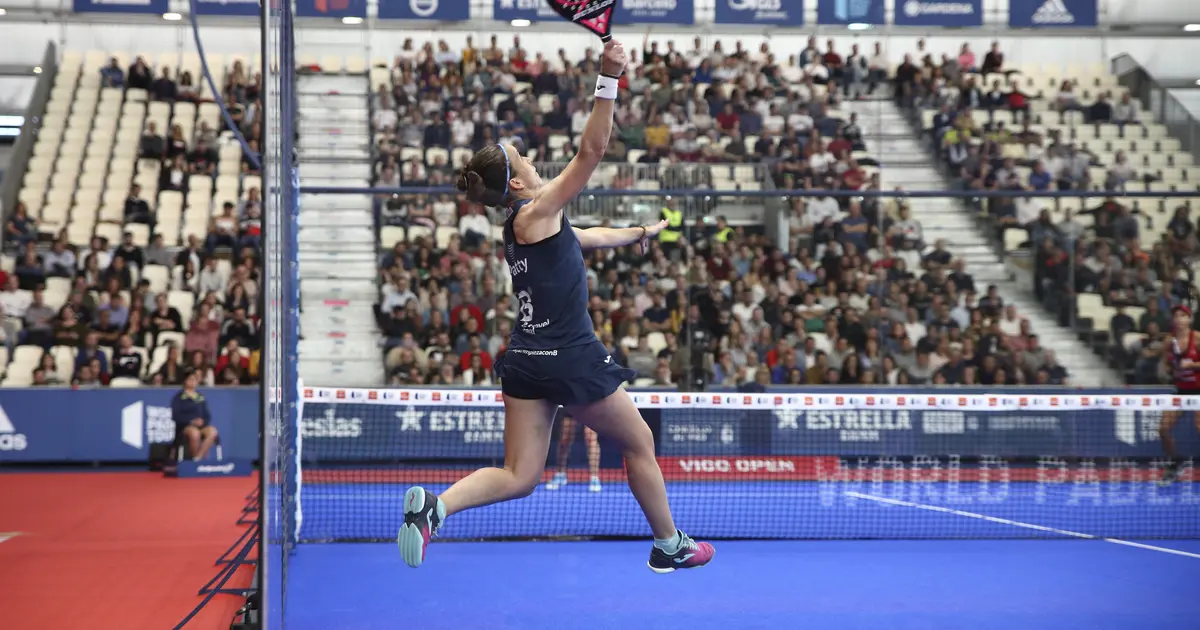
Junior padel follows a structured pathway from local club play to international competition. The International Padel Federation (FIP) sets the framework — age categories, rule adaptations, and championship formats — that national federations implement across the world. This guide explains how the competitive system works and how to get your child into it.
For the detailed technical rules (court dimensions, ball stages, scoring adaptations), see our junior padel rules guide. For a broader introduction to the sport for children, see padel for kids.
FIP Junior Age Categories
The FIP divides junior competition into five age groups. A player’s category is determined by their age during the calendar year of the competition — not their age on match day:
| Category | Age | Court | Ball | Match Format |
|---|---|---|---|---|
| Sub-10 | Under 10 | Mini padel (14 m × 7 m) or adapted | Stage 2 (orange) / Stage 3 (red) | Short sets (first to 4 games) |
| Sub-12 | Under 12 | Mini padel or full-size | Stage 2 (orange) / Stage 1 (green) | Short sets or standard |
| Sub-14 | Under 14 | Full-size (20 m × 10 m) | Stage 1 (green) or standard | Standard (best of 3 sets) |
| Sub-16 | Under 16 | Full-size | Standard | Standard (best of 3 sets) |
| Sub-18 | Under 18 | Full-size | Standard | Standard (best of 3 sets) |
Players always compete in the category matching their age. A 13-year-old plays sub-14, not sub-16. Some national federations allow younger players to compete upward in a higher age category when their skill level warrants it, but they cannot move downward.
How Junior Competitions Are Organised
Junior padel competition operates on four levels, each feeding into the next.
Local and Club Tournaments
The entry point for competitive padel. Clubs affiliated with a national federation run internal junior leagues and open tournaments throughout the year. These events are low-pressure and designed to introduce children to match play in a familiar environment.
Regional and National Championships
National federations organise regional qualifying rounds that lead to national championships in each age category. These are the primary competitive calendar for most junior players and the route to national ranking.
In countries with strong padel cultures — Spain, Argentina, Portugal, Italy, Sweden — national junior championships draw hundreds of pairs per category. Newer padel nations may combine categories or run smaller draws, but the structure exists across all FIP member federations.
Continental Championships
Continental championships are team events organised by the continental padel confederations. Europe, South America, Central America, and other regions hold annual or biennial junior championships where national teams compete.
The European Padel Championship for juniors, for example, has grown significantly since 2020, with over 20 national teams now participating across all five age categories. These events serve as both competitive tournaments and qualification pathways for the World Championship.
FIP Junior World Championship
The pinnacle of junior padel competition. The FIP Junior World Championship is an annual event that brings together national teams from every continent. Key features:
- Team format — each country sends representative pairs (typically two pairs per category, one male and one female)
- All five age categories compete at the same event
- Group stage followed by knockout rounds — teams are seeded based on continental championship results
- Host rotation — the championship rotates between continents, with recent editions held in Spain, Mexico, and Qatar
- Standard FIP rules apply with the usual category-appropriate adaptations for younger groups
National federations select their World Championship teams through national rankings and selection trials. For talented juniors, making the national team is a significant milestone and the clearest pathway to international exposure.
Rule Differences from Adult Padel
Junior competition uses the same core padel rules as adult play, with specific adaptations at the younger age levels:
Court Size
Sub-10 and sub-12 categories may use mini padel courts measuring approximately 14 m × 7 m with lower walls and a lower net (80–88 cm at centre). From sub-14 upward, all matches are played on standard 20 m × 10 m courts with standard net height (88 cm at centre, maximum 92 cm at posts).
Ball Type
Low-compression balls are mandatory at younger levels. Stage 3 (red) and Stage 2 (orange) balls move more slowly and bounce lower, giving children more time to prepare shots. The transition to standard balls typically happens between sub-12 and sub-14. For a detailed explanation of the ball stage system, see our junior padel rules guide.
Match Duration
Sub-10 and sub-12 tournaments commonly use shortened formats — first to 4 games per set instead of 6, with a match tie-break (first to 10 points) replacing a full third set. No-advantage scoring (deciding point at deuce) is also common at these levels. These adaptations keep matches to 30–45 minutes, appropriate for younger children’s physical endurance and concentration.
2026 rule change: The 2026 FIP rulebook contains no junior-specific scoring rules. The change that affects every age group is at 40-40: alongside advantage and the golden point (one deciding point at the first deuce), the rulebook now offers the Star Point (two advantage chances, then one deciding point at the third deuce; Rule 1). Junior events choose their own format, so check the competition rules.
Coaching During Matches
In sub-10 and sub-12 competitions, on-court coaching between points is generally permitted (subject to national federation rules). At sub-14 and above, coaching rules align with adult competition — coaching is typically restricted to changeovers and set breaks.
How to Get Your Child into Competitive Padel
Step 1: Join a Club with Junior Programmes
Find a padel club affiliated with your national federation that runs structured junior coaching. Club coaches can assess your child’s level and recommend the right category and competition pathway. For help finding a club, see our how to find a padel court guide.
Step 2: Obtain a Player Licence
To compete in federation-sanctioned tournaments, your child needs a player licence (sometimes called a federation card or membership). The process varies by country but typically requires:
- Proof of age — birth certificate or identity document
- Medical fitness certificate — a doctor’s confirmation that your child is fit for competitive sport (some federations accept a parental declaration for younger categories)
- Annual registration fee — costs vary by federation, typically ranging from €15 to €60 per year
- Club affiliation — most federations require the player to be registered through an affiliated club
Contact your national padel federation directly or ask your club — most handle the registration process for their junior members.
Step 3: Enter Local Tournaments
Start with club-level and local federation tournaments. These provide match experience in a supportive environment before moving to regional and national competitions. Most federations publish a junior tournament calendar at the start of each season.
Step 4: Build a Ranking
Results from sanctioned tournaments contribute to your child’s national junior ranking. Rankings determine seedings, qualification for national championships, and ultimately selection for international teams. Consistent tournament play through the season is more important than occasional strong results.
Equipment for Competitive Junior Padel
Competitive play demands reliable equipment suited to the player’s age and category.
Racket
Choose a racket appropriate for your child’s age group:
| Age Group | Racket Length | Weight Range | Shape |
|---|---|---|---|
| Sub-10 (under 10) | 40–43 cm | 260–310 g | Round |
| Sub-12 (under 12) | 43–44 cm | 290–330 g | Round or teardrop |
| Sub-14 (under 14) | 44–45 cm | 310–350 g | Round or teardrop |
| Sub-16 / Sub-18 | 45–45.5 cm (adult) | 340–370 g | Player preference |
Round rackets remain the best choice for developing players because of their large sweet spot and control. Diamond-shaped power rackets are not recommended until sub-16 at the earliest. For detailed buying advice, see our best padel rackets for kids & juniors, best rackets for beginners, and racket buying guide.
Shoes
Proper court shoes with herringbone or omni soles are essential for competitive play. Running shoes or casual trainers do not provide the lateral support needed for padel movement and significantly increase injury risk. See our best padel shoes guide for current recommendations.
Accessories
A wrist strap is mandatory under FIP rules for all age categories — this is enforced in competition and your child will be required to use it. An overgrip helps maintain racket control, especially in warm conditions. For more on accessories, see our padel accessories guide.
The Pathway from Junior to Professional Padel
The FIP junior competition structure is designed as a development pipeline. Players who excel at national and international junior level gain visibility with professional coaches and talent scouts. The transition from sub-18 to senior competition typically happens at ages 16–18, with many future professional players competing in both junior and lower-tier senior events simultaneously.
Spain, Argentina, and Brazil have the most developed junior-to-professional pathways, but the growing international reach of padel means that talented juniors from any FIP member nation now have access to competitive structures that can support their development.
Related Guides
Was this page helpful?
Thanks for your feedback!
Free beginner PDF + rule updates
Get the 4-page beginner guide to the 2026 padel rules, then one short email a week for four weeks and a monthly newsletter.
More in Basic Rules
Ball Hits a Player in Padel: Who Wins the Point?
What happens if the ball hits a player in padel? FIP 2026 rules for your body, your partner, an opponent and the serve, with a decision chart.
What Happens When the Ball Goes Out of the Court in Padel?
Ball out of the court in padel: when it is a lost point, when you can run out and play it, why over the back wall is lost, and ceiling hits (FIP 2026).
Can the Ball Bounce Twice in Padel? The One-Bounce Rule
No. In padel the ball may touch your floor only once before you hit it. What counts as a bounce, glass vs mesh, serve vs rally, under the FIP 2026 rules.
Padel Faults & Lets: Every Way to Lose a Point (2026)
Padel faults, lets and lost points under the 2026 FIP rules: serve faults, net serves, interference, double hits, net touches, and glass vs mesh.