 PADEL RULES
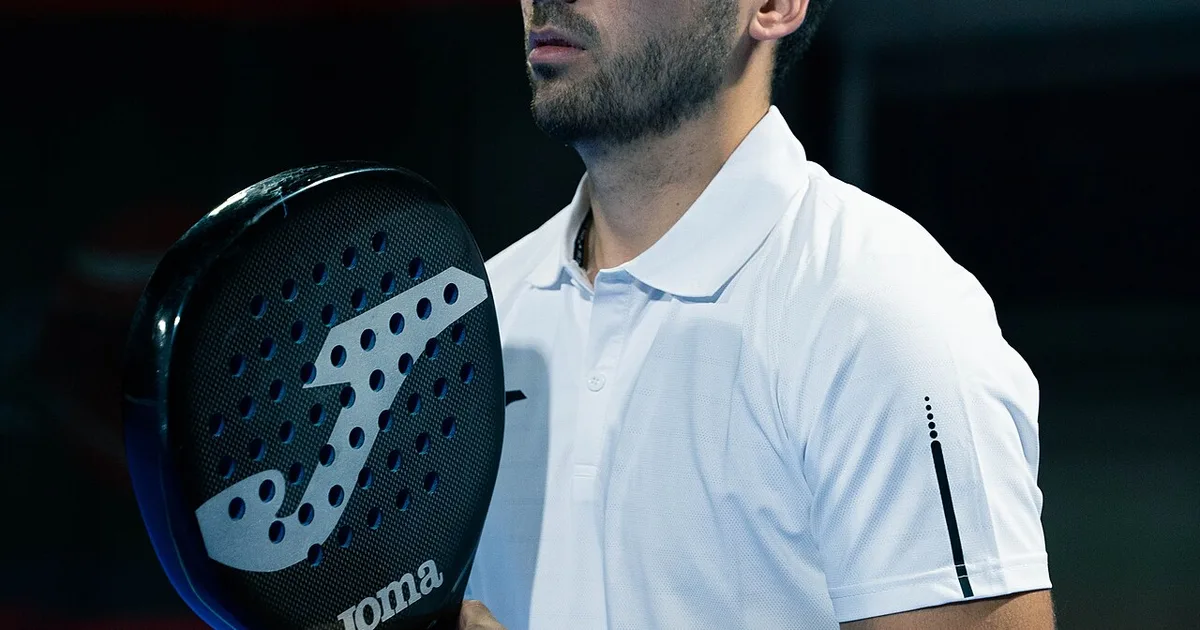
How to Serve in Padel — Step-by-Step Technique for Beginners
6 min read
The padel serve must be hit underhand at or below waist height — but that does not mean it is easy. Many beginners struggle with consistency, hitting serves into the net or sending them long. This guide breaks the serve down into clear steps so you can build a reliable, repeatable motion.
For the official rules that govern what is and is not legal, see Padel Serve Rules. For where to aim once your technique is solid, see Serve Tactics.
The Grip
Use a continental grip. Hold the racket as if you were shaking hands with it — the base knuckle of your index finger sits on the second bevel of the handle (the narrow edge that faces upward when you hold the racket on its side).
Why continental? It opens the racket face slightly, which helps you:
- Strike the ball cleanly at a low contact point
- Add natural slice without changing your grip
- Control direction more precisely than with a forehand grip
If you are unsure whether your grip is correct, hold the racket edge-on and let it hang naturally — the face should be roughly perpendicular to the ground.
Stance and Starting Position
-
Stand behind the service line with at least one foot on the ground behind the line. Position yourself between the centre line and the side wall on the half you are serving from.
-
Face the side wall, not the net. Your non-dominant shoulder should point roughly toward the target service box. A side-on stance gives you rotation and balance.
-
Feet shoulder-width apart, weight slightly on the back foot. You will transfer weight forward as you swing.
2026 rule note: Since January 2026, only one foot must be behind the service line at the moment of contact (previously both feet). This gives you a slightly more comfortable starting position. However, your feet must not touch the service line, the imaginary central line, or the reception box on your side before the ball is struck.
The Ball Bounce
The ball must bounce on the ground before you strike it — this is not optional in padel.
- Hold the ball at about waist height in your non-hitting hand
- Drop it (do not throw it upward) so it bounces close to your body, slightly to the hitting-arm side
- Let the ball rise to a comfortable contact point — roughly hip height
Common mistake: Bouncing the ball too far in front. This forces you to reach forward, pulls your weight ahead of the swing, and makes accuracy difficult. Keep the bounce close — within arm’s length.
The Swing and Contact
-
As the ball rises from the bounce, take the racket back with a short backswing. There is no need for a large wind-up — the padel serve is about control, not power.
-
Swing forward and slightly upward, transferring weight from the back foot to the front foot. The racket should move through the ball on a low-to-high path to clear the net.
-
Contact the ball at or below hip height, slightly in front of your body. Hit through the centre-back of the ball for a flat serve, or brush across the outside for slice.
-
The follow-through is short and natural — the racket finishes pointing toward your target, roughly at chest height.
Key checkpoints at contact:
- Racket face is slightly open (tilted upward)
- Wrist is firm, not floppy
- Eyes are on the ball, not the target
- Weight is moving forward
Follow-Through and Recovery
After contact, let the racket continue naturally in the direction of the target. Do not stop the swing abruptly — a smooth follow-through improves accuracy and reduces strain on the wrist and elbow.
Immediately after the serve:
- Reset your feet — return to a ready position facing the net
- Watch the return — your partner at the net will cover the middle; be ready to play a forehand or backhand from the baseline
- Look for a chance to advance — if the return is weak, move forward to join your partner at the net
Adding Slice
Once you can serve consistently flat, introduce a slice serve:
- Same continental grip, same stance
- Instead of hitting flat through the ball, brush the racket across the outside — from right to left for right-handers, left to right for left-handers
- The sidespin makes the ball curve away from the returner and stay low after bouncing
- Aim slightly more toward the centre to compensate for the curve
Slice is the most useful spin variation for beginners because it keeps the ball low and makes returns more difficult without requiring significant extra skill.
Common Beginner Mistakes
Hitting with a forehand grip. A forehand grip closes the racket face, making it harder to strike below the waist and reducing your ability to add spin. Switch to continental.
Bouncing the ball too hard. A high bounce takes longer to come down, disrupts your timing, and risks contacting the ball above hip height (a fault). Drop the ball gently — a bounce of 30–40 cm is enough.
Trying to hit hard. Power is irrelevant if the serve does not land in the box. Focus on placement and consistency first. Speed comes naturally once the motion is grooved.
Not watching the ball. Many beginners look at the target instead of the ball. Watch the ball from the bounce through contact — your body will aim based on your stance and alignment.
Standing square to the net. Without a side-on stance, you lose rotation and have to muscle the ball with your arm. Turn sideways and let your body do the work.
Practice Routine
A simple drill to build consistency:
- Place a target (cone, towel, or bag) in the service box — start in the middle, then move it to corners
- Serve 10 balls to the target, counting how many land in the box
- Aim for 7 out of 10 in the box before adding slice or changing placement
- Alternate serving from the right and left sides each set of 10
Once you are consistent at 70%, move the target to the T, the body zone, and wide — these are the three primary serve placements covered in Serve Tactics.
Useful Links
- Padel Serve Rules — full FIP regulations for the serve
- Serve Tactics — Placement, Spin & Pressure — where to aim
- Return of Serve Tactics — the returner’s perspective
- Padel for Beginners — complete beginner’s guide
Stay in the loop
Get padel rule updates and tournament news — no spam.
More in Techniques
La Bajada in Padel — Taking the Ball Off the Back Wall
Learn how to hit la bajada in padel. This guide covers the technique for taking the ball off the back wall on the way down, when to use it, common.
The Bandeja in Padel — How to Hit It and When to Use It
Learn how to hit the bandeja in padel. This guide covers technique, body position, when to choose bandeja over smash, and how it keeps you at the net.
The Chiquita in Padel — Technique, Timing, and When to Use It
Learn how to hit the chiquita in padel. This guide covers technique, grip, body position, when to play the chiquita, common mistakes, and how the pros use.
La Contrapared in Padel: How to Hit Off Your Own Back Wall
Master la contrapared — the padel shot where you hit the ball against your own back wall to return it over the net. Technique, timing, and when to use it.