 PADEL RULES
How to Play Padel — Rules, Scoring & Court Basics for Beginners
8 min read
Padel is one of the easiest racket sports to pick up. The enclosed court, smaller playing area, and wall play mean you can have a real rally within your first session — even without much experience. This guide walks you through everything you need to know to play your first game.
What Is Padel?
Padel is a doubles racket sport played on an enclosed court surrounded by glass walls and metal fencing. Two pairs of players compete across a net, and the ball can bounce off the walls as part of normal play. The sport is governed by the International Padel Federation (FIP), which last updated the official rules in January 2026.
Padel is always played as doubles. There is no singles format in competitive padel.
For a full overview of the sport’s origins and unique characteristics, see What is Padel?.
For comprehensive padel rules including all 2026 FIP updates, see our complete rules guide.
The Court
A padel court is 20 metres long and 10 metres wide — roughly half the size of a tennis court. It is completely enclosed:
- Back walls: Glass panels (4 metres high), with metal fencing above
- Side walls: Glass panels of varying height with fencing above
- Net: 88 cm high at the centre, 92 cm at the posts
The court is divided into service boxes by a service line 3 metres from the net on each side. The playing surface is almost always artificial grass (padel turf).
Small openings (doors) in the fencing allow players to exit the court to retrieve balls that fly out — this is legal play.
For exact dimensions, see Court Dimensions.
The Equipment
Padel racket (pala): A solid, stringless racket approximately 45–47 cm long. The face is perforated with holes. Rackets come in three shapes — round (best for beginners), teardrop, and diamond. Start with a round racket for better control.
Wrist strap: Mandatory under FIP rules. The cord must be attached to the racket and worn on your wrist during play. This prevents the racket from flying off.
Padel balls: Similar to tennis balls but slightly smaller (63–68 mm) and with lower internal pressure. Purpose-made for padel’s artificial grass surface.
Shoes: Padel shoes have herringbone-pattern soles for grip on artificial grass. Running shoes can cause slipping and ankle injuries — use proper padel or clay-court tennis shoes.
How a Game Works
Setting Up
Teams of two take a side each. A coin toss (or mutual agreement) decides who serves first and which side each team starts on. Teams change ends after the first set and after every odd-numbered set thereafter.
The Serve
The serve is the most rule-specific shot in padel. Here is the sequence:
- The server stands behind the service line, within their service half (between the centreline and the side wall)
- The server drops the ball and lets it bounce once on the court
- The ball must be struck at or below waist height — no overarm serves
- The ball must travel diagonally over the net and land in the opponent’s service box (the box diagonally opposite)
- Two faults = double fault = point to the receivers
After a successful serve, the receiving team must return the ball before it bounces twice. Normal play begins.
See Serve Rules for the complete serve regulations including foot faults and lets.
Wall Play — The Core of Padel
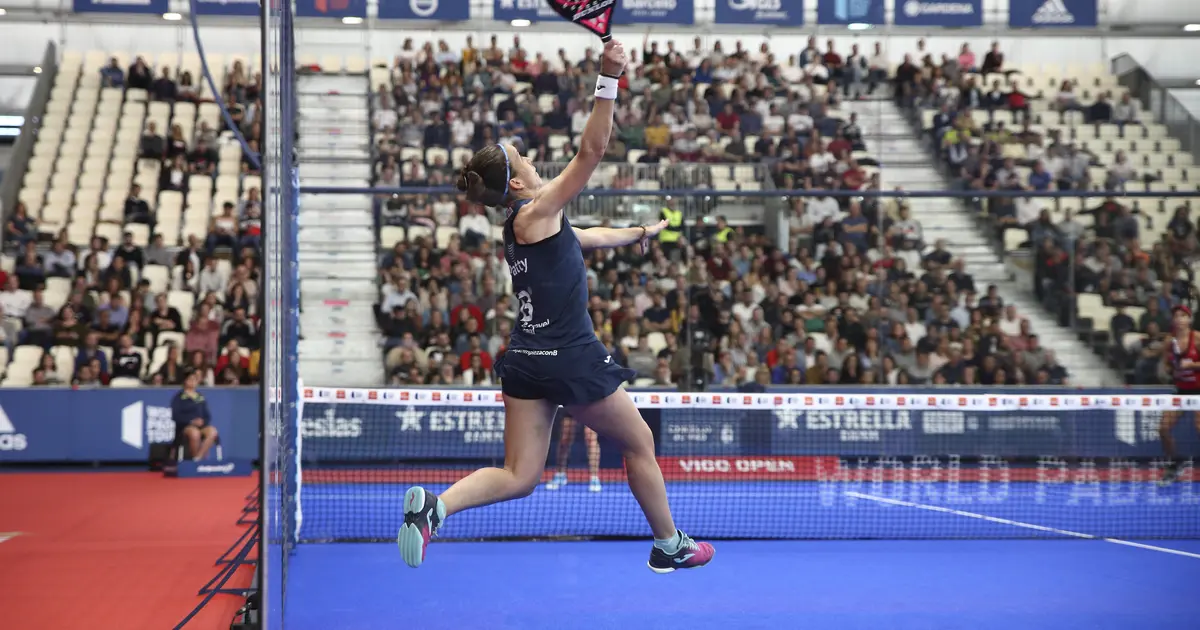
This is what makes padel unique. After the ball bounces once on your side of the court, it can hit the back or side walls and remain in play. You play it back over the net from there.
Key wall play rules:
- The ball must bounce on the floor before hitting your own walls — a ball that hits a wall before bouncing on the floor (except off the net cord) is out
- You can play the ball directly off the opponent’s wall shots
- If the ball goes over the back fence after bouncing, it is still in play — players can exit through the side doors to retrieve it (called “going out” or salida)
Wall play is what gives padel its tactical depth. Learning to use the back glass is one of the key skills to develop.
See Wall Play for the full rules on ball contact with walls and fencing.
Winning and Losing Points
You win a point when:
- The ball bounces twice on the opponent’s side
- The opponent hits into the net
- The opponent hits the ball out (beyond the court boundaries)
- The ball hits an opponent directly before bouncing
You lose a point when:
- Your shot bounces twice on your side before you hit it
- You hit the ball into the net
- You hit the ball out
- The ball hits you or your partner before bouncing on your side after a legal shot from the opponent
Scoring
Padel uses the same scoring system as tennis:
Points in a Game
15 — 30 — 40 — game
At 40-40 (deuce), under the 2026 FIP rules, a Star Point is played: the receiving team chooses which side they receive from, and the team that wins that point wins the game. This replaces the traditional deuce-and-advantage format at professional level.
2026 rule change: The Star Point replaced the Golden Point (and traditional deuce/advantage) as the default deuce format under the January 2026 FIP revision. The Star Point gives the receiving team the choice of service side at deuce, whereas the Golden Point did not.
Games in a Set
First team to 6 games wins the set, provided they lead by at least 2 games. At 6-6, a tie-break is played (first to 7 points, with a 2-point lead required).
Match Format
Most recreational and competitive padel is best of 3 sets. The professional tour plays best of 5 sets for some events.
See Scoring System and Star Point Rule for the full scoring rules.
Basic Tactics for Beginners
Positioning: Net vs Baseline
In padel, the net is king. The team at the net has a huge advantage — they can volley the ball downward and control the point. Beginners should aim to get to the net as quickly as possible after the serve.
The classic starting positions:
- Serving team: Server stays back (baseline area) after the serve; server’s partner stands at the net
- Receiving team: Receiver returns from the baseline; receiver’s partner stands at the net
The goal for the serving team is to work their way to the net after the serve. The goal for the receiving team is to push the serving team back or win the net themselves.
Using the Walls
Don’t try to hit winners from the back. Use the walls:
- Lob: Hit the ball high and deep to force opponents off the net. The ball will bounce off the back glass, giving you time to move forward
- Bandeja: A defensive overhead used to keep opponents at the net while you reposition
- Vibora: A more aggressive overhead with topspin and slice, used to attack off high balls
Wall play is the biggest skill difference between beginners and experienced players. Practice reading where the ball will come off the glass — it often bounces outward and lower than you expect.
Communication
Because padel is always doubles, communication with your partner is essential:
- Call “mine” or “yours” on balls between you
- Agree on positioning before the point starts
- Move as a unit — when one goes back, the other often stays at the net
Common Beginner Mistakes
| Mistake | Why It Costs Points | Fix |
|---|---|---|
| Hitting too hard | Power is less important than placement | Focus on consistency; winners come from positioning |
| Staying at the baseline | Loses net advantage | Move forward after the serve and after forcing a lob |
| Ignoring the walls | Misses easy wall balls | Practice reading the glass during warm-up |
| Serving too high | Gives opponents easy return | Keep the ball low — aim for the service line |
| Not using the wrist strap | Racket can fly and injure others | Always attach the cord before playing |
Your First Padel Session
Most clubs offer beginners:
- Introductory session with a coach (recommended — 30–60 minutes covers the basics)
- Social sessions for mixed abilities
- Equipment hire — you usually do not need to buy a racket immediately
Start by practising the serve and cross-court groundstrokes. Focus on keeping the ball in play rather than hitting hard. Once you can rally consistently, start introducing wall play.
Useful Links
- Serve Rules — complete serve regulations
- Scoring System — full scoring explanation
- Court Dimensions — court layout and measurements
- Wall Play — wall and fencing play rules
- Star Point Rule — the 2026 deuce format
- What is Padel? — sport overview and history
- Padel vs Tennis — key differences
Stay in the loop
Get padel rule updates and tournament news — no spam.
More in Beginner Guides
Can You Play Padel Alone? Solo Practice Options and Drills
Can you play padel alone? Padel is a doubles sport, but you can practise solo with wall drills, ball machines, and specific exercises.
Padel Doubles Tactics — Strategy Guide for All Levels
Master padel doubles tactics with this strategy guide. Covers court positioning, attacking from the net, defending from the baseline, and key shot.

How Long Does a Padel Match Last? Average Duration and Format
How long does a padel match last? Most padel matches last 60–90 minutes. Learn about set format, tie-breaks, and what affects match duration.
How to Find and Book a Padel Court
Learn how to find and book a padel court near you using Playtomic, Matchi, Google Maps, and club websites. Includes tips for first-timers on pricing, equipment hire, and what to expect.