 PADEL RULES
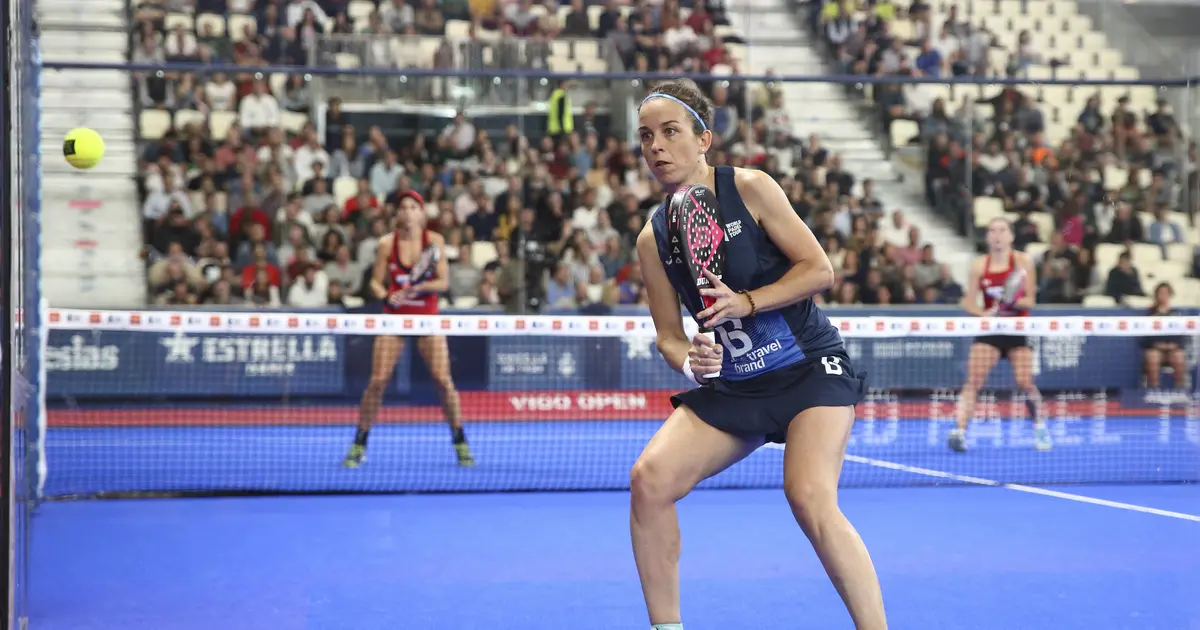
Padel Doubles Tactics — Strategy Guide for All Levels
9 min read
Padel is always doubles — and doubles tactics are what separates players who understand the game from those who just hit the ball. This guide covers the core principles of padel doubles: positioning, net dominance, defensive play, and how to win points consistently.
Why Tactics Matter More in Padel Than in Tennis
In tennis, a powerful serve or groundstroke can win a point outright. In padel, the serve is limited (underarm, below waist), the court is enclosed with walls that keep the ball in play, and the court is smaller. This means:
- Raw power rarely wins points alone — placement and positioning matter more
- Wall play extends rallies — defensive situations can be recovered
- Net control is decisive — the team closest to the net has a structural advantage
Understanding positioning is the fastest way to improve at padel.
The Two Fundamental Positions
Every point in padel involves both teams trying to occupy one of two positions:
1. Net Position (Attacking)
Both players stand roughly 3–4 metres from the net, one on each side of the centreline. From here:
- You can volley downward at angles
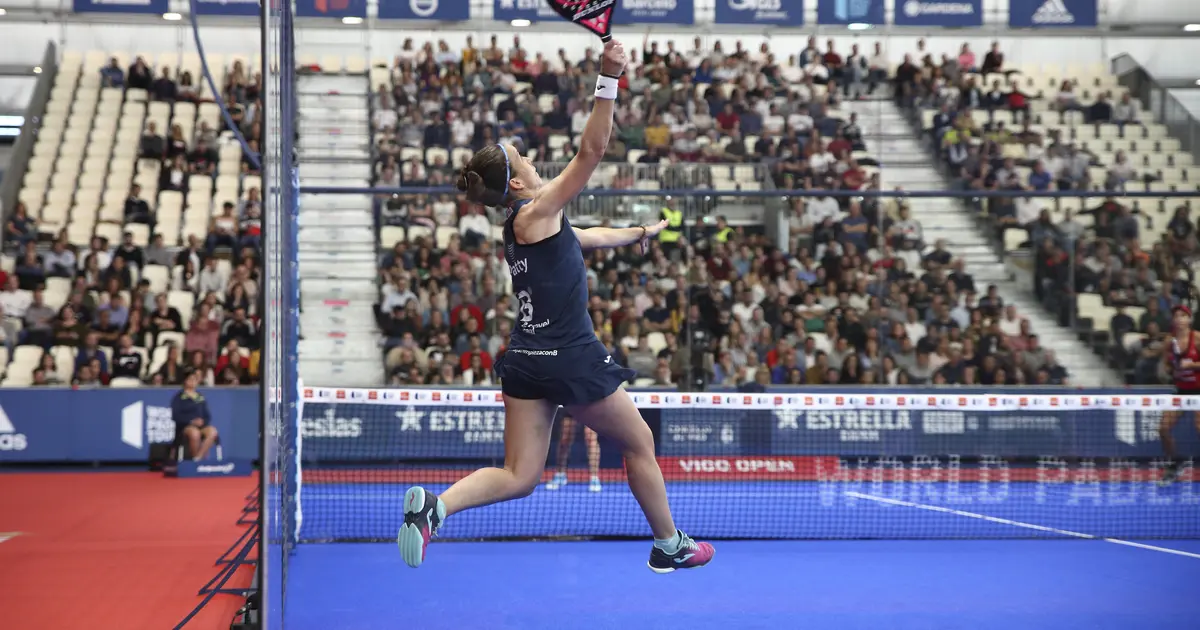
- You can put away high balls with overheads (smash, bandeja, vibora)
- Your opponents must attack from further back
The team at the net controls the point approximately 70–80% of the time in organised padel.
2. Baseline Position (Defensive)
Both players stand near the back of the court, within 2–3 metres of the back wall. From here:
- You can use the back glass to retrieve difficult shots
- You lob to try to dislodge opponents from the net
- You try to force a weak shot that lets you advance
The golden rule: Both players should be in the same zone — both at the net, or both at the baseline. A team split between net and baseline is vulnerable to easy angled volleys down the middle.
Starting Positions — Serve and Return
Serving Team
- Server: Stands behind the service line, serves, and then typically stays at the baseline initially
- Server’s partner: Stands at the net, on the side opposite the serve (ready to intercept weak returns)
After the serve, the serving team tries to move forward together to the net. The key transition moment is after a good, deep return — stay patient and look for the right moment to advance.
Receiving Team
- Receiver: Stands at the baseline, receives serve, and tries to return deep or lob
- Receiver’s partner: Stands at the net on their side
The receiving team already has one player at the net. The receiver’s goal is either to:
- Return the serve so that the receiver can also advance to the net (return + approach)
- Hit a deep or lob return that forces the serving team back
Attacking from the Net
The Volley
Volleys at the net should be directed:
- Cross-court at feet level — forces opponents to lift the ball, giving you an easy next shot
- Down the centre — exploits the seam between two opponents who are slow to communicate
- Angled wide — opens up the court for a put-away
Avoid hitting directly at opponents (unless they are close to the net and it is a fast reaction shot) — it gives them an easy block and changes the direction in your favour.
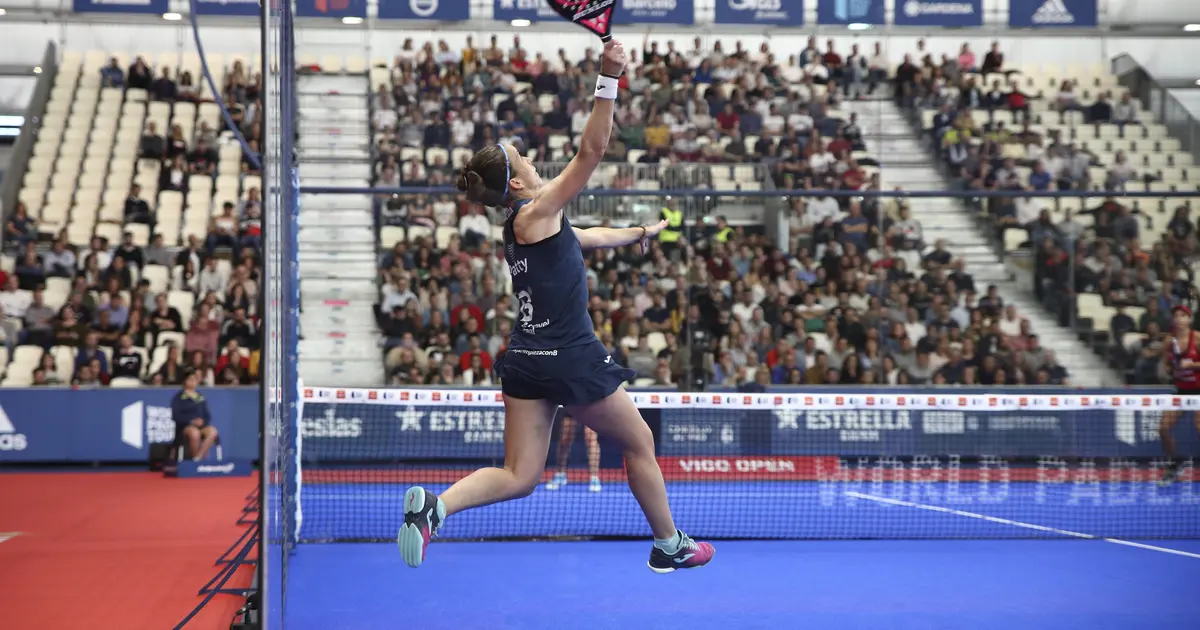
The Overhead (Smash, Bandeja, Vibora)
When opponents lob, you face a decision based on the height and position of the ball:
Smash (remate): For balls you can hit hard and put away directly. Usually only when the ball is short or below the fence height and you can angle it down to the floor. Be careful — in padel, a hard smash often comes back off the back glass.
Bandeja: A softer overhead hit with slice, used when the ball is medium-high. The ball stays low after bouncing, making it hard to lob back. Use this to maintain net position rather than trying to end the point outright.
Vibora: An aggressive overhead with a combination of topspin and slice. Generates pace and awkward bounce. Use when you are confident and the ball is at a good height. The vibora can end points, but also requires good timing.
General principle for overheads: When in doubt, play a bandeja down the middle or to the weaker player. Keeping the net is more valuable than going for a winner.
Defending from the Baseline
The Lob — Your Most Important Defensive Shot
The lob is the most important shot in padel from a tactical perspective. A well-executed lob:
- Forces the net players off the net (they must retreat to retrieve)
- Gives your team time to reposition
- Can win the point outright if it passes over the opponents’ heads
How to lob effectively:
- Aim high and deep — the ball should bounce near the back line or hit the back glass high
- Target the backhand side of the weaker overhead player
- After lobbing, advance to the net immediately — the goal is to switch positions
Reading the Back Glass
When opponents hit a smash at your feet or into the back glass, the ball will often come back out further than expected. Common glass patterns:
- A hard shot into the back glass often rebounds almost parallel to the wall — be ready to move laterally
- A higher, slower shot into the glass may rebounce at a steep angle toward the centre
- The corner (side wall + back wall) is the most unpredictable rebound — play it off the first wall
Practice reading the glass by standing at the back during warm-up and watching where balls come off different heights and angles.
Baseline Shot Selection
From the baseline, prioritise:
- Deep lobs to force opponents off the net
- Low, fast balls through the centre (hard to volley cleanly)
- Targeting the weaker player with consistent balls — make them make mistakes
- Avoid going for outright winners from the back — the risk/reward rarely works out
Common Tactical Patterns
The Four-Two Pattern (4-2)
The classic path to winning a point:
- Receive or play defensively from the baseline
- Force a weak lob from opponents with a deep groundstroke or low ball
- Both players advance to the net
- Finish the point with a volley or overhead
The Cross-Lob Switch
When opponents are at the net and you need to defend:
- Lob cross-court over the opponent on the far side
- While the ball is in the air, both baseline players move to the opposite side
- Opponents must retreat and play the glass — you gain time to reposition
The Centre Attack
When at the net, direct volleys down the centreline repeatedly. This:
- Forces opponents to communicate (who takes it?)
- Creates hesitation errors
- Opens up the wider angles for a subsequent shot
Moving as a Unit
The biggest tactical mistake in padel doubles is splitting — having one player at the net and one at the baseline without a clear reason.
Move together:
- Both advance when the opportunity arises (after a good lob or deep groundstroke)
- Both retreat when a lob beats you overhead (do not leave one player at the net while the other chases the back glass)
- Communicate constantly — call shots, signal when you are going for an overhead, tell your partner when to stay or advance
Poaching
At higher levels, the net player crosses to intercept a cross-court ball before it reaches their partner. This is called poaching. It can be highly effective but requires:
- Clear communication (non-verbal signal before the point, or a pre-agreed pattern)
- Confidence that your partner covers the gap you leave
At beginner level, avoid poaching unless the ball is clearly there — the coordination gap it creates is usually not worth the risk.
Targeting the Weaker Player
In recreational padel, most partnerships have a difference in ability between the two players. Exploit this tactically:
- Direct repeated balls to the player with the weaker overhead
- Force the weaker player to serve early in the set if the serving order allows
- Attack their backhand if they have a weak slice
This is not poor sportsmanship — it is standard competitive padel. At higher levels, professionals deliberately target pairings to break the weaker link.
Key Principles Summary
| Principle | Application |
|---|---|
| Control the net | Get there after the serve or after lobbing your opponents back |
| Move as a unit | Avoid splitting — both at net or both at baseline |
| Lob first, attack second | Lob to create the opening, then advance and put the point away |
| Bandeja over smash | Keeping net position is worth more than going for the outright winner |
| Use the centre | Aim down the middle to create confusion and communication errors |
| Read the glass | Practice predicting where balls come off the back wall |
For more advanced offensive and defensive systems, see our guide to padel formations.
Useful Links
- How to Play Padel — beginner fundamentals
- Position of Players — FIP rules on court positioning
- Serve Rules — full serve regulations
- Wall Play — rules for playing off walls
- Scoring System — full scoring explanation
More Beginner Resources
Get the Free Beginner Guide PDF
Rules, scoring & first-lesson tips — one printable PDF for new players.
No spam. Unsubscribe anytime. By submitting you agree to our Privacy Policy. We use double opt-in for confirmation (GDPR compliant).
Stay in the loop
Get padel rule updates and tournament news — no spam.
More in Beginner Guides
Can You Play Padel Alone? Solo Practice Options and Drills
Can you play padel alone? Padel is a doubles sport, but you can practise solo with wall drills, ball machines, and specific exercises.
How Long Does a Padel Match Last? Average Duration and Format
How long does a padel match last? Most padel matches last 60–90 minutes. Learn about set format, tie-breaks, and what affects match duration.
How to Find and Book a Padel Court
Learn how to find and book a padel court near you using Playtomic, Matchi, Google Maps, and club websites. Includes tips for first-timers on pricing, equipment hire, and what to expect.
How to Improve at Padel — Practice Tips, Drills, and Mental Game
Practical advice on how to improve at padel. Covers practice drills, shot selection, positioning, the mental game, and common mistakes that hold players.