 PADEL RULES
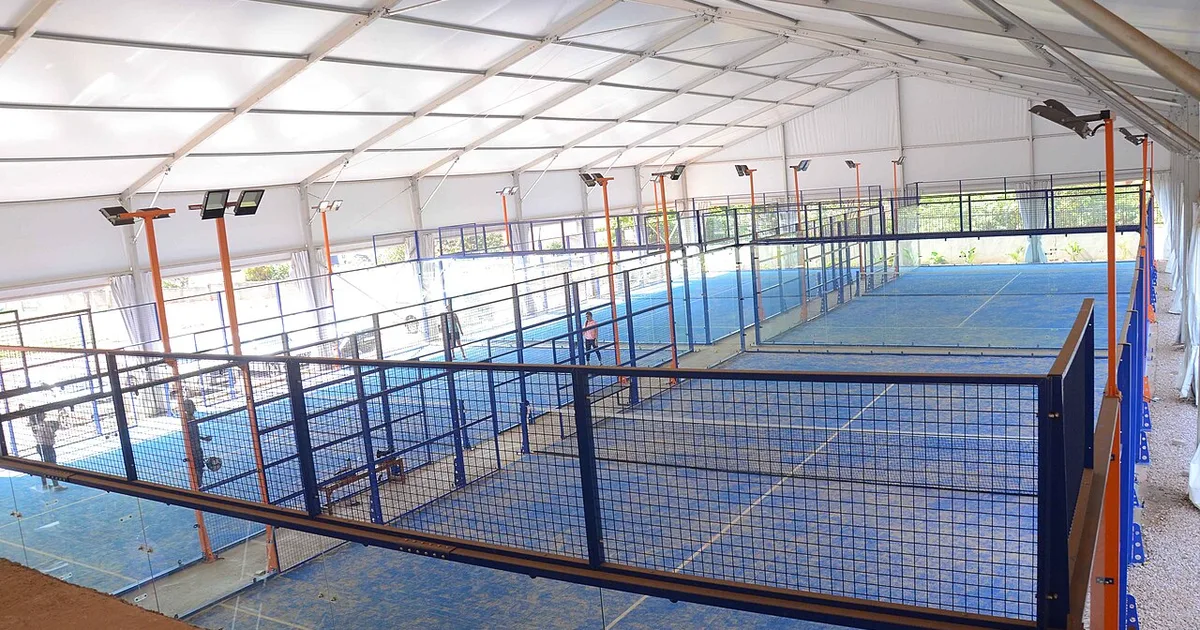
Padel Wall Rules Explained: When Can the Ball Hit the Wall?
8 min read
Wall play is the fundamental rule that makes padel unique. It transforms the sport from tennis (with walls as obstacles) into padel (with walls as integral playing surfaces). The wall rule is so important it shapes strategy, shot selection, and court movement.
Why Wall Play Defines Padel
The Game-Changing Difference from Tennis
Tennis: Walls and fences are out of play — if the ball hits a boundary, it’s out.
Padel: Walls are in play — if the ball hits your wall, you can still win the point.
This single difference creates an entirely different sport:
- Defensive options multiplied — lobs over net, pass shots, wall defenses
- Rally length increased — points that would be winners in tennis are extended in padel
- Skill requirements changed — wall physics, angle understanding, positioning all matter
- Court usage transformed — players move side-to-side more (to walls) than in tennis
Strategic Implications
Wall play enables:
- Back-wall defensive shots — lobbing, passing over net from defensive position
- Side-wall attacks — bandeja, vibora, angle winners off glass
- Wall-to-wall rallies — players trading shots off opposite walls
- Deception — same shot can go different directions off walls
Without walls, padel would be “tennis in a smaller box.” With walls, it’s a fundamentally different game.
Core Rule: When Walls Are In Play
The FIP rules establish a clear hierarchy:
Prerequisite: Ball Must Bounce Once on Opponent’s Side
Before you can use walls, the ball must:
- Land on the opponent’s side of the court
- Bounce once on the ground
Until that happens, your walls are NOT in play:
- If the ball hasn’t bounced on opponent’s side yet, you cannot use walls
- If you hit your wall before the ball bounces on opponent’s side, the opponent loses the point
Example: Serve reaches opponent’s baseline without bouncing (fault). You cannot then hit your wall and recover.
After That Bounce: All Walls Are In Play
Once the ball bounces on opponent’s side:
- You can hit it directly before it hits the ground (volley)
- You can let it bounce on your side then hit it
- You can let it hit your walls and then hit it
- You can hit it into your walls and redirect it
The Requirement: Ball Must Cross Net Afterward
Whatever path the ball takes (walls or no walls), it must:
- Cross the net after your shot
- Land in opponent’s court (inside the baseline)
Walls are valid rebounds, not escape routes. The ball must ultimately get back over the net.
Key Wall-Play Rules
Direct Wall Hits Are Valid
Misunderstanding: You must let the ball bounce before using walls.
Reality: You can hit the ball directly into any wall on your side (back, side, front) without the ball bouncing on the ground first.
Example: Opponent serves. Ball bounces past you toward the back wall. You can hit it directly into the back wall (without letting it bounce on your court), and it’s valid if it crosses the net afterward.
This is the basis for advanced shots:
- Vibora — lob directly into back wall
- Bandeja — underhand directly into side glass
- Back-wall volley — volley directly into back wall
Ball Cannot Bounce Twice on Your Side
Before you hit it: The ball can bounce only once on your side before you must play it.
Example:
- Ball lands on your court → bounces once → you hit it ✓ (valid)
- Ball lands on your court → bounces once → bounces again → you hit it ✗ (point lost)
The second bounce rule is absolute, whether the walls are involved or not.
Walls Don’t Reset the Bounce Count
If the ball bounces on your side, hits a wall, and bounces again, the second bounce ends the point. Walls don’t “restart” the bounce counter.
Multiple Walls Are Fine
A ball can hit multiple walls in sequence and remain valid:
Example: Ball bounces on court → hits back wall → bounces again on court → hits side wall → crosses net → valid point.
But: Only the first ground bounce is allowed. The second bounce (after wall contact) ends the rally.
Glass Walls vs. Mesh Fences
Padel courts use two different wall materials for distinct reasons:
Glass (Back Wall & Some Side Walls)
Characteristics:
- Hard, rigid surface
- Fast, predictable bounces
- Ball returns with similar speed
- High rebound angle (steeper)
Strategic use:
- Aggressive back-wall volleys
- Fast counterattacks
- Predictable angles (easier to position for)
Mesh Fence (Side Walls & Parts of Back Wall)
Characteristics:
- Flexible surface
- Softer, slower bounces
- Ball loses speed on rebound
- Lower rebound angle (flatter)
Strategic use:
- Defensive wall play (ball returns slower)
- Controlled angles (less aggressive)
- Softer feel (reduces arm impact)
Why both? Padel courts intentionally mix materials to create varied playing conditions and force players to adapt shots based on wall type.
Common Wall Play Sequences
Defensive Back-Wall Sequence
- Opponent hits toward your court
- Ball bounces on ground, travels toward back glass
- You play the ball off the back glass (directly or after court bounce)
- Ball crosses net into opponent’s court
- Rally continues
This is the fundamental defensive move in padel.
Attacking Side-Wall Sequence
- Opponent hits short ball toward your court
- Ball bounces and travels toward side mesh
- You hit it into the side wall at an angle
- Ball redirects off wall into opponent’s court
- Winning shot or forcing weak return
This is the fundamental attacking move (bandeja, vibora variations).
Back-Wall-to-Back-Wall Rally
- You hit ball into opponent’s back glass
- Opponent plays it back, into their back glass
- Ball returns to you
- You volley it off your back glass
- Rally of wall-to-wall exchanges
This creates the signature padel rally that differentiates the sport from tennis.
When Walls Are NOT In Play
Before the Opponent’s Bounce
If the ball lands on opponent’s side and hasn’t bounced yet, your walls are not accessible:
- If you hit a wall to try to redirect it, you lose the point
- The ball must bounce on opponent’s side first
On the Net or Past the Baseline
Walls outside the court boundaries (beyond the back baseline) are not in play:
- If you hit a ball that’s already past the back line, walls beyond that point don’t count
- Out is out
If the Ball Hasn’t Crossed the Net Toward You
Walls on the opponent’s side are not your concern (they’re in play for your opponent):
- If the opponent’s wall-to-wall shot comes back to the net, that’s their point loss
- You cannot hit into opponent walls
Advanced Wall Shots (Enabled by This Rule)
The wall-play rule enables signature padel shots:
Vibora (Back-Wall Lob)
Hit the ball directly into the back glass with an upward swing, causing it to rebound up and over the net.
Rule enabled: Direct wall hits are valid (you don’t need the ball to bounce first).
Bandeja (Side-Wall Underhand)
Hit the ball into the side glass with an underhand, angled motion, causing it to redirect into the opponent’s court at a sharp angle.
Rule enabled: Direct wall hits allow this underhand angle technique.
Wall Volley Exchanges
Players volley balls directly off walls repeatedly, creating fast, controlled wall-to-wall rallies.
Rule enabled: Multiple wall hits are allowed in sequence.
Strategic Implications
Defense Becomes More Viable
- You can defend from the back wall (lobs, passing shots)
- Wall play extends rallies when you’re in a defensive position
- Defensive teams use back-wall strategy to wear down opponents
Positioning Changes
- More side-to-side movement (to walls) than in tennis
- Back-wall positioning is critical (ready for back-wall defense)
- Side-wall angles are studied (attack opportunities)
Racket Requirements Change
- Round rackets (larger sweet spot) favor defensive wall play
- Teardrop/diamond rackets (power-focused) favor attacking wall shots
- Wall play demands precise control, not just power
Summary
| Rule | Explanation |
|---|---|
| Walls are in play | All walls on your side are valid rebound surfaces |
| After opponent’s bounce | Walls only count after the ball bounces on opponent’s side |
| Direct wall hits allowed | You can hit the ball directly into walls (no bounce required first) |
| Must cross net | Ball must ultimately cross net and land in opponent’s court |
| One bounce max on your side | Only one ground bounce before you hit it; walls don’t reset this |
| Multiple walls OK | Ball can hit multiple walls in sequence and remain valid |
| Glass vs. mesh | Different speeds/angles; both used intentionally |
For related rules, see ball in play, out-of-court play, and ways to lose a point.
Stay in the loop
Get padel rule updates and tournament news — no spam.
More in Basic Rules
What Happens If the Ball Hits a Player in Padel?
If the ball hits a player's body in padel, that player's team loses the point — with limited exceptions. Full FIP rule breakdown with scenarios.
What Happens When the Ball Goes Out of the Court in Padel?
When the ball leaves the padel court through an open door or over the fence, the point may continue if a player can retrieve it.
Can the Ball Bounce Twice in Padel?
No — if the ball bounces twice on your side of the court, you lose the point. Learn the one-bounce rule, wall rebounds, and the exceptions every padel.
Padel Fault Rules and Lets
A fault is an invalid serve — two faults lose the point. A let means the serve is replayed with no penalty. Covers every fault type and the let rule.