 PADEL RULES
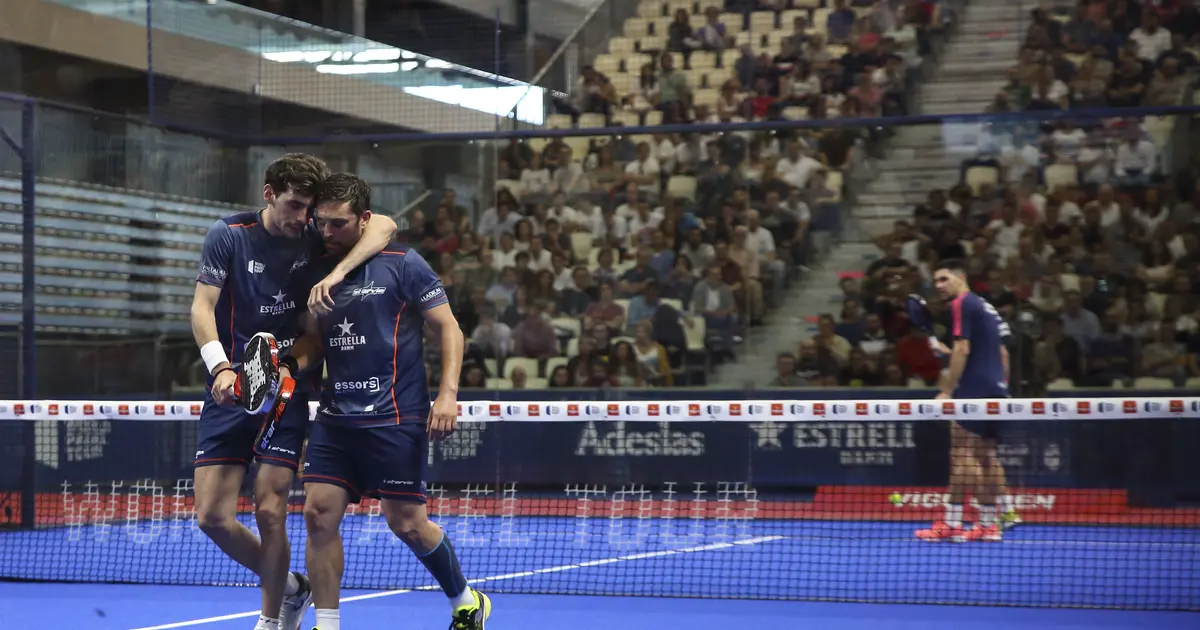
When Do You Lose a Point in Padel? Every Fault Explained (Rule 13)
5 min read
The FIP Rules of Padel (Rule 13) set out every situation that results in a team losing a point. Understanding these prevents disputes and helps players make accurate line calls during self-officiated matches.
Complete List — Ways to Lose a Point (FIP Rule 13)
A team loses the point when:
During the Serve
- Double fault — both the first and second serve are faults
Touching the Net or Opponent’s Court
- Player or equipment touches the net — any player, their racket, or anything worn or carried touches the net, net posts, tension cable, or any part of the opponent’s court while the ball is in play
- Jumping over the net — any player jumps over the net while the point is being played
Ball Play Faults
- Ball bounces twice — the ball bounces a second time on the team’s side before they play it
- Ball does not cross the net — a shot hits the net and falls back on the same side
- Ball played before it crosses the net — a player strikes the ball on the opponent’s side of the net before it has crossed over (a follow-through that crosses the net plane after the ball was already struck is permitted)
- Return hits own court then opponent’s wall — if a player returns the ball (directly or off their own walls) and without bouncing first it hits the opponent’s walls, metallic fence, or any element not on the ground of the opponent’s court
- Return hits net post then opponent’s wall — if the ball touches the net or posts and then directly hits the opponent’s wall, fence, or similar element without bouncing in the opponent’s court first
- Ball hits own court or fence on player’s side — if after being struck the ball touches the player’s own side of the court ground, their own metallic fence, or any off-court element on their own side before crossing the net
Body and Equipment Contact
- Ball struck twice — a double hit by the same player. Exception: a double contact that occurs within the same stroke movement without substantially changing the ball’s direction is not a fault
- Ball touches the hitter’s team after being struck — after hitting the ball, it touches the player who hit it, their partner, or anything worn by either of them
- Ball hits a player before bouncing — the ball in play hits any part of a player, their clothing, or equipment (other than the racket) after being hit by the opposing team
- Ball struck with a thrown racket — the ball is hit with a racket that was thrown at it
- Simultaneous hit by both players — both players on the same team hit the ball simultaneously or consecutively; only one team member may strike the ball per shot
- Safety cord breaks or racket is dropped — if a player’s safety cord breaks or they drop their racket, the pair immediately loses the point (see wrist strap rules)
2026 rule change: This rule was added in the January 2026 FIP revision. The 2021 rules required players to wear the wrist safety cord but did not specify an immediate point penalty if it broke or the racket was dropped. The 2026 revision makes the consequence explicit — a flying or dropped racket is a safety hazard to all four players on a small enclosed court, so play stops immediately and the point is forfeited.
Out-of-Court Faults
- Player’s body is outside the court — a player strikes the ball when any part of their body is outside the court, unless out-of-court play has been specifically authorised for that court
Code Violations
Some code violations (see code of conduct) result in a point penalty, which directly awards a point to the opposing team. These are not rally faults but conduct-related point losses.
Summary Table
| Situation | Who loses the point |
|---|---|
| Double fault | Serving team |
| Touching net / opponent’s court | Team that touched |
| Jumping over the net | Team that jumped |
| Ball bounces twice | Team on whose side it bounced |
| Shot hits net, stays same side | Team that played the shot |
| Playing ball before it crosses net | Team that played the shot |
| Return hits opponent’s wall/fence without bouncing | Team that played the shot |
| Ball hits player’s body before bouncing | Team struck by ball |
| Ball touches hitter’s team after being struck | Team that hit the ball |
| Double hit (with changed direction) | Team that double-hit |
| Simultaneous hit by both teammates | Team that both hit |
| Cord breaks or racket dropped | Team of player involved |
| Player’s body outside court (no OOC authorized) | Team of player involved |
| Deliberate interference | Team that interfered |
| Code violation point penalty | Team that committed violation |
See also: ball in play rules · padel let rule explained
Related Game Rules
Stay in the loop
Get padel rule updates and tournament news — no spam.
More in Gameplay Rules
Padel Ball in Play Rules: When Is the Ball Live?
FIP Rule 12 defines when the ball is in play in padel, when it is out of play, and how walls, the net, and out-of-court situations affect the rally.
Interference in Padel: When Points Are Replayed, Lost, or Disputed
FIP Rule 11 explains when interference causes a let (replay) vs. point loss. Learn the difference between external interference, deliberate hindrance, and accidental disruptions — plus what happens when a ball hits a player.
Ways to Win a Point
FIP Rule 15 covers the ways a team wins a point in padel — from forcing a double bounce to winners, net faults by opponents, and code violation penalties.
Where Do Players Stand in Padel? Court Positions Explained
Learn exactly where players must stand in padel during the serve and in general play. FIP Rule 3 covers server, receiver and partner positions.