 PADEL RULES
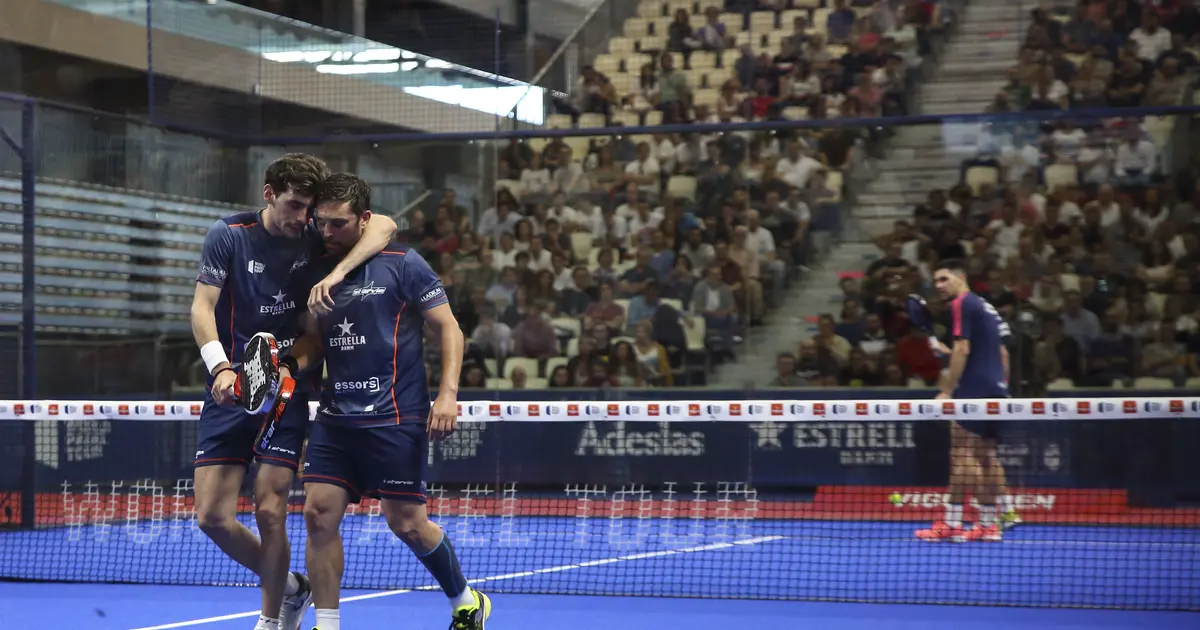
What Happens If the Ball Hits a Player in Padel?
4 min read
If the ball hits any part of your body during a rally, your team loses the point. This rule applies to all body contact, whether the ball was heading in or out, and regardless of whether you were trying to dodge it. The only thing that should touch the ball is your racket.
The Body Contact Rule (FIP Rule 13)
Under the FIP Rules of Padel, a team loses the point if the ball touches any part of a player’s body — head, torso, legs, arms, or feet. This includes:
- The ball hitting you before it bounces (a volley situation)
- The ball hitting you after bouncing on your side
- The ball deflecting off your racket and then hitting your body
- The ball hitting your clothing or accessories (cap, sunglasses, wristband)
The rule is strict: any physical contact between the ball and a player’s body results in the point being awarded to the opposing team.
Common Scenarios
Ball Hit Directly at You
In fast exchanges at the net, players sometimes get hit by a hard-driven shot. Even if you had no time to react, the point goes to the team that hit the shot. This is one reason net positioning and reflexes are so important in padel — see net play strategy for tips on safe positioning.
Accidental Contact During a Swing
If you swing at the ball and it clips your body before or after making contact with the racket, you lose the point. This can happen when attempting awkward returns off the back glass, where body and racket are close together.
Ball Hits Your Partner
If the ball hits your partner — even if they were standing out of the way — your team loses the point. Both players must avoid all body contact with the ball at all times during a rally.
Ball Was Going Out
A common frustration: even if the ball was clearly heading out of bounds, if it hits your body first, you lose the point. The ball’s trajectory after potential contact is irrelevant — the moment it touches you, the point is decided.
The Racket Hand Exception
There is one narrow exception: the ball may touch the hand holding the racket (below the wrist) during a stroke, and play continues. This is because the hand gripping the racket is considered part of the racket for the purposes of shot-making. However, if the ball hits the wrist, forearm, or the player’s other hand, the point is lost.
2026 rule change: The 2026 FIP revision explicitly defines the racket hand as the area “below the wrist of the hand holding the racket.” Prior wording was ambiguous about where the hand ended and the wrist began, leading to inconsistent calls.
Deliberately Getting Hit
In rare cases, a player may intentionally let the ball hit them — for instance, to stop play when they believe a rule violation occurred. This does not change the outcome: the point is still lost. Players should appeal to the referee rather than interfering with the ball using their body.
Quick Reference
| Situation | Result |
|---|---|
| Ball hits your body during rally | Point lost |
| Ball hits your partner | Point lost |
| Ball hits hand holding the racket (below wrist) | Legal — play continues |
| Ball hits your other hand | Point lost |
| Ball hits clothing or accessories | Point lost |
| Ball was going out but hits you first | Point lost |
See also: ways to lose a point · ball in play
Related Padel Rules
Stay in the loop
Get padel rule updates and tournament news — no spam.
More in Basic Rules
What Happens When the Ball Goes Out of the Court in Padel?
When the ball leaves the padel court through an open door or over the fence, the point may continue if a player can retrieve it.
Can the Ball Bounce Twice in Padel?
No — if the ball bounces twice on your side of the court, you lose the point. Learn the one-bounce rule, wall rebounds, and the exceptions every padel.
Padel Fault Rules and Lets
A fault is an invalid serve — two faults lose the point. A let means the serve is replayed with no penalty. Covers every fault type and the let rule with real-match scenarios.

What Happens If You Hit the Ball Twice in Padel?
Hitting the ball twice in padel results in losing the point — unless the double contact is unintentional and happens in a single continuous swing.