 PADEL RULES

Padel Scoring System Explained — Points, Sets & Tie-Breaks (2026)
4 min read
Quick Answer
Padel uses tennis-style scoring: 15, 30, 40, game — then sets (first to 6 games, tie-break at 6-6). At deuce (40-40) teams choose before the match: classic advantage, the 2026 Star Point system, or a single golden point where the receiver picks which side to return from.
Padel uses the same points system as tennis — 15, 30, 40, and game. A set is won when a team reaches 6 games with at least a two-game lead. Here is how to keep score in padel, step by step.
Game Points
- 0 points = “Love”
- 1 point = 15
- 2 points = 30
- 3 points = 40
- 4 point = “Game”
Deuce
“Deuce” happens when a game is tied at 40-40. There are three official options; the one to use must be agreed before the match:
-
Option 1 - “Advantage mode”
- Next point = “Advantage”
- If the same team wins the following point it is “Game”; otherwise it is “Deuce” again.
- Must win by 2 consecutive points.
-
Option 2 - “Star Point mode” (introduced January 2026)
- At first deuce: “Deuce 1” is called. Winner of next point gets “Advantage 1”. If they win the next = Game; if they lose = “Deuce 2”.
- At second deuce: “Deuce 2” called. Winner gets “Advantage 2”. Win next = Game; lose = “Deuce 3”.
- At third deuce: A single deciding “Star Point” is played. The receiving team chooses whether to receive on the right or left side, but cannot change positions to do so.
- In mixed doubles, the receiver of the Star Point must be the same gender as the server.
2026 rule change: The 2021 rulebook offered only two deuce options — Advantage mode and Golden Point. The Star Point was added in January 2026 as a middle ground. The Golden Point was criticised for leaving too much to chance on a single point; the Star Point gives each team two attempts to close the game before forcing a single decider. See The Star Point Rule Explained for a full breakdown.
-
Option 3 - “Golden Point mode”
- At deuce, a single deciding “Golden Point” is played immediately.
- The receiving team chooses whether the service is on the left or right side of the court but cannot change positions to receive.
- In mixed matches, the receiver must be the same gender as the server.
Set Scoring
- 6 games needed to win a Set
- Must win by 2 clear games
- Tie-break at 6-6
Tie-Break
Played when a set reaches 6-6. Points are counted 0, 1, 2, … (not 15/30/40). First team to reach 7 points with a 2-point margin wins the set. Service alternates every two points; the next set is served by the team that did not open the tie-break.
See tie-break rules for full details on service order and end changes during a tie-break.
Alternative Scoring Methods
- Four games or Mini Set
- Four games wins the set with a margin of 2 games, or tie-break if tied at 4 games.
- Tie-Break defines the match (up to 7 points)
- When the Set score is tied, a Tie-Break game is played to decide the match. The Tie-Break replaces the last set. The first team to reach 7 points with a 2 point margin wins the Tie-Break, hence the match.
- Super Tie-Break to define the match (up to 10 points)
- When the Set score is tied, a Tie-Break game is played to decide the match. The Tie-Break replaces the last set. The first team to reach 10 points with a 2 point margin wins the Tie-Break, hence the match.
See alternative scoring methods for official FIP-permitted format variations.
For a full summary of everything that changed in the January 2026 FIP revision, see Padel Rules 2026 — What Changed.
New to padel? See What is Padel? for a beginner’s overview. For a side-by-side scoring comparison with tennis, see Padel vs Tennis — Key Rule Differences.
Stay in the loop
Get padel rule updates and tournament news — no spam.
More in Basic Rules

What Happens If the Ball Hits a Player in Padel?
If the ball hits a player's body in padel, that player's team loses the point — with limited exceptions. Full FIP rule breakdown with scenarios.

What Happens When the Ball Goes Out of the Court in Padel?
When the ball leaves the padel court through an open door or over the fence, the point may continue if a player can retrieve it.
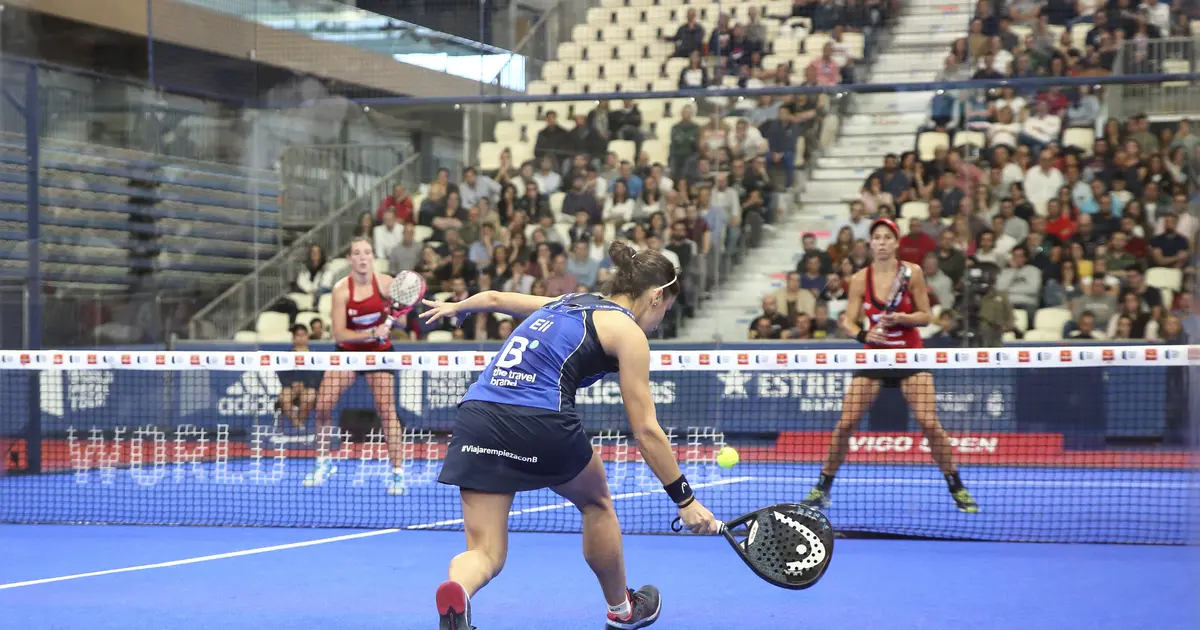
Can the Ball Bounce Twice in Padel?
No — if the ball bounces twice on your side of the court, you lose the point. Learn the one-bounce rule, wall rebounds, and the exceptions every padel.

Padel Fault Rules and Lets
A fault is an invalid serve — two faults lose the point. A let means the serve is replayed with no penalty. Covers every fault type and the let rule.