PADEL RULES
Padel Elbow — What It Is, Prevention, and Recovery
7 min read
- What Is Padel Elbow?
- Why Padel Players Are at Risk
- 1. Solid racket face
- 2. Overhead shots
- 3. Wall rebounds
- 4. Grip pressure
- 5. Playing frequency
- Symptoms
- Prevention
- Correct grip size
- Reduce grip pressure
- Choose the right racket
- Warm up properly
- Strengthen the forearm
- Manage playing volume
- Treatment and Recovery
- Phase 1: Acute (first 1–2 weeks)
- Phase 2: Rehabilitation (weeks 2–8)
- Phase 3: Return to play
- When to seek professional help
- Key Takeaways
“Padel elbow” is one of the most common injuries in the sport, particularly among intermediate and advanced players who play frequently. It is the same condition that tennis players experience — lateral epicondylitis — but the solid face of a padel racket, combined with overhead shots and wall rebounds, creates a specific set of causes and risk factors.
This guide explains what padel elbow is, why padel players get it, how to prevent it, and what to do if you develop symptoms.
Note: This article provides general information about padel elbow for educational purposes. It is not medical advice. If you are experiencing elbow pain, consult a physiotherapist or sports medicine professional for a proper diagnosis and personalised treatment plan.
What Is Padel Elbow?
Padel elbow is lateral epicondylitis — inflammation and micro-tearing of the tendons that attach your forearm extensor muscles to the bony bump on the outside of your elbow (the lateral epicondyle).
These tendons are responsible for:
- Extending your wrist (bending it backward)
- Gripping objects
- Stabilising your wrist during impacts
In padel, every shot transmits force through these tendons. Over time, repetitive stress causes small tears that the body cannot repair quickly enough, leading to pain, tenderness, and reduced grip strength.
Why Padel Players Are at Risk
Several factors make padel particularly likely to cause elbow problems:
1. Solid racket face
Unlike a strung tennis racket, a padel racket has a solid face with a foam core. Strung rackets absorb and distribute impact energy through the string bed. A solid face transmits more vibration directly to the arm — especially on off-centre hits.
2. Overhead shots
The bandeja, vibora, and smash all require the wrist extensors to stabilise under load while the arm is raised. These shots are played far more frequently in padel than overhead shots in tennis, because lobs are a core defensive tactic.
3. Wall rebounds
Shots played off the glass — particularly fast-bouncing returns from the back wall — arrive at unpredictable angles and speeds. Late contact or off-centre hits increase the shock transmitted to the elbow.
4. Grip pressure
Many players grip the racket too tightly, especially during defensive situations or when fatigued. Excessive grip pressure increases strain on the forearm extensors with every shot.
5. Playing frequency
Padel is highly social and addictive. Many players go from zero to 3–5 sessions per week rapidly, without giving their tendons time to adapt to the new workload.
Symptoms
Padel elbow typically develops gradually rather than appearing after a single incident:
- Pain on the outside of the elbow, especially when gripping, twisting, or lifting objects
- Tenderness when pressing on the bony bump on the outer elbow
- Weak grip strength — difficulty opening jars, shaking hands, or holding the racket firmly
- Pain during or after playing, particularly on backhand shots, overhead shots, and service
- Morning stiffness in the forearm that eases with movement
In early stages, pain may only appear after playing and disappear by the next day. If ignored, it progresses to pain during play, then pain during daily activities.
Prevention
Preventing padel elbow is far easier than treating it. These strategies address the root causes:
Correct grip size
A grip that is too small forces you to squeeze harder, increasing tendon load. A grip that is too large limits wrist movement and creates strain.
How to check: Hold the racket in your playing hand. You should be able to fit the index finger of your other hand between your fingertips and the base of your thumb. If the gap is too small, add an overgrip. If it is too large, the racket handle may not suit your hand.
Reduce grip pressure
Consciously relax your grip between shots. Squeeze firmly only at the moment of impact, then release. Many players hold maximum grip pressure throughout entire rallies — this is a primary cause of tendon fatigue.
Choose the right racket
- Round-shaped rackets have a larger sweet spot, reducing off-centre impacts that cause vibration. See Padel Racket Shapes for a comparison
- Softer foam cores (EVA soft or similar) absorb more vibration than hard foam
- Lighter rackets (350–365 g) reduce the overall load on your arm
- Consider your racket choice carefully — see our Racket Buying Guide
Warm up properly
Cold tendons are more susceptible to micro-tearing. Always warm up your forearm and shoulder before playing:
- Wrist circles — 20 in each direction
- Forearm stretch — extend your arm, pull fingers back gently, hold 20 seconds per side
- Light rally or wall practice for 5 minutes before competitive play
For a full pre-match routine, see Padel Warm-Up Routine.
Strengthen the forearm
Eccentric wrist exercises (lowering a weight slowly with the wrist) are the single most effective preventive measure for lateral epicondylitis:
- Hold a light dumbbell (1–2 kg) with your arm resting on a table, wrist over the edge, palm facing down
- Slowly lower the weight by extending your wrist downward over 3–4 seconds
- Use your other hand to lift the weight back up (avoid lifting with the injured side)
- 3 sets of 15 repetitions, daily
Manage playing volume
Increase your weekly playing frequency gradually. If you are new to padel, build up from 1–2 sessions per week over several weeks. Take at least one rest day between sessions to allow tendon recovery.
Treatment and Recovery
If you develop padel elbow symptoms, act early. The sooner you address it, the faster recovery is.
Phase 1: Acute (first 1–2 weeks)
- Reduce or stop playing — continuing to play is the single biggest factor that turns mild cases into chronic ones
- Ice the outer elbow for 15 minutes, 2–3 times per day
- Eccentric wrist exercises (as described above) — start gently and without pain
- Counterforce brace — a strap worn just below the elbow can reduce load on the tendon during daily activities
Phase 2: Rehabilitation (weeks 2–8)
- Progressive loading — gradually increase the resistance of your wrist exercises
- Forearm and shoulder strengthening — weakness elsewhere forces the elbow to compensate
- Grip strength exercises — squeeze a soft ball or use a hand grip exerciser at low resistance
- Physiotherapy — a sports physiotherapist can provide targeted manual therapy, ultrasound, or shockwave therapy for stubborn cases
Phase 3: Return to play
- Start with light wall practice (gentle feeds, no overhead shots)
- Gradually reintroduce overhead shots over 2–3 sessions
- Play at reduced intensity before returning to competitive matches
- If pain returns during or after a session, pull back and give it more time
When to seek professional help
See a physiotherapist or sports doctor if:
- Pain has not improved after 2 weeks of rest
- Your grip strength is noticeably reduced
- Pain affects daily activities (lifting, typing, carrying)
- You have had the condition before and it has returned
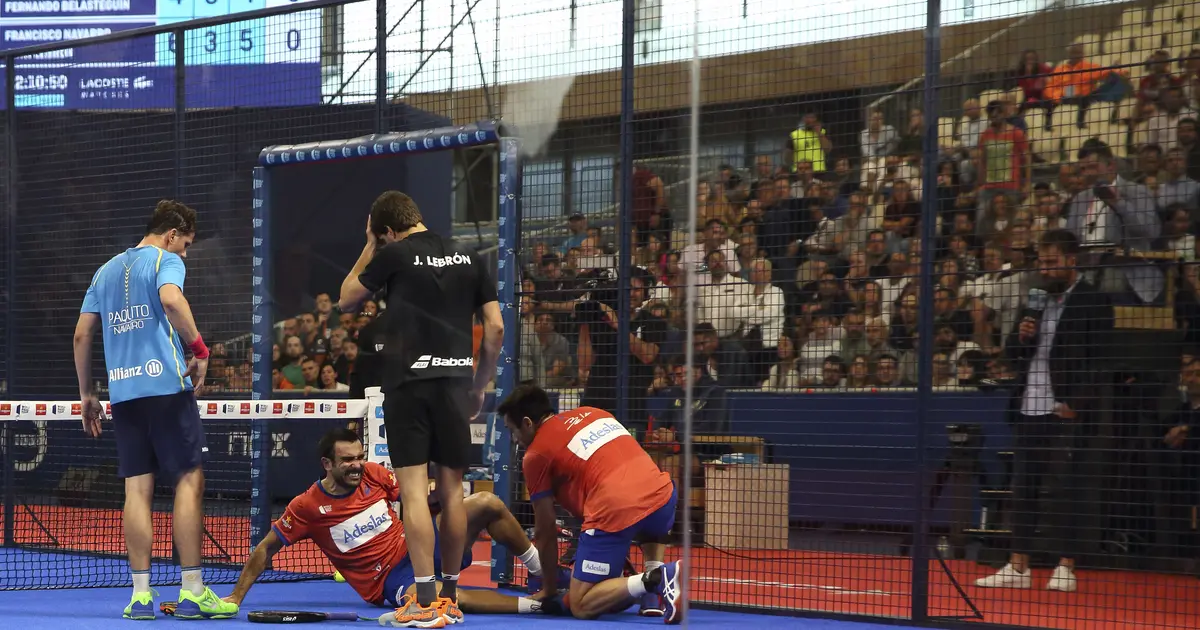
Note: Under FIP tournament regulations, players can request a medical timeout during a match for treatment of acute injuries. However, for chronic conditions like padel elbow, match-day treatment is limited — prevention and off-court management are essential.
Key Takeaways
- Padel elbow is lateral epicondylitis caused by repetitive stress on the forearm tendons, amplified by padel’s solid racket face and frequent overhead shots
- Prevention centres on correct grip size, relaxed grip pressure, a suitable racket, proper warm-up, and managing playing volume
- Eccentric wrist exercises are the most evidence-based preventive and rehabilitative measure
- Early rest and treatment prevent mild cases from becoming chronic
- If pain persists beyond 2 weeks or affects daily activities, see a professional
For a broader overview of common padel injuries and how to avoid them, see Padel Injuries Prevention.