 PADEL RULES
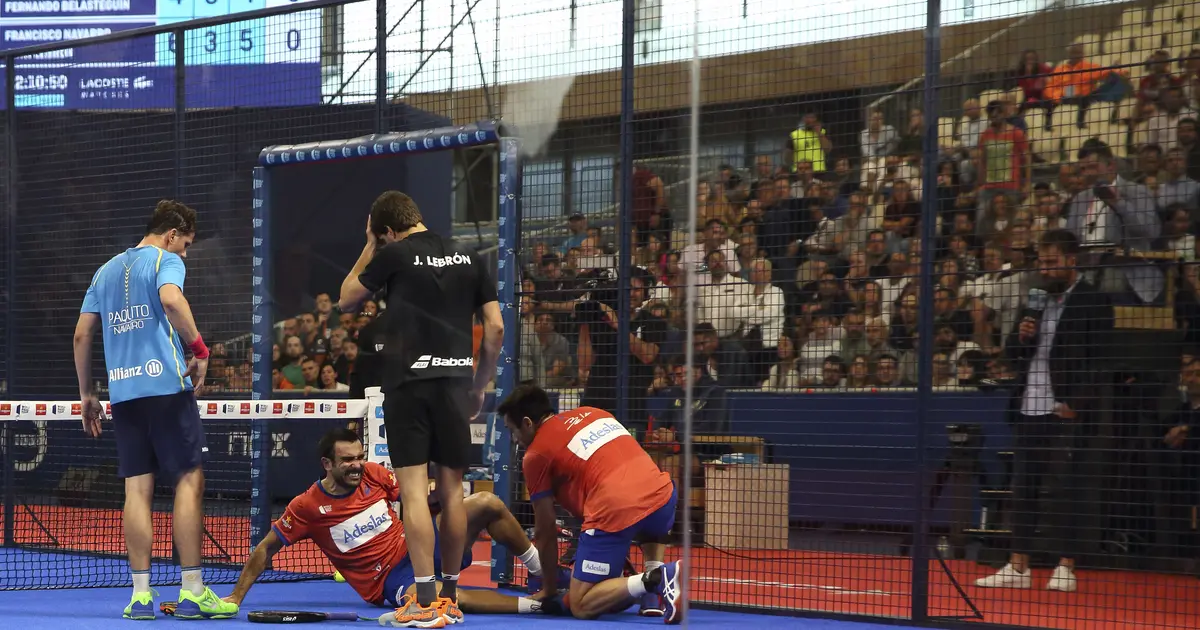
Medical Timeouts: How Padel Balances Injury Care and Fair Play
6 min read
Quick Answer
Each player gets one 3-minute medical timeout per match to treat a genuine injury. No warm-up is allowed after treatment ends, and requesting more time risks a time-delay code violation. Referees watch closely for abuse — faking an injury is a conduct offence.
Medical timeouts are injury management tools, not strategic breaks. The FIP’s 3-minute rule balances player safety with fair play — enough time to address a genuine injury, but not so much that medical timeouts become unofficial rest breaks.
Why the 3-Minute Limit?
The time limit reflects a practical standard:
Injury Assessment & Initial Treatment (2–3 minutes)
- Ice application for swelling (30 seconds to 1 minute)
- Tape or brace application (1–2 minutes)
- Evaluation of severity by medical staff (1 minute)
- Pain assessment and decision on whether to continue (30 seconds to 1 minute)
3 minutes is enough to:
- Assess whether injury is serious
- Apply basic first aid
- Decide whether to continue or retire
3 minutes is not enough to:
- Recover substantially from fatigue
- Dehydrate and rehydrate
- Take a full mental rest break
- Substantially reduce pain
This prevents abuse — players can’t use medical timeouts as unofficial rest periods.
Protecting Match Integrity
Without time limits:
- Players could take unlimited timeouts for minor issues
- Matches would drag on indefinitely
- Opponents would lose momentum
- Strategic “injury claims” would become common
The 3-minute standard is identical for all injuries, which prevents players from claiming serious injuries that don’t warrant long treatment.
Standard Medical Timeout Rules
Entitlement
Each player gets one 3-minute timeout per match:
- The timeout is non-transferable — if Partner A uses their timeout, Partner B still has their own
- The timeout is for injury treatment only (not rest, hydration, or mental reset)
- Each player’s timeout is independent in doubles
Repeating Treatment During Changeovers
If the same injury needs ongoing treatment:
- You can use part of your 3-minute allocation at the current changeover
- You can request additional treatment time at the next two changeovers (using the standard changeover time)
- All treatment must fit within standard changeover time (90 seconds)
Example: Ankle injury at game 2. You use 2 minutes at game 2 changeover, 1 minute at game 3 changeover, and this exhausts your 3-minute entitlement.
Requesting Medical Timeout
You can request timeout:
- After an injury occurs during play (at the next changeover)
- At any changeover if you’re dealing with ongoing injury pain
- Immediately if injury is severe (ref decides if play should stop)
The referee must approve all medical timeouts. If a player claims injury repeatedly without evidence, the ref can deny requests.
Heat & Cramp Rules
Heat-related conditions (heat cramps, heat exhaustion) receive special consideration:
Heat Cramps (Muscle Cramps from Dehydration)
- Qualify for medical timeout
- Standard 3-minute limit applies (ice, stretching, hydration)
- If player continues playing, they’re accepting the risk of worsening
Heat Exhaustion (Weakness, Dizziness, Nausea)
- More serious than cramps
- Can receive extended medical attention (5–15 minutes) at referee’s discretion
- May warrant match suspension or postponement if weather is dangerous
- Player can retire if unable to safely continue
Heat Stroke (Confusion, Loss of Consciousness)
- Emergency medical situation
- Ref can grant extended medical attention (15+ minutes)
- Usually results in retirement or match suspension
- Medical personnel may require immediate transfer to hospital
Importantly, heat conditions don’t bypass the 3-minute standard — they just may warrant referee discretion for longer breaks if dangerous.
Accidental Injury Timeout (Non-Match-Related Injuries)
Some injuries are not consequences of play:
- Fainting or dizziness (not from exertion)
- Allergic reaction
- Respiratory crisis or asthma attack
- Preexisting medical condition flaring up mid-match
For these conditions, the referee can grant up to 15 minutes of medical attention. This is separate from the 3-minute injury timeout and is at ref’s discretion only.
Example: Player has asthma attack mid-rally. Ref stops play and allows 10 minutes for respiratory treatment. This is not an official “timeout” — it’s a medical emergency pause.
What Happens During Medical Timeout
Medical Staff Treatment
During the timeout:
- Trainers or medical staff can assess the injury
- Ice, tape, bracing, or wrapping can be applied
- Medication (pain relief, anti-inflammatory) can be administered
- Coaches may discuss continuing vs. retiring (but no tactical coaching)
No Warm-Up After Timeout
When play resumes:
- No warm-up is granted (unlike external delays)
- Players must resume from the same court positions
- Score and service order are unchanged
- Play resumes immediately after the timeout ends
This prevents abuse — if you didn’t have time to warm up before, medical timeout doesn’t grant it.
Retiring from a Match
If injury is too severe to continue:
- Inform the referee before leaving the court
- The opposing team wins by walkover
- Any sets you completed count in the final result
Example: You’re down 4–6, 3–2 and suffer a bad ankle sprain. You retire. Final score is 6–4, Walkover (one set completed, one incomplete).
Abuse Detection & Penalties
Referees watch for medical timeout abuse:
Red Flags
- Claiming injury to the same area repeatedly
- Taking timeout when losing, but miraculously recovering after
- Requesting timeout without visible injury or pain
- Taking max time repeatedly, then playing fine afterward
Consequences for Abuse
- First false claim — Warning (code violation)
- Second false claim — Point penalty
- Pattern of abuse — Disqualification
If a player repeatedly claims injuries, referees can deny future timeout requests or impose penalties.
Strategic Use of Medical Timeout
While timeouts are for injury, their effects are real:
Legitimate Strategic Benefits
- Mental reset — 3 minutes to calm down and refocus (legitimate side effect of injury treatment)
- Momentum break — opponent loses their rhythm
- Tactical discussion — during timeout, coach can advise while trainer treats injury
- Physical recovery — even injured players benefit from brief rest
These benefits are legitimate consequences of an injury timeout — the rule doesn’t prohibit them, just the abuse of fake injuries.
When Timeout Becomes Abuse
Taking timeout repeatedly for minor complaints, or requesting multiple timeouts for the same condition when you can’t justify treatment time, crosses into unsporting behavior.
2026 Medical Guidelines
Ref expectations: Referees are trained to assess injury legitimacy. Common signs of genuine injury: visible swelling, limping, visible pain response, player favoring an area. Red flags for false claims: no visible injury, claiming pain but moving freely, requesting timeout only when losing.
Summary
| Aspect | Rule |
|---|---|
| Standard timeout | 3 minutes per player per match |
| Repeating treatment | Within standard changeover time (90 sec) |
| Accidental injury | Up to 15 minutes at ref’s discretion |
| Both partners | Each gets separate 3-minute timeout |
| Heat cramps | Standard 3-minute timeout (extended only if dangerous) |
| Warm-up after timeout | Not granted |
| Abuse penalty | Warning, point penalty, disqualification |
| Retirement | Opponent wins by walkover |
For related rules, see timings, changes of sides, and penalties and sanctions.
Stay in the loop
Get padel rule updates and tournament news — no spam.
More in Player Guidelines

Padel Court Etiquette: 8 Rules Every Player Must Know
8 essential padel court etiquette rules: continuous play, hindrance calls, ball retrieval, and the FIP conduct standards every club and competitive player must follow.

Common Padel Injuries and How to Prevent Them
A guide to the most common padel injuries — including padel elbow, shoulder problems, ankle sprains, and knee pain — with practical prevention strategies.
Proper Attire
FIP regulations require non-marking footwear and appropriate sports clothing. Professional events have additional branding and sponsor requirements.
Padel Wrist Straps: Mandatory Safety Equipment & Why Length Matters
Wrist straps are mandatory safety equipment in padel. Learn why they're non-negotiable, what makes a strap tournament-legal (max 35 cm, non-elastic), what happens if it breaks, and how to maintain them safely.