 PADEL RULES

Padel Attack vs. Defence — When to Go for the Winner
7 min read
Padel rewards smart decision-making more than raw power. The enclosed court and the doubles format conspire against the player who swings for winners at every opportunity. Understanding when to attack, when to defend, and recognising the exact moment to switch between the two is the most important tactical skill in the sport.
For specific defensive techniques, see our defensive tactics guide. For net positioning and volley play, see net play strategy.
The Core Principle: Position Dictates Intention
Every shot decision in padel should start with one question: where am I on the court?
- At the net (inside the service box): You are in an attacking position. Look to finish the point or maintain pressure.
- At the baseline (behind the service line): You are in a defensive position. Your job is to neutralise and look for opportunities to advance.
- In between (no-man’s-land): You are in the worst position on court. Get out — forward or backward — as quickly as possible.
The team at the net wins the vast majority of points. This means the strategic objective of every rally is to win the net and keep it. Everything else — lobs, drives, chiquitas, slices — is a means to that end.
Reading the Situation: The Three-Factor Check
Before every shot, experienced players assess three factors. With practice, this becomes automatic.
1. Ball Height Relative to the Net
This is the single most reliable indicator of whether to attack or defend.
- Ball above net height: You can hit downward. Attack is an option.
- Ball at net height: Neutral. Play a controlled, constructive ball.
- Ball below net height: You must hit upward. Defend — any aggressive shot from here carries high risk.
2. Your Position on Court
Even a high ball is not attackable if you are deep behind the baseline. The closer you are to the net when you receive a high ball, the more aggressively you should play it. A high ball at the service line is a smash opportunity; the same ball at the back wall is a lob situation.
3. Opponent Position
Scan across the net before you swing:
- Both opponents covering well at the net? Play low and deep — force a mistake rather than trying to thread a winner.
- One opponent out of position? Target the gap they have left.
- Both opponents at the baseline? You have time. Place the ball carefully and hold your net position.
When all three factors align — high ball, good court position, opponent out of place — go for the winner. When even one factor is against you, play the percentages.
Transition Moments: When Rallies Change Hands
The shifts from defence to attack and back again are the most important moments in any rally. Recognising them a split second earlier than your opponents is what separates competitive players from recreational ones.
From Defence to Attack
The transition typically happens when:
- Your lob pushes both opponents off the net. The moment they retreat, you and your partner advance together.
- An opponent hits a weak volley that floats above net height. Step forward and take the ball early.
- The opponent’s smash lands short or without pace. Hold your ground and drive the ball low through the middle.
The key discipline is advancing together. One player charging the net while the other stays back creates a split formation that is easy to exploit.
From Attack to Defence
Attack-to-defence transitions catch many players off guard:
- A perfect lob sails over both net players. Accept it, retreat together, and reset.
- A hard, low drive passes through the middle. If you cannot volley cleanly, let it go to the glass and regroup.
- You overreach on a volley and leave a gap. Recover your position rather than lunging for a second ball.
The worst response to losing the net is panic. Retreat calmly and work your way forward again.
When to Go for Winners — and When to Keep the Ball in Play
Go for the Winner When:
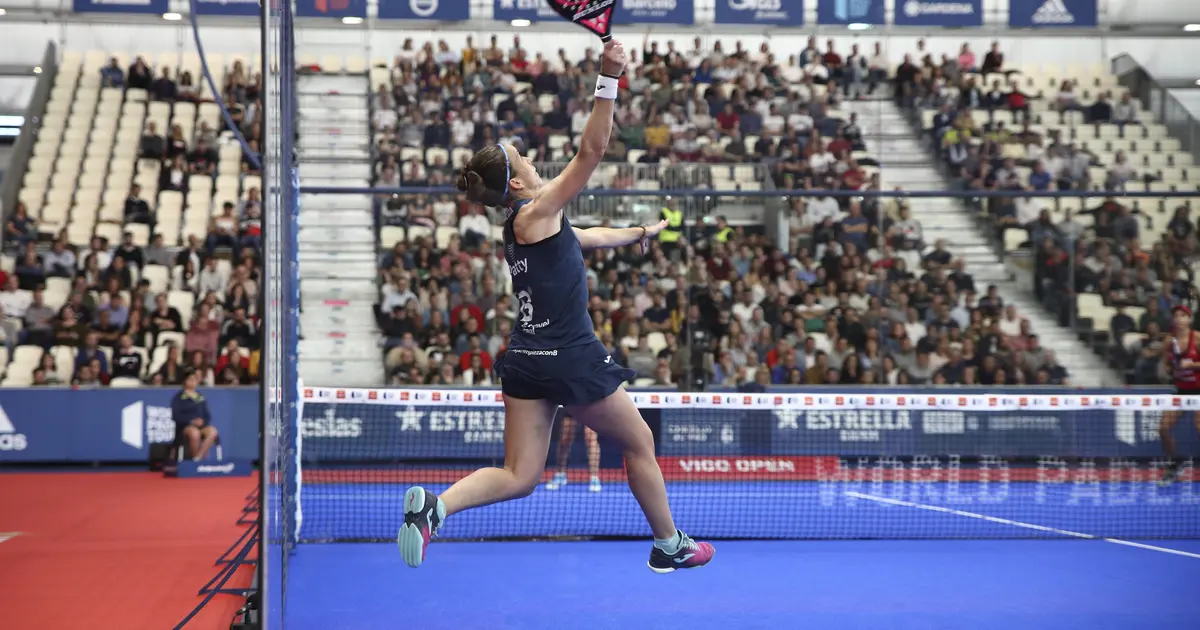
- You have a ball above shoulder height inside the service box
- There is clear open court (opponent wrong-footed or in transition)
- Both opponents are deep with no chance of intercepting
- You are balanced and set — not lunging or off-balance
Keep the Ball in Play When:
- The ball is below net height — any aggressive shot carries high risk
- Both opponents are well-positioned and covering the court
- You are under pressure or moving backward
- It is a critical point where errors are more costly than a missed chance to finish
A useful rule of thumb: if you have to think about whether to go for the winner, you probably should not. Genuine opportunities feel obvious. Everything else is a percentage play.
Risk Management: Why Patience Wins in Padel
At every level of padel, unforced errors outnumber winners by a wide margin. This means the team that makes fewer mistakes almost always wins. Forcing the opponent to play one more ball is a legitimate strategy, and going for a low-percentage winner when a safe ball keeps you in the rally is almost always the wrong call.
Patience does not mean passivity. It means building pressure with placement, moving as a pair, and only pulling the trigger when the opening is genuine.
The Four-Ball Rule
A practical guideline for club players: aim to construct the point over at least four shots before attempting anything aggressive.
- Ball 1: Neutralise — get the ball deep and low
- Ball 2: Probe — hit to a weakness or create a positional advantage
- Ball 3: Pressure — force a difficult shot from the opponent
- Ball 4+: Finish — if the opening appears, take it
Winning the Net: The Strategic Objective
Every tactical decision should be evaluated through one lens: does this help my team get to the net or keep us there?
- A lob from the baseline is not just defence — it is a net-winning tool
- A chiquita at the feet of the net player is not just a safe shot — it creates the chance to advance
- A deep return of serve is not just consistency — it pins the server back while you move forward
Teams that understand this play with purpose. Every ball has a reason, and it almost always connects to court position.
How to Advance as a Pair
Move forward together in small steps, not in one dramatic charge. After a good lob, both players take 2-3 steps forward. After a low ball to the opponent’s feet, shuffle up another step. After a weak reply, close the remaining distance. This incremental approach keeps both players at the same depth and avoids no-man’s-land.
Useful Links
- Defensive Tactics — glass wall play, lob defence, and resetting points
- Net Play Strategy — volley positioning, poaching, and overhead coverage
- Padel Doubles Positioning — where to stand and why in doubles
- The Lob — technique guide for padel’s most versatile shot
- Return of Serve Tactics — aggressive and defensive return options
Related Strategy Guides
Stay in the loop
Get padel rule updates and tournament news — no spam.
More in Strategy & Tactics

Advanced Padel Tactics — How to Break Through the Intermediate Plateau
Master advanced padel tactics to break the intermediate plateau. Net positioning, glass play, lob management, shot selection, and communication explained.
10 Most Common Padel Mistakes — And How to Fix Them
Avoid the 10 most common padel mistakes that beginners and intermediate players make — from hitting too hard off the walls to poor net positioning — with practical fixes for each.
Defensive Padel Play — Glass Walls, Lob Defence & Resetting Points
Master defensive padel tactics including glass wall play, lob defence, and how to reset points when your opponents control the net.

Dominating the Net in Padel — Volley Positioning, Poaching & Overhead Coverage
Learn how to dominate the net in padel with proper volley positioning, when to poach, overhead coverage, and how to maintain net control throughout.