 PADEL RULES
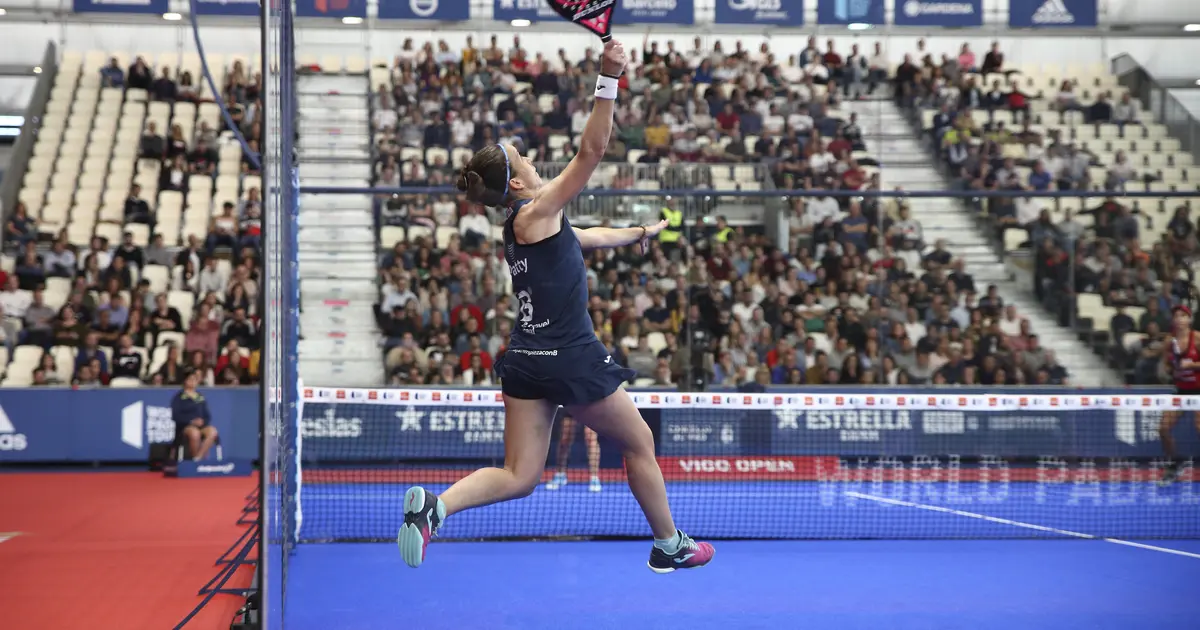
4-Week Padel Training Plan for Beginners — From First Session to Match Play
6 min read
Starting padel is exciting — but without a structured plan, most beginners spend weeks hitting randomly and reinforcing bad habits. This four-week training programme gives you a clear session-by-session path from your first time on court to playing competitive points with confidence.
The plan assumes three to four sessions per week, each lasting 60–90 minutes. If you are completely new to padel, read How to Play Padel first for an overview of the rules and court layout.
Note: This is a general training framework for healthy adults. If you have existing injuries or health conditions, consult a qualified professional before starting any exercise programme.
Before You Start — Equipment and Warm-Up
You need a padel racket, padel balls, and court shoes with good lateral support. Avoid running shoes — they lack the side-to-side stability padel demands.
Every session should begin with a 10–15 minute warm-up routine. This is not optional. Cold muscles lead to poor technique and avoidable injuries, especially in the shoulders and knees.
Week 1 — Grip, Stance, and First Shots
Goal: Learn the continental grip, the ready position, and hit consistent forehand and backhand groundstrokes from the baseline.
Session frequency: 3–4 sessions, 60 minutes each.
Session Structure
- Warm-up (10–15 min) — dynamic stretches and light rallying against the back wall
- Grip and stance drill (15 min) — practise the continental grip by feeding yourself balls off the back glass, focusing on racket face angle rather than power
- Forehand groundstroke (15 min) — partner feeds slow balls to your forehand side from mid-court; return every ball cross-court with control
- Backhand groundstroke (15 min) — repeat the same drill on the backhand side; focus on a compact swing and early preparation
- Cool-down and review (5 min)
Key Points for Week 1
- Hold the continental grip for every shot — resist the temptation to switch to a tennis forehand grip
- Stay low with bent knees in the ready position; this is the foundation of good court movement
- Hit with 60–70% power; your goal is consistency, not speed
- Let the ball bounce before hitting — do not try to volley yet
Week 2 — Court Movement and Glass Play
Goal: Add the split-step, lateral movement, and learn to play balls off the back and side glass.
Session frequency: 3–4 sessions, 60–75 minutes each.
Session Structure
- Warm-up (10–15 min)
- Split-step drill (10 min) — partner alternates feeding balls to your forehand and backhand; perform a split-step before every shot
- Back glass drill (15 min) — stand one metre from the back glass while a partner lobs balls deep; let the ball hit the glass, then play it after the rebound
- Side glass drill (10 min) — same concept but from the side wall; focus on positioning your body sideways to the glass
- Rally practice (15 min) — cross-court rallies with a partner, incorporating movement and the split-step between every shot
- Cool-down (5 min)
Key Points for Week 2
- The split-step happens as your opponent makes contact — not before, not after
- On glass play, patience is everything; let the ball come to you rather than chasing it into the wall
- Continue hitting at controlled pace; add depth rather than power
- Review common errors in Beginner Mistakes to check what you might be doing wrong
Week 3 — Volleys and the Lob
Goal: Introduce the forehand and backhand volley at the net, and the defensive lob from the baseline.
Session frequency: 3–4 sessions, 75–90 minutes each.
Session Structure
- Warm-up (10–15 min)
- Volley technique (15 min) — stand at the net while a partner feeds balls from mid-court; block the ball back with a short, controlled racket movement and open face
- Volley-volley drill (10 min) — both players at the net, rallying volleys back and forth; focus on soft hands and placement
- Lob technique (15 min) — from the baseline, practise hitting high, deep lobs to push an imaginary opponent off the net; aim for the ball to land in the last third of the court
- Combination drill (15 min) — one player at the net, one at the baseline; the baseline player lobs, the net player plays a volley or lets it go if it is too deep; rotate every 5 minutes
- Points play (15 min) — play points starting from a lob feed, focusing on using the shots learned so far
- Cool-down (5 min)
Key Points for Week 3
- The volley is a block, not a swing; less is more
- Read the Padel Volley technique guide for detailed mechanics
- On the lob, use a full follow-through and aim high over the net with topspin or a flat trajectory
- Start moving to the net after a good lob — this is how points are won in padel
Week 4 — Building Game Sense and Match Play
Goal: Combine all skills in match-like situations. Develop court awareness and partner communication.
Session frequency: 3–4 sessions, 75–90 minutes each.
Session Structure
- Warm-up (10–15 min)
- Serve and return (15 min) — practise the underarm serve to both boxes; the returner practises a deep return cross-court
- Transition drill (15 min) — start at the baseline, play a deep lob, then advance to the net with your partner; practise moving forward as a unit
- Match play (40–50 min) — play sets or tiebreaks with a focus on applying what you have learned: use the lob from the back, volley at the net, move as a pair, and reset with the split-step between every shot
- Post-match review (5 min) — discuss with your partner or coach what worked and what did not
Key Points for Week 4
- Focus on shot selection, not shot power; ask “what is the right shot here?” before every ball
- Communicate with your partner — call “mine” or “yours” on every ball in the middle
- After serving, move to the net immediately behind a good serve
- Do not worry about winning points; focus on executing the process correctly
What Comes Next
After four weeks, you should be comfortable rallying from the baseline, playing basic volleys at the net, and using the lob to move opponents. Your next step is the Intermediate Training Plan, which introduces tactical patterns, advanced shots like the bandeja, and structured match preparation.
To support your on-court development, consider adding off-court fitness training two to three times per week. Stronger legs, a more stable core, and better shoulder conditioning will make every technique easier to execute and help you avoid common overuse injuries.
Consistency beats intensity. Three focused sessions per week for four weeks will produce more progress than six unfocused sessions crammed into one week. Trust the process, stay patient, and enjoy the learning curve.
Stay in the loop
Get padel rule updates and tournament news — no spam.
More in Fitness & Training
How Many Calories Does Padel Burn? Estimates by Duration and Intensity
How many calories does padel burn? A 70 kg player burns 560–700 calories per hour. Estimates by weight, intensity level, and match duration.
10 Best Padel Drills for Beginners to Improve Fast
Practical padel drills for beginners — 10 exercises to improve your volleys, serves, lobs, wall play, and court movement from your first sessions.
Padel Elbow — What It Is, Prevention, and Recovery
Everything you need to know about padel elbow (lateral epicondylitis). Learn the causes, symptoms, prevention strategies, and recovery steps.
Padel Hydration Guide — How Much to Drink Before, During, and After a Match
How much water to drink for padel: specific amounts before, during, and after play, signs of dehydration, when to use electrolytes, and hot-weather.