 PADEL RULES
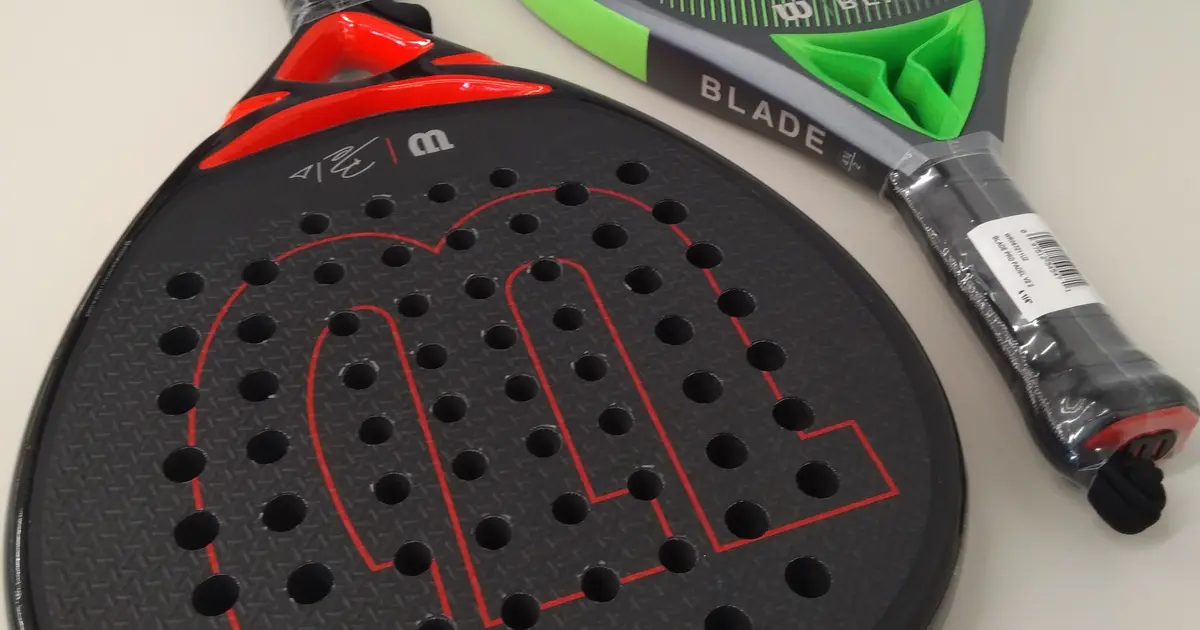
How to Hold a Padel Racket: Grip Techniques Explained
8 min read
Your grip is the only connection between you and the racket. Get it wrong and every shot suffers. Get it right and you unlock control, touch, and the ability to react quickly at the net. This guide covers how to hold a padel racket correctly, why the continental grip is the standard, and how to avoid the most common mistakes.
If you are just getting started, pair this guide with our full padel for beginners overview.
What Is the Continental Grip?
The continental grip is the default hand position for padel. It is the same grip tennis players use for serves and volleys, and in padel it covers nearly every shot you will play — volleys, bandejas, viboras, smashes, serves, and defensive lobs.
The Hammer Grip Analogy
The simplest way to find the continental grip is to imagine you are picking up a hammer to drive a nail into a wall. Hold the racket by the handle as if it were a hammer, with the edge of the frame pointing forward. Your palm sits on the wider, flatter panel of the grip, and your fingers wrap naturally around the handle.
Extend your arm in front of you — the face of the racket should be roughly perpendicular to the ground, neither tilted forward nor backward. That is the continental grip.
The V-Shape Test
A more precise check is the V-shape method:
- Place your hitting hand flat against the strings.
- Slide it down over the throat and onto the handle.
- Close your fingers around the grip.
- The V formed by your thumb and index finger should sit on the top bevel, roughly in line with the edge of the frame.
If the V drifts right (for a right-hander), you have moved toward an eastern forehand grip. Too far left means a backhand grip. Neither is ideal as a default in padel.
Why the Continental Grip Is the Default in Padel
Tennis players cycle through several grips during a point — semi-western for forehands, eastern for backhands, continental for volleys. They have time because the court is large and rallies develop from the baseline.
Padel is different. The court is smaller, most points are decided at the net, and exchanges happen fast. You rarely have time to adjust your hand between shots. The continental grip works because it is neutral — effective on both forehand and backhand sides without any change. You can hit a forehand volley, pivot to a backhand volley, then step back for a bandeja — all without moving your hand on the handle.
Step-by-Step Grip Positioning
Follow these steps to set your grip correctly every time.
1. Start With the Handle
Hold the racket in your non-dominant hand by the throat. Let the handle hang down freely.
2. Place Your Hand
With your dominant hand relaxed and open, place the base knuckle of your index finger on the second bevel of the handle (counting from the top). Your palm should sit across the top and slightly to the right (for right-handers).
3. Wrap Your Fingers
Close your fingers around the handle, leaving a small gap between your index and middle fingers. This “trigger finger” position gives extra feel and wrist control. Your thumb wraps around the other side for a secure but relaxed hold.
4. The Knuckle Test
Extend your arm and look at your hand from above. The knuckle of your index finger should sit on the upper-right bevel. If it has slipped behind the handle, you are holding a backhand grip. If it is on top, you have drifted toward an eastern forehand. Adjust until it sits on that second bevel.
5. Check the Wrist
Your wrist should be slightly behind the handle — not locked, not limp. Think of a firm handshake. This allows you to snap the wrist for power on smashes and absorb pace on defensive shots.
Grip Variations for Specific Shots
While the continental grip handles the vast majority of padel situations, advanced players sometimes make small adjustments for specific shots.
Slight Eastern Forehand for Drives
When you move to the back of the court for a forehand drive, rotating your hand a few degrees clockwise (for right-handers) moves you into a mild eastern forehand grip. This places more of the palm behind the handle and makes it easier to drive through the ball.
The adjustment is subtle — perhaps a quarter-turn of the hand. You are not switching to a full tennis forehand grip, just nudging the continental to get a better angle on low balls from the baseline.
Semi-Western for Heavy Topspin
Some advanced players use the semi-western grip for heavy topspin on forehand groundstrokes. The hand rotates further clockwise so the base knuckle sits under the handle, naturally closing the racket face and encouraging a low-to-high swing path.
Use this sparingly. It is effective for aggressive backcourt forehands but slow to transition from when you need to volley at the net. Focus on mastering continental first and explore this variation later. Our guide on how to improve at padel covers when to add advanced techniques.
How Grip Pressure Affects Your Game
How tightly you squeeze the handle directly affects your touch, power, and long-term comfort.
The Pressure Scale
Think of grip pressure on a scale of 1 (barely holding) to 10 (maximum squeeze):
- During rallies and ready position: 4-5. Firm enough for stability but relaxed enough for quick wrist movements.
- At the moment of contact: 7-8. Tighten briefly to maintain control and prevent the racket from twisting.
- Between points: 1-2. Let the racket rest in your fingers. Shake out your hand if needed.
This “squeeze and release” pattern becomes natural with practice. Watch professional players — they constantly adjust the racket in their hand between points, resetting their grip and releasing tension.
Why Grip Pressure Matters for Injury Prevention
A chronically tight grip transfers vibration into the forearm tendons, increasing the risk of overuse injuries. Players who grip too hard often develop pain on the outside of the elbow — sometimes called padel elbow. Read more in our padel elbow injury guide.
Keeping your grip relaxed between contacts reduces stress on the tendons.
Common Grip Mistakes
Using a Tennis Forehand Grip
Players from tennis often default to a semi-western or eastern forehand grip. This works for baseline forehands but fails at the net. You cannot hit a clean backhand volley or bandeja with a forehand grip — there is not enough time to rotate your hand. If you are transitioning from tennis, commit to continental from day one.
Gripping Too High on the Handle
Some players choke up, placing their hand close to the throat of the racket. This shortens your reach, reduces leverage, and makes overhead shots harder. Your hand should sit at the base of the handle, with the butt cap resting against the heel of your palm.
The Death Grip
Squeezing with maximum force throughout the point is the fastest way to tire yourself out and lose feel. The “death grip” creates tension from the forearm into the shoulder, reducing your ability to react. It also accelerates fatigue, meaning your technique deteriorates as the match goes on.
Neglecting Your Overgrip
A worn, slippery overgrip forces you to squeeze harder to compensate. Replace it regularly — most players change it every few sessions. Our guide on grips and overgrips covers how to choose and apply them.
Practice Drills to Build Grip Comfort
Drill 1: Wall Volleys With a Relaxed Hand
Stand two metres from a wall and hit alternating forehand and backhand volleys. Keep a relaxed grip (4-5 on the pressure scale) and tighten only at the moment of contact. Do this for five minutes before every session to make the squeeze-and-release pattern automatic.
Drill 2: The Grip Check Pause
During practice rallies, pause after every ten shots and check your V-shape. Has your grip drifted? Resetting consciously trains muscle memory until the correct position feels natural.
Drill 3: Shadow Swings With Transitions
Without a ball, stand at the net and simulate a sequence: forehand volley, backhand volley, step back for a bandeja, move forward for another volley. Keep your hand in the same continental position throughout. This teaches your body that one grip handles all these shots.
Drill 4: Serve and Volley Sequences
Practice serving and immediately moving to the net for a volley. Both shots use continental, but the transition is where many players accidentally shift their hand. Pay attention to your grip as you move forward.
Wrapping Up
The grip is the foundation everything else is built on. A correct continental hold, proper pressure management, and a fresh overgrip give you the versatility to handle every shot padel throws at you. Spend time on the basics now and you will avoid bad habits that become harder to fix later. For a broader development plan, check out our guide on how to improve at padel.
Stay in the loop
Get padel rule updates and tournament news — no spam.
More in Techniques
La Bajada in Padel — Taking the Ball Off the Back Wall
Learn how to hit la bajada in padel. This guide covers the technique for taking the ball off the back wall on the way down, when to use it, common.
The Bandeja in Padel — How to Hit It and When to Use It
Learn how to hit the bandeja in padel. This guide covers technique, body position, when to choose bandeja over smash, and how it keeps you at the net.
The Chiquita in Padel — Technique, Timing, and When to Use It
Learn how to hit the chiquita in padel. This guide covers technique, grip, body position, when to play the chiquita, common mistakes, and how the pros use.
La Contrapared in Padel: How to Hit Off Your Own Back Wall
Master la contrapared — the padel shot where you hit the ball against your own back wall to return it over the net. Technique, timing, and when to use it.