 PADEL RULES
Padel Service Box Dimensions: How Box Size Shapes Serve Strategy
6 min read
Service box dimensions might seem like arbitrary numbers, but they’re engineered to control serve difficulty and fairness. The box size determines how hard you must serve, how much area you must cover defensively, and what serves are strategically viable.
Service Box Dimensions: The Engineering
The Numbers
| Dimension | Padel | Why It Matters |
|---|---|---|
| Length | 6.95 m (from net) | Deep enough to require power, not so deep that ace-serving dominates |
| Width | 5 m (half-court) | Diagonal serve creates angle advantage; straight serve would be weaker |
| Total area | 34.75 m² | Larger than tennis (26.2 m²), favoring more varied serve strategies |
| Central line extension | 20 cm beyond service line | Prevents boundary disputes on deep serves |
Why 6.95 Metres, Exactly?
This dimension creates a serve-pressure equilibrium:
Too Short (Tennis at 6.4 m)
- Servers could easily hit aces
- Defensive players would be overwhelmed
- Serve would dominate the game
- First serves would be overpowered, not strategic
Too Long (7.5+ m)
- Serves would lose urgency (too much room to land)
- Servers would default to soft, placement-focused serves
- Underhand serves would be viable even at pro level
- Serve would become a weak link, not a weapon
The 6.95 m sweet spot means:
- Hard serves are necessary to win points
- But accuracy matters (can’t just blast everything in)
- Serve is a weapon without being dominant
- Returners have a fighting chance
Width: 5 Metres (Diagonal Requirement)
The service box width equals half the court width:
- Diagonal serve goes from your right service box to opponent’s right service box
- Creates angular asymmetry — opponent faces a wider angle on returns
- Diagonal requirement prevents straight serves (which would be weaker)
Comparison to tennis:
- Tennis also uses diagonal serves, but for same reason: to make serving harder and more tactical
Service Box Markings: Why Precision Matters
The Service Line
- Parallel to net
- 6.95 m from net (exact measurement)
- 5 cm wide — if your serve lands on this line, it’s IN
- White or black, contrasting with court surface
The 5 cm width is intentional — it’s wide enough for clear visibility but narrow enough to create a distinct boundary.
Central Service Line
- Perpendicular to service line
- Extends 20 cm beyond the service line toward the back wall
- Divides the court into left and right halves
Why the 20 cm extension?
Serves landing very deep in the service box (near the back wall) could ambiguously land on or near the center line. The 20 cm extension moves the boundary marker into the back wall area so:
- Deep serves have a clearly defined box boundary
- Disputes are prevented
- The serving team and receiving team can’t argue about whether a deep ball landed in the left or right service box
Line Colours
Lines are white or black, contrasting with the court surface:
- Yellow court → white or black lines
- White court → black lines
- Purpose: maximum visibility for serves
Where the Server Must Stand
Foot Position Rules
The server must stand:
- Behind the service line (away from net)
- In the half of the court matching the service box
For right (deuce) service box:
- Server stands to the right of the Central Service Line
For left (advantage) service box:
- Server stands to the left of the Central Service Line
Foot Fault Violations
Your feet must not touch or cross the service line until the ball is struck:
- Contact with service line = foot fault
- Crossing service line before strike = foot fault
- Penalty: Loss of point (not just a fault)
Why? The serve is the one moment in padel where you have a positional advantage (you’re farther from the net, opponent is standing back). The foot rule prevents you from abusing this by moving forward during service.
The Diagonal Serve Requirement
Why Diagonal, Not Straight?
The rules require serves to go diagonally (from your right box to opponent’s right box, etc.):
Straight Serve (Not Allowed)
If straight serves were permitted:
- You could serve from your right side straight to opponent’s right side
- You’d serve to the opponent’s likely stronger side
- You’d lose the natural court angle advantage
- Returners would camp on the opposite side
Diagonal Serve (Required)
- You serve from your right to opponent’s right (but across the court)
- Creates angular asymmetry — harder return angles
- Forces returners to cover the wider angle
- Prevents returners from predicting serve direction
Sequence
The sequence always starts from the right (deuce) side:
- Serve to opponent’s deuce side (diagonal)
- Serve to opponent’s ad side (diagonal)
- Repeat
This alternation ensures both serve types appear equally often.
Ball Requirements During Serve
The serve must follow a strict sequence:
- Ball bounces in server’s half — bounce once, then strike
- Struck below waist height (hip level) — underhand serve
- Clears net — passes over without touching
- Lands in diagonal opponent service box — if it lands anywhere else, it’s a fault
Net Contact = Let (Not Fault)
If the ball touches the net and lands correctly in the service box, it’s a let:
- Serve is replayed at no penalty
- Unlike tennis, padel allows the let serve
This is more forgiving than tennis and makes serving slightly easier.
Strategic Implications of Box Size
Serve Characteristics
The 6.95 m × 5 m dimensions create conditions for:
- Power serves — distance is far enough to require pace
- Placement serves — area is small enough that accuracy matters
- Variety — box width allows lateral serve placement
- Returnable serves — box isn’t so far that serves are unreturnable
Comparison to Tennis
| Sport | Box Dimensions | Serve Style |
|---|---|---|
| Tennis | 6.4 m × 4.1 m | Mostly hard serves; aces common |
| Padel | 6.95 m × 5 m | Mix of power and placement; aces rare |
| Squash | 6.4 m × 3.7 m | Soft serves; rallies built from serve |
Padel’s larger box allows more serve variety than tennis, but the underhand-only rule keeps serves returnable.
Summary
| Aspect | Key Point |
|---|---|
| Length (6.95 m) | Requires power; not so far that aces dominate |
| Width (5 m) | Full half-court; diagonal serve creates advantage |
| Diagonal requirement | Forces tactical serve placement; prevents camping |
| Foot rule | Server must stay behind line until ball struck |
| Central line extension | Clarifies boundaries on deep serves |
| Net contact | Let (replay); unlike tennis, not an ace |
For related rules, see serve rules, faults and lets, and court dimensions.
Stay in the loop
Get padel rule updates and tournament news — no spam.
More in Court Dimensions
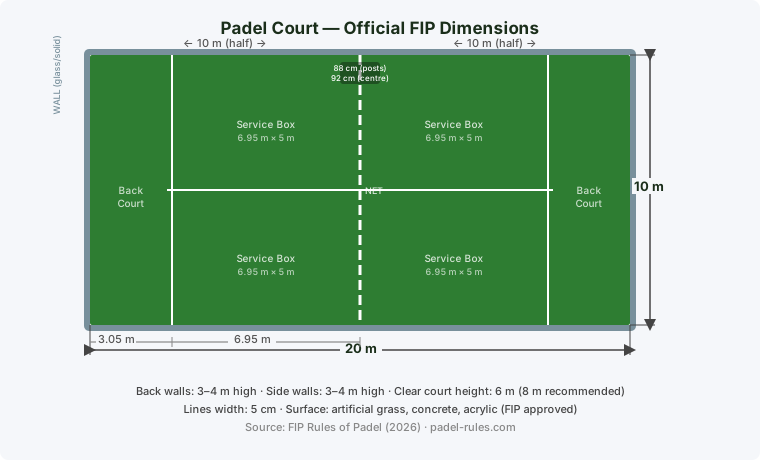
Padel Court Dimensions 2026 — Official Measurements & Diagram
Official padel court dimensions: 20m × 10m (200 m²). See the labelled diagram with wall heights, net specs, and service box measurements — FIP 2026 standard.
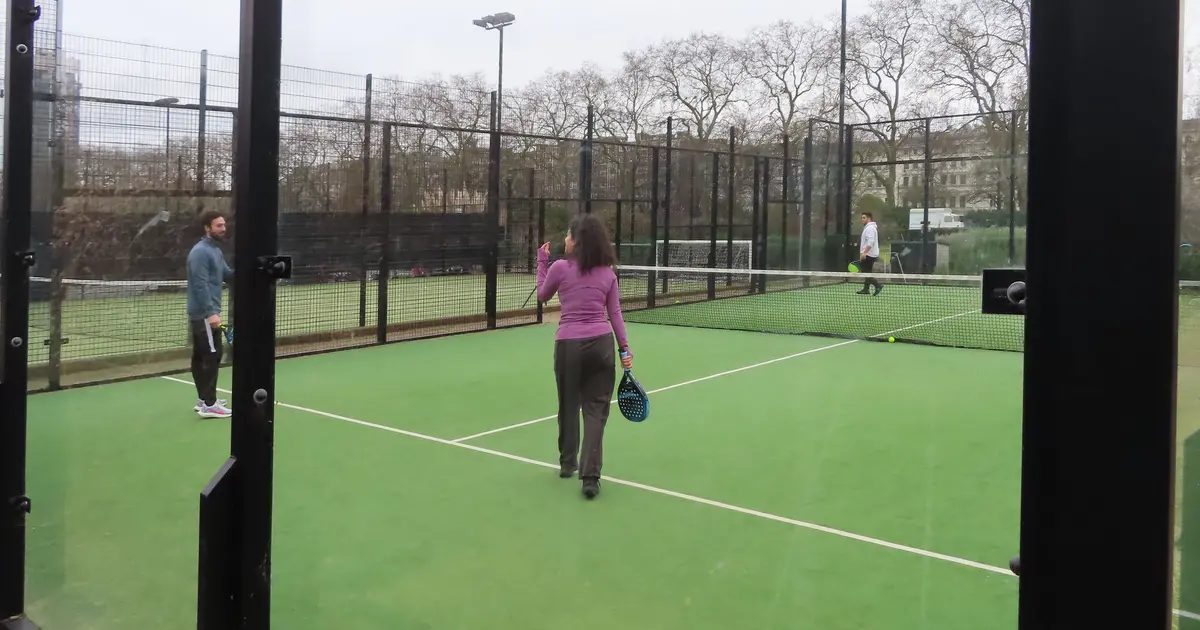
Glass Wall Height & Design: Why 4 Metres Defines Padel Strategy
Padel court back walls are 4 metres high to enable lob play and wall rebounds. Learn how wall height affects strategy, glass vs opaque trade-offs, safety standards, and spectator experience.
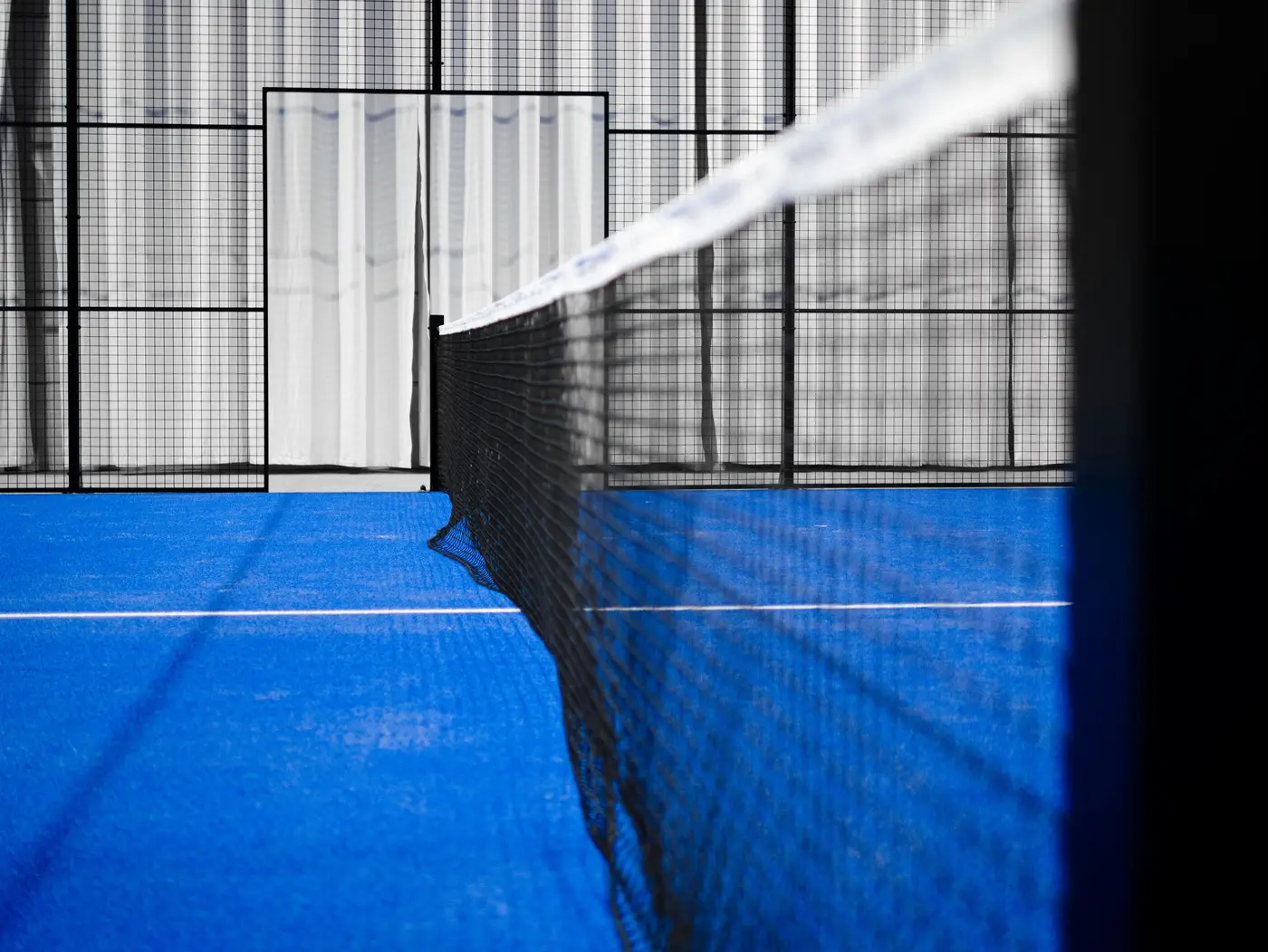
Padel Court Net Specifications: How Net Height Affects Your Game
FIP net height (88–92 cm) is lower than tennis to encourage aggressive net play. Learn how net height affects strategy, why the slope matters, and what makes a compliant net.
How to Build a Padel Court — Complete Construction Guide for Clubs and Developers
Complete padel court construction guide: site requirements, panoramic vs standard court types, materials, build timeline (4-8 weeks), planning permission.