 PADEL RULES
Padel Court Net Specifications: How Net Height Affects Your Game
7 min read
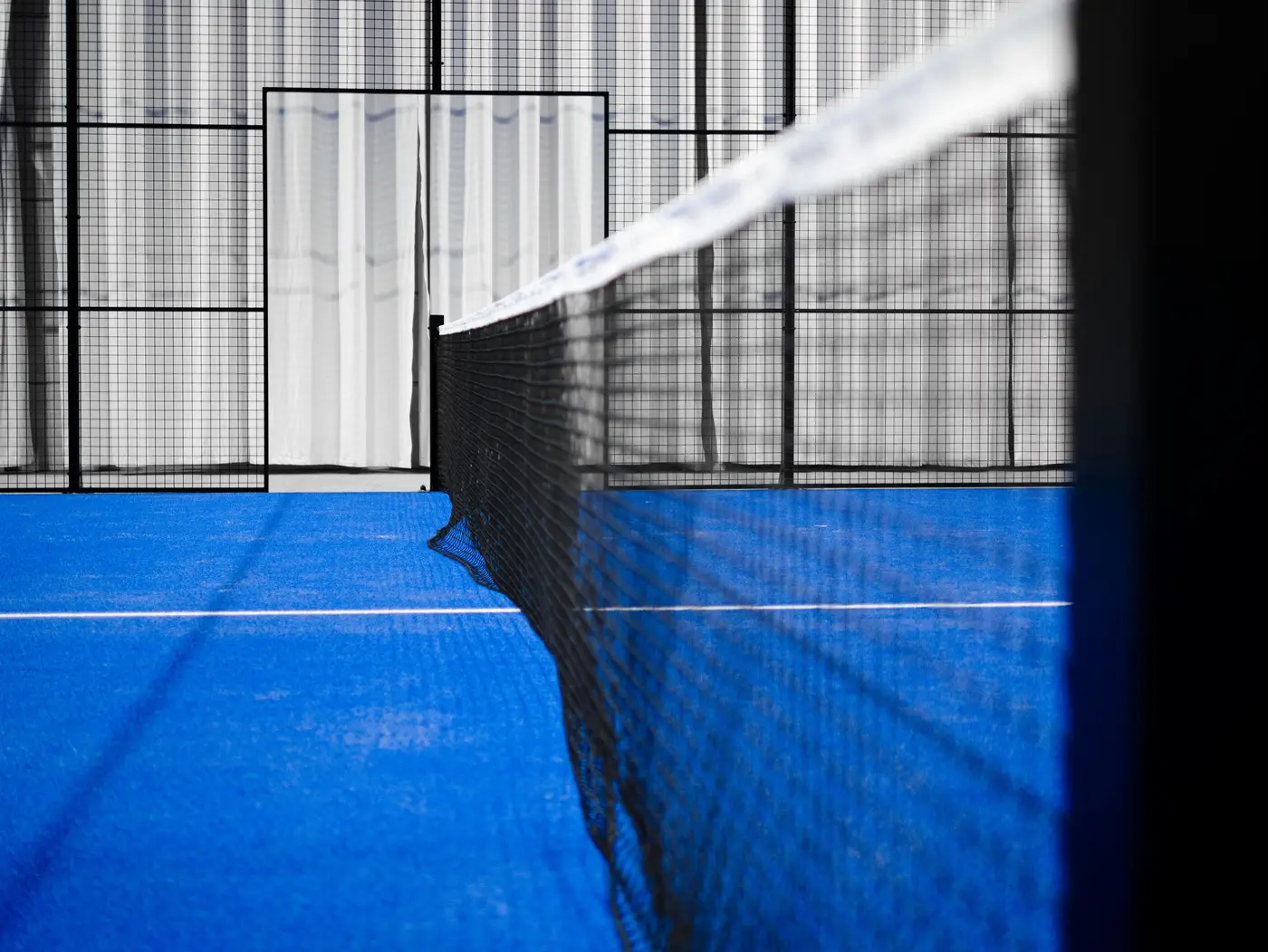
The padel net is deceptively important. At 88 cm in the centre and 92 cm at the sides, it’s 3.4 cm lower than a tennis net. This seemingly small difference fundamentally shapes how padel is played. The net’s height, slope, and tension directly influence strategy, rally structure, and skill development.
The Padel Net vs Tennis Net: A Tactical Difference
| Dimension | Padel | Tennis | Implication |
|---|---|---|---|
| Centre height | 88 cm | 91.4 cm | Padel encourages net attacking; easier to hit winners at the net |
| Side height | 92 cm | 91.4 cm (no slope) | Padel’s slope rewards centre-court play over sidelines |
| Slope | 4 cm rise from centre to sides | None | Padel penalizes playing too wide |
| Visual result | Slightly lower, angled profile | Horizontal line | Different strategic geometry |
Why the lower height?
In tennis, a higher net (91.4 cm) rewards:
- Baseline consistency and groundstroke stability
- Deep, powerful drives that clear the net by a comfortable margin
- Longer rallies building from the baseline
In padel, a lower net (88 cm) encourages:
- Aggressive net play — you can hit winners from closer to the net
- Quick pressure building through the court
- Shorter, sharper rallies
This isn’t accidental. Padel was designed as a faster, more attacking version of tennis. The lower net is central to that identity.
The Net Slope: Why 88 cm to 92 cm Matters
The 4 cm slope from centre (88 cm) to sides (92 cm) is a brilliant design decision that shapes tactical play:
What the Slope Prevents
Without a slope (if all heights were 88 cm), players would simply hit crosscourt angles to the wider corners — the net would be lower there too, making it easier to clear. Rallies would become:
- Predominantly crosscourt
- Heavy on sideline play
- Scattered across the width of the court
- Less structured around the centre
With a slope, hitting to the sidelines becomes slightly harder. The net gets progressively higher toward the edges, so:
- Players are encouraged to hit through the centre
- Rallies build in a more structured pattern
- Net play becomes more central and technical
- The geometry of the court is fully utilized
Strategic Impact
The slope means:
- A ball hit to the exact sideline must be hit higher (over the higher 92 cm net)
- A ball hit to the centre requires less clearance (88 cm)
- Net players benefit from being in the middle (lower net to clear, easier angles)
- Aggressive returns down the line are harder (higher net to clear at the sides)
This forces players to think tactically about court geometry, not just “hit the ball.” It’s one reason padel develops such precise, intelligent players.
Official Net Specifications
Height Requirements
- Centre height: 88 cm (34.65 inches) — measured at the midpoint of the net
- Side height: 92 cm (36.22 inches) — measured above the sideline marks
- Maximum tolerance: ±5 mm across the entire net
The ±5 mm tolerance is extremely tight. For comparison:
- Tennis nets allow ±1.27 cm tolerance
- Padel’s tighter standard reflects the importance of precise net height for fair play
Why Such Tight Tolerance?
A sagging net or incorrect height creates unfair advantages:
- Too low → Returning team has an easier time clearing (advantage receiver)
- Too high → Serving/attacking team has an easier time clearing (advantage server)
- Sagging in the middle → The centre becomes easier to hit through (advantage whoever exploits it)
Tournament officials test net height before matches using a measuring stick. If the net fails the check, it’s adjusted immediately.
Net Posts
- Maximum height: 1.05 m (41.34 inches) above the court surface
- Position: Outer edge of the post must align with the court’s sideline boundary
- Shape: Posts may be circular or square, but edges must be rounded (for safety)
Posts that extend beyond the court boundary or have sharp edges are rejected at tournaments.
Net Construction and Materials
Composition
- Material: Synthetic fibre (polypropylene, nylon, or polyester)
- Mesh size: Tight enough that the ball cannot pass through (typically 3–5 cm square or diamond pattern)
- Durability: Must withstand thousands of ball impacts and weather exposure (for outdoor courts)
Tension Cable
- Diameter: Maximum 1 cm
- Position: Runs beneath the white strip at the top of the net
- Purpose: Holds the net taut so it doesn’t sag during play
A properly tensioned net should have almost no vertical sag. When a ball hits the net, it should stop cleanly without catching or deforming.
Net Strip (Mandatory White Strip)
The white strip is a critical design element:
- Height: 5 to 6.3 cm (1.97–2.48 inches)
- Colour: Pure white (mandatory for visibility)
- Additional advertising: A coloured strip may be added beneath the white, but combined height cannot exceed 11 cm total
- Purpose: Visual contrast against backgrounds so players can clearly see the net
Why the White Strip Matters
Without the white strip, against certain backgrounds (a white wall, a window, or bright sunlight), the net mesh might be nearly invisible. Players need to clearly see where the net is:
- To judge whether a shot clears the net
- To track high-passing balls that are near the net height
- For safety (avoid running into an invisible net)
The white strip solved this with a simple but effective design.
Common Net Issues and Problems
Problem: Net Sagging or Loose
Cause: Worn posts, loose tension cable, or damage to anchor points.
Effect:
- Ball unpredictably bounces off a sagging net
- Center may be lower than specified, giving returning team an unfair advantage
- Matches become contested (“Is that a let or in?”)
Solution:
- Tighten the tension cable
- Replace worn posts or anchor points
- Test with a measuring stick before matches
Problem: Net Mesh Allows Ball to Pass Through
Cause: Damaged mesh or loose weave.
Effect:
- Ball occasionally falls through the net instead of bouncing off
- Severely disrupts play and is grounds for requesting a rematch
Solution:
- Repair or replace the net immediately
- This is typically a tournament grounds for stopping play and switching to a backup net
Problem: Net Height Inconsistent
Cause: Posts leaning, uneven foundation, or incorrect installation.
Effect:
- One side higher than the other
- Unfair play — easier to attack on the lower side
- Tournament officials will reject and require adjustment
Solution:
- Realign posts using a level
- Fix foundation issues
- Re-tension the cable
Summary
| Specification | Value | Purpose |
|---|---|---|
| Centre height | 88 cm | Encourages aggressive net play |
| Side height | 92 cm | Discourages sideline play, promotes centre-court tactics |
| Slope | 4 cm rise | Shapes strategic geometry and rally structure |
| Height tolerance | ±5 mm | Ensures fair play |
| White strip | 5–6.3 cm | Provides visual contrast for player safety |
| Tension cable | ≤1 cm | Keeps net taut and bounce consistent |
| Post edges | Rounded | Safety feature |
The net’s design is a masterclass in how a single equipment specification can shape an entire sport’s tactical and strategic character.
Learn More About Padel
- Rules & Gameplay — How to play
- Top Players — Professional padel
- Getting Started — Beginner”s guide
Stay in the loop
Get padel rule updates and tournament news — no spam.
More in Court Dimensions
Padel Court Dimensions 2026 — Official Measurements & Diagram
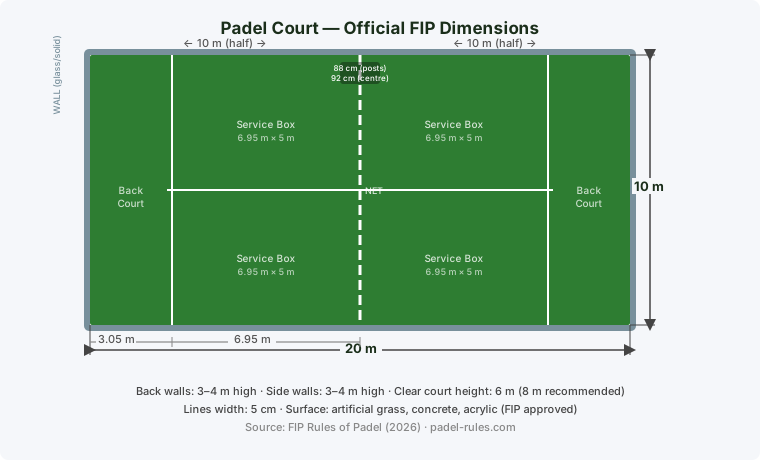
Official padel court dimensions: 20m × 10m (200 m²). See the labelled diagram with wall heights, net specs, and service box measurements — FIP 2026 standard.
Glass Wall Height & Design: Why 4 Metres Defines Padel Strategy
Padel court back walls are 4 metres high to enable lob play and wall rebounds. Learn how wall height affects strategy, glass vs opaque trade-offs, safety standards, and spectator experience.
How to Build a Padel Court — Complete Construction Guide for Clubs and Developers
Complete padel court construction guide: site requirements, panoramic vs standard court types, materials, build timeline (4-8 weeks), planning permission.
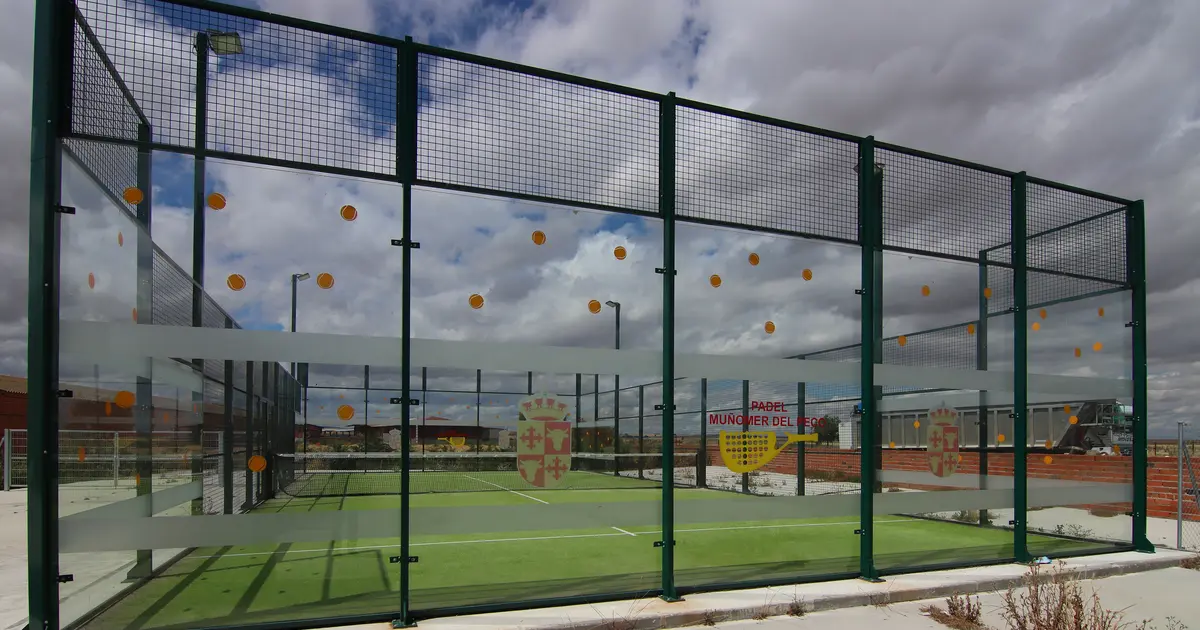
Playing Surface
The padel court surface must be uniformly flat with a maximum deviation of 3mm per 3 metres in any direction, and must ensure regular ball bounce.