 PADEL RULES
Padel Rules for Beginners — Scoring, Serving & Wall Play (2026)
6 min read
If you are new to padel, you do not need to memorise an entire rulebook before stepping on court. This guide breaks down the essential rules in plain language so you can play your first game with confidence. For the full official rules, see our complete Padel Rules 2026 article.
1. The Court
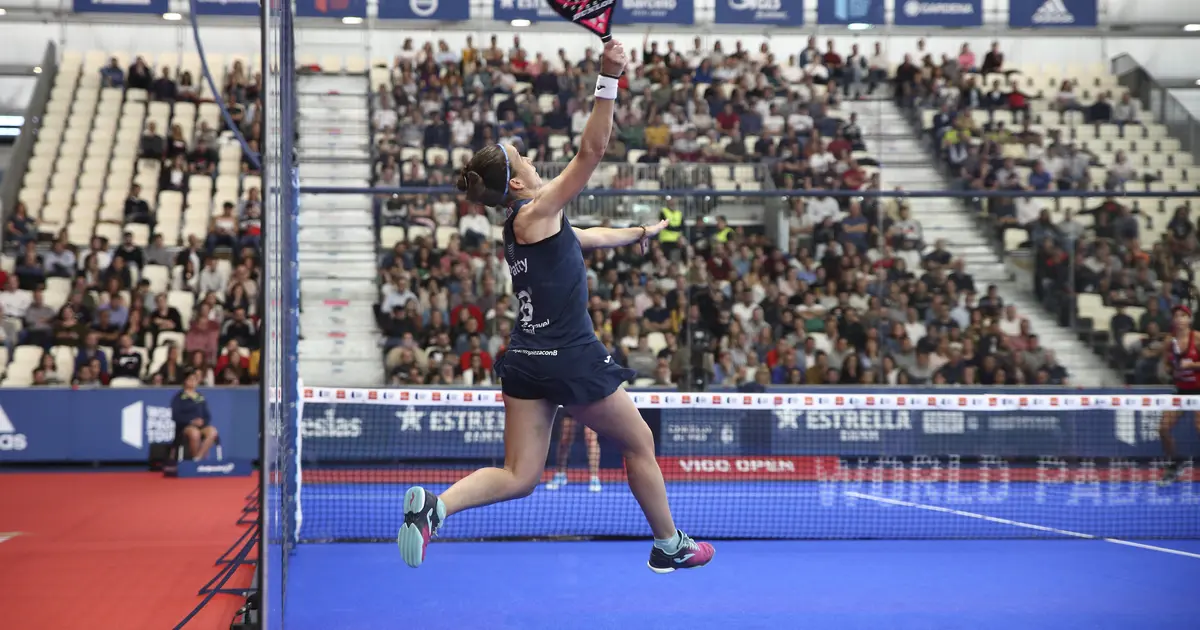
A padel court is smaller than a tennis court — 20 metres long and 10 metres wide. The most noticeable difference is that the court is completely enclosed. The back walls are made of glass panels about 4 metres high, with metal mesh fencing above them. The side walls are a mix of glass and mesh as well.
There is a net across the middle, slightly lower than a tennis net (88 cm at the centre). On each side of the net, you will see a service line drawn 3 metres back. The surface is usually artificial grass.
The walls are not just boundaries — they are part of the game. The ball can bounce off the glass and stay in play, which is what makes padel so unique and fun.
For exact measurements, see Court Dimensions.
2. Scoring
Good news: if you know how tennis scoring works, you already know padel scoring. Points go 15, 30, 40, game. If both sides reach 40, that is called deuce, and one side must win two consecutive points (or a deciding point, depending on the format agreed before the match).
A set is won by the first pair to reach 6 games, with at least a 2-game lead. If the set reaches 6-6, a tiebreak is played to decide it.
Matches are usually best of 3 sets.
One thing to note: padel is always played as doubles. There are four players on court — two on each side of the net.
3. The Serve
The serve in padel is different from tennis. Here are the key rules:
- Underhand only. You must hit the ball at or below waist height. No overhead smashes on the serve.
- Bounce first. You drop the ball and let it bounce once on the ground before hitting it. You do not throw it up in the air.
- Diagonal. The serve must go diagonally into the opponent’s service box, just like in tennis.
- Two attempts. If your first serve is a fault (hits the net, lands outside the box, or bounces and hits the wire mesh), you get a second serve.
- Foot position. You must stand behind the service line with at least one foot on the ground when you hit the ball.
The serve is deliberately designed to be easy. It is not a weapon in padel the way it is in tennis — the real game starts once the rally begins.
For complete serve regulations, see How to Play Padel.
4. During the Rally
Once the serve is in play, the rally follows these core rules:
- One bounce maximum. The ball must bounce on the floor once on your side before you hit it back. You can also volley the ball (hit it before it bounces), as long as you are on your own side of the net.
- Walls are in play. After the ball bounces on the floor, it can hit the back wall or side walls and you can still play it. This is the heart of padel — using the walls to retrieve shots that would be winners in tennis.
- No direct wall shots across the net. You cannot hit the ball so that it strikes a wall on your opponent’s side without bouncing on their floor first. The ball must always bounce on the floor before touching any wall on the receiving side.
- Let rule on serve. If the serve clips the net and still lands in the correct service box (without hitting the wire mesh), it is a let and the serve is retaken.
The wall play is what makes padel exciting. Balls that look impossible to reach can be played off the glass, giving you much longer rallies than in tennis.
5. When Is the Ball Out?
This confuses beginners the most, so here is the simple version:
- Out if it hits the mesh or fencing before bouncing. If a shot flies directly into the wire mesh or metal fence (not the glass) without bouncing on the floor first, the ball is out and the point goes to the other side.
- Out if it hits the opponent’s wall without bouncing. Any ball that strikes a wall on the opponent’s side of the court without first bouncing on the floor is out.
- In if it bounces on the floor first. As long as the ball hits the floor on the correct side before touching any wall, it is still in play — even if it then hits the glass, the side walls, or bounces high.
In short: floor first, then walls are fine. No floor bounce, and it hits mesh or fence — out.
6. Common Rule Confusions
Here are the questions beginners ask most often:
Can you hit the ball out of the cage? Yes! This is one of padel’s most spectacular plays. If the ball bounces on your side and then flies over the back wall (or out through a side opening), you can chase it outside the court and hit it back over the net. The ball must travel back over the net or around the side of the net structure.
Can you use the walls offensively? You can aim your shot so that it bounces on the opponent’s floor and then kicks into the wall at an awkward angle. You cannot, however, hit the ball directly into a wall on the opponent’s side — it must bounce on their floor first.
What if the serve bounces and hits the wire mesh? It is a fault. On the serve specifically, the ball may bounce in the service box and then hit the glass back wall, but if it reaches the wire mesh or fencing above the glass, the serve is a fault. You still get a second serve.
Can you reach over the net? No. You cannot make contact with the ball on your opponent’s side of the net. Your racket can cross the net only on the follow-through after you have already hit the ball on your side.
Where to Read the Full Rules
This guide covers what you need for your first games, but padel has more detailed rules covering foot faults, code of conduct, and specific match formats. For the complete rulebook and the latest 2026 changes, see:
- Padel Rules 2026 — full official rules and recent changes
- How to Play Padel — complete beginner’s guide with equipment and tactics
- Padel for Beginners — tips for getting started
- Court Dimensions — exact court layout and measurements
Stay in the loop
Get padel rule updates and tournament news — no spam.
More in Beginner Guides
Can You Play Padel Alone? Solo Practice Options and Drills
Can you play padel alone? Padel is a doubles sport, but you can practise solo with wall drills, ball machines, and specific exercises.

Padel Doubles Tactics — Strategy Guide for All Levels
Master padel doubles tactics with this strategy guide. Covers court positioning, attacking from the net, defending from the baseline, and key shot.

How Long Does a Padel Match Last? Average Duration and Format
How long does a padel match last? Most padel matches last 60–90 minutes. Learn about set format, tie-breaks, and what affects match duration.

How to Find and Book a Padel Court
Learn how to find and book a padel court near you using Playtomic, Matchi, Google Maps, and club websites. Includes tips for first-timers on pricing, equipment hire, and what to expect.