 PADEL RULES

Mixed Doubles Padel: How Equal Competition Rules Work
5 min read
Mixed doubles padel introduces one of the most interesting fairness engineering challenges in the sport: how do you maintain equal competition when teams include different genders with different average physical attributes? The FIP’s solution — the Golden Point same-gender serve-receive rule — is elegant and often misunderstood.
Why Mixed Doubles Exists
Mixed doubles serves multiple purposes:
Inclusive Competition
- Allows male and female players to compete together on equal terms
- Creates partnership and social dynamics (mixed teams often develop stronger team cohesion)
- Expands the player base — not every club has enough women or men to fill all brackets
Fairness Through Constraint
- Prevents exploitation — without specific rules, teams could stack genders strategically (strong female + weak male, for example)
- Forces balanced partnerships — teams must think about positioning and coverage, not just pairings
- Preserves individual achievement — doesn’t eliminate gender differences, just prevents teams from gaming them
The Golden Point Rule: Why Same-Gender Serve-Receive?
The deuce situation is when Golden Point (sudden-death) matters most. Here’s the structural problem it solves:
The Fairness Dilemma
In a standard deuce (40–40), the next point decides the game. If any player can serve to any player:
- A team with a very strong male player might serve to the female opponent (theoretically easier to return)
- A team with a very strong female player might serve to the male opponent
- Teams exploit perceived physical advantages
This isn’t cheating, but it shifts strategy from skill to gender-based favorability.
The Solution: Same-Gender Golden Point
When the Golden Point begins:
- Male servers must be received by male players
- Female servers must be received by female players
This eliminates positioning advantage:
- Teams cannot cherry-pick serve/receive matchups
- A strong male server faces the opposing male player (equivalent challenge)
- A strong female server faces the opposing female player (equivalent challenge)
Why No Position Switching?
The rule also forbids teams from changing positions before the Golden Point. Why?
Without this restriction, teams could reposition strategically:
- “Our female player is weaker at receiving, so let’s swap her to the other side”
- “We want our strong player on the serve side for the Golden Point”
Freezing positions prevents this advantage-seeking and forces teams to live with their positioning choices throughout the game.
Standard Rules That Apply to All Mixed Doubles
All core padel rules remain unchanged:
- Court dimensions, net height, lighting
- Scoring system (15, 30, 40, game, tiebreak)
- Service rules (underhand, below waist, diagonal service box)
- Wall play and fence play
- Changeover schedule (every odd game)
- Challenger/challenged player dynamics
For specific rules on scoring, serving, and scoring progressions, see scoring system and serve rules.
Service Rotation in Mixed Doubles
No gender-based serving order is mandated. Partners alternate serves:
- Player A serves (say, male)
- Player B serves (say, female)
- Opposing player C serves (say, male)
- Opposing player D serves (say, female)
Example rotation: Male-Female-Male-Female (alternating)
Why no gender rule? Because alternating already ensures equal service opportunities. Each gender serves equally often, so there’s no fairness concern.
Compare this to singles, where one player serves until they lose the game. In mixed doubles’ partnership model, service order naturally balances itself.
Strategic Differences from Men’s/Women’s Doubles
While rules are identical, mixed doubles creates distinct strategic challenges:
Positioning Puzzles
- Net coverage — who plays net, who plays baseline? This depends on individual skill, not gender
- Service selection — teams often develop gendered service strategies (female player serves first serve more conservatively), but rules don’t mandate this
- Rally construction — opponents often target the weaker player, so teams must use wall play to rotate strengths
Partnership Dynamics
- Communication — different verbal or visual signals because players come from different competitive backgrounds
- Confidence gaps — if one partner is much stronger, the weaker player must know when to take responsibility vs. when to trust their partner
- Pressure moments — the Golden Point same-gender rule means pressure can’t be “passed” to the other gender
Advantage Mode in Mixed Doubles
Some tournaments and clubs use Advantage mode (advantage server, then next point wins) instead of Golden Point at deuce. In Advantage mode:
- No gender-specific serve/receive restrictions
- Game can extend indefinitely (tied at advantage repeatedly)
- Preferred in some regions for longer, more engaging deuce battles
The rule choice (Golden Point vs. Advantage) should be specified before play.
Summary
| Aspect | Why It Matters |
|---|---|
| One male, one female per team | Inclusive; forces partnership and balanced positioning |
| Same-gender Golden Point serve/receive | Eliminates unfair gender-based advantage-seeking |
| No position switching during Golden Point | Prevents strategic repositioning before sudden-death |
| Equal service rotation (no gender order) | Already fair — each gender serves equally |
| All standard rules apply | Mixed doubles is padel, not a variant sport |
For related rules, see service order, scoring system, and padel rules 2026.
Related Padel Rules
Stay in the loop
Get padel rule updates and tournament news — no spam.
More in Basic Rules

What Happens If the Ball Hits a Player in Padel?
If the ball hits a player's body in padel, that player's team loses the point — with limited exceptions. Full FIP rule breakdown with scenarios.
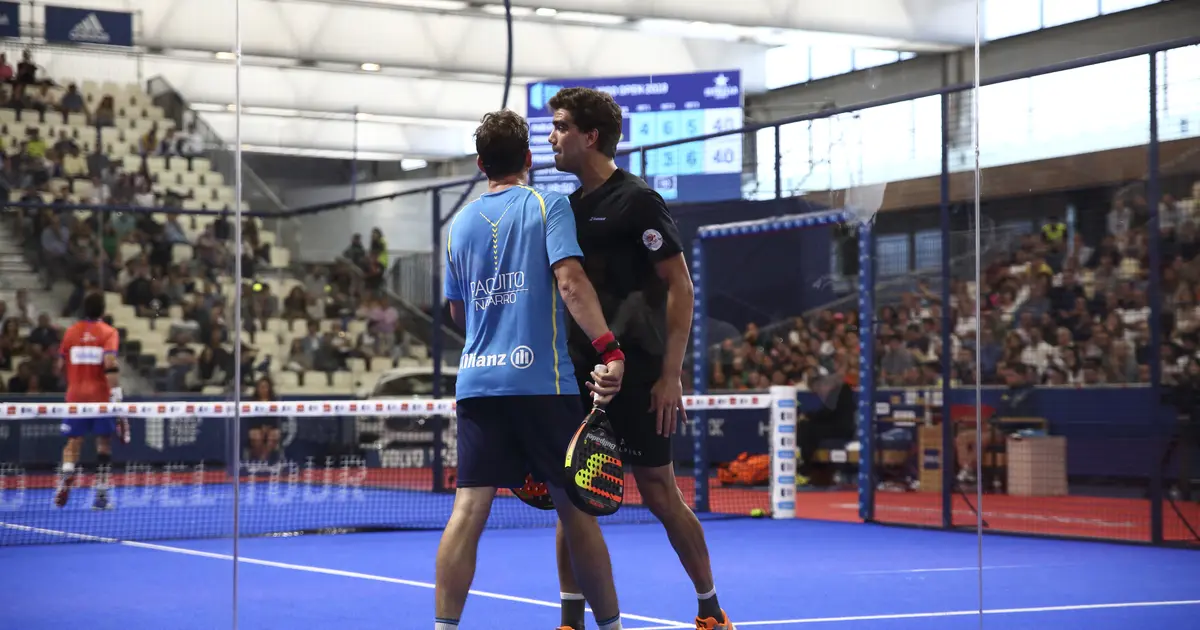
What Happens When the Ball Goes Out of the Court in Padel?
When the ball leaves the padel court through an open door or over the fence, the point may continue if a player can retrieve it.
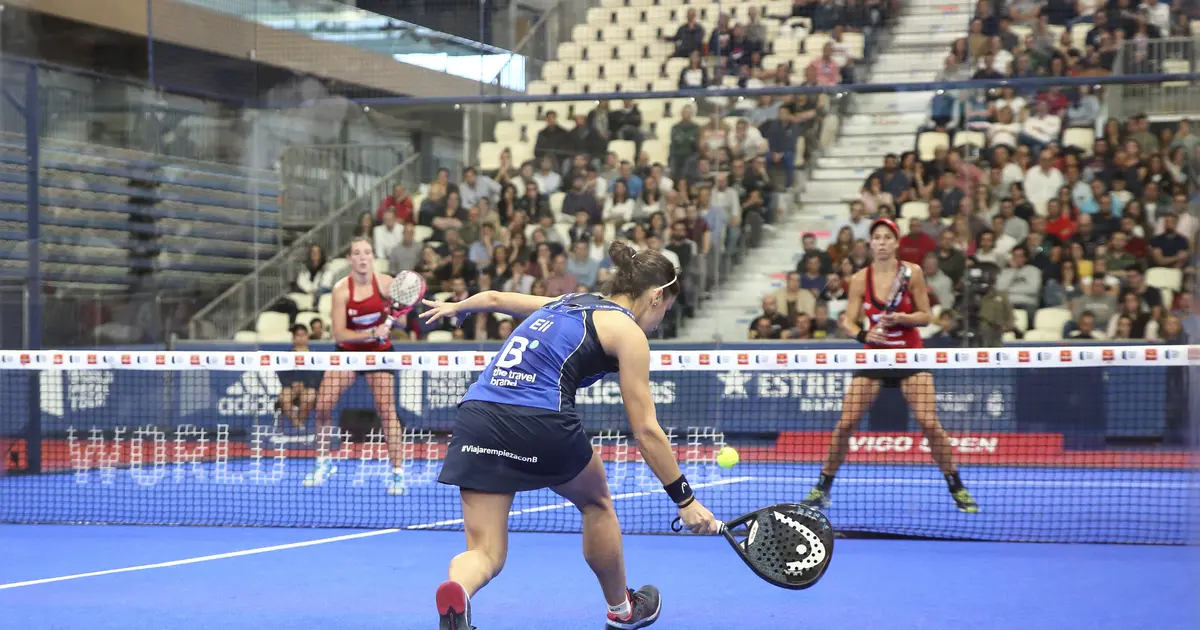
Can the Ball Bounce Twice in Padel?
No — if the ball bounces twice on your side of the court, you lose the point. Learn the one-bounce rule, wall rebounds, and the exceptions every padel.
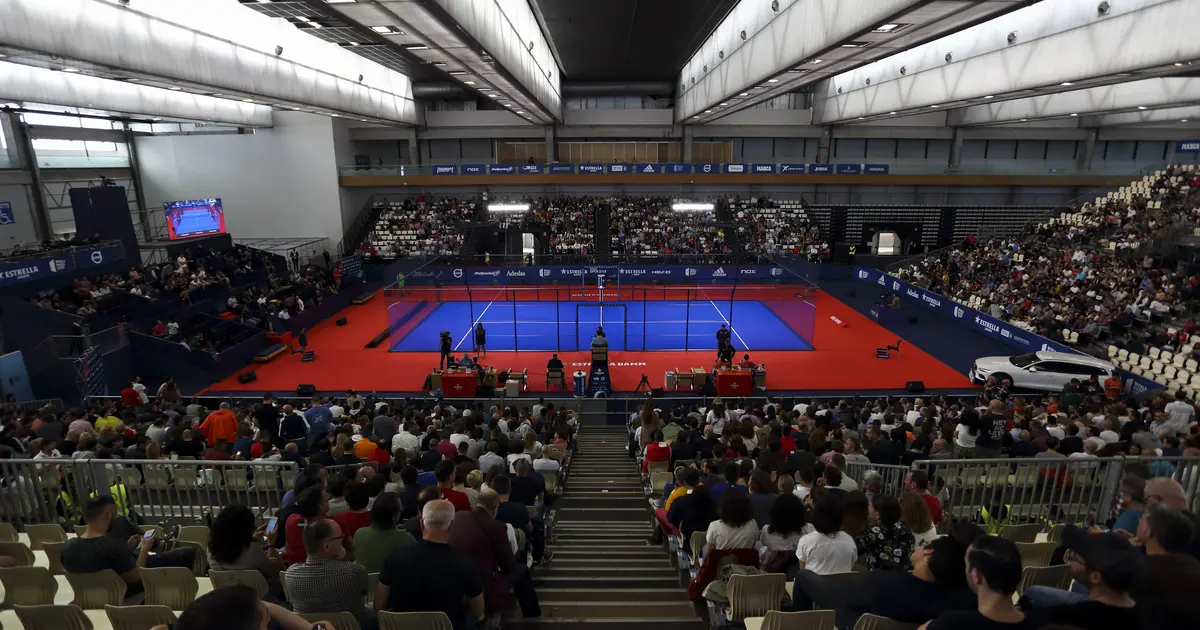
Padel Fault Rules and Lets
A fault is an invalid serve — two faults lose the point. A let means the serve is replayed with no penalty. Covers every fault type and the let rule with real-match scenarios.