 PADEL RULES
Padel vs Squash — How the Rules Differ
7 min read
Padel and squash share one defining characteristic: walls are part of the game. Both sports are played inside enclosed courts where the ball can legally hit the walls. Beyond that shared feature, however, the two sports differ substantially in scoring, equipment, court layout, and how the walls interact with play.
The Court
Both sports use enclosed courts, but the dimensions and wall usage are completely different.
| Padel | Squash | |
|---|---|---|
| Dimensions | 20 m × 10 m | 9.75 m × 6.4 m (WSF standard) |
| Players | 4 (always doubles) | 2 (singles) or 4 (doubles) |
| Net | Yes (88 cm at centre) | No net |
| Walls used | Back glass + side walls (after ball bounces on floor) | Front wall is the primary target; all 4 walls in play |
| Surface | Artificial grass | Hardwood or synthetic |
| Ceiling | Open (no ceiling in play) | Out of bounds |
Squash courts are much smaller and do not have a net. The front wall is mandatory in squash — every shot must hit the front wall. In padel, the front wall (the back glass) is only used after the ball bounces off the floor on your side of the court.
How the Walls Are Used
This is the most fundamental difference in gameplay.
Padel wall rules:
- The ball must bounce once on the floor before hitting any wall
- After that bounce, the ball can hit the back or side walls and remain in play
- The ball must clear the net to reach the opponent’s side
- You can hit the ball directly off the wall (without it bouncing first) only if the ball was played to you by the opponent and has not yet bounced
Squash wall rules:
- Every shot must hit the front wall above the tin (a metal strip at the bottom of the front wall, approximately 48 cm high in singles)
- The ball can hit side walls, back wall, and front wall in any combination before reaching the opponent
- There is no floor-bounce requirement — the ball can be volleyed before it bounces
- The ball must stay below the out line that runs along the top of all four walls
The squash player is always aiming for the front wall; the padel player is primarily hitting the ball over the net, and walls come into play as a secondary tactical element.
The Ball and Racket
Padel:
- Solid racket (pala) — no strings, perforated foam or carbon face
- Pressurised rubber ball, 63–68 mm diameter, similar to but smaller than a tennis ball
- Lower internal pressure than a tennis ball — designed for wall rebounds on a grass surface
Squash:
- Strung racket — longer than a padel pala, similar to a small tennis racket
- Small hollow rubber ball, 40–44 mm diameter — significantly smaller than a padel ball
- Different ball speeds/dots: yellow dot (slowest, for advanced players), red dot (intermediate), blue dot (beginner/junior)
- Squash balls bounce very little when cold; they need warming up during play to reach correct speed
Scoring
Padel uses tennis-based scoring; squash uses point-per-rally (PAR) scoring.
Padel:
- Points: 15, 30, 40, game (with deuce/advantage or Star Point)
- Sets: first to 6 games with tie-break at 6-6
- Matches: best of 3 sets (or 5 at professional level)
Squash (PAR scoring — modern format):
- Points are scored by whoever wins the rally, regardless of who served
- Games are played to 11 points, win by 2 (cap at 12-10 or play to 11+1, depending on format)
- Matches are best of 5 games
- There is no love/15/30/40 structure
PAR scoring means squash matches are very predictable in duration and are easier to follow for spectators. Padel matches can swing dramatically in length depending on the number of deuce games.
The Serve
The serves are completely different in structure.
Padel serve:
- Ball must be bounced off the floor, then struck at or below waist height
- Served diagonally into the opponent’s service box
- Must land in the correct box before hitting the back/side wall
- Two attempts before a double fault
Squash serve:
- Server stands inside one of the two service boxes
- Ball is struck above the service line on the front wall (the cut line, approximately 1.83 m from the floor)
- Ball must land in the opposite back quarter (receiver’s box)
- Only one serve attempt (hand is lost immediately on a fault)
In squash there is no diagonal box — the receiver’s box is determined by which side the server chose. The squash serve is also significantly harder to set up as a weapon, since the receiver can volley it before it bounces.
Let and Stroke in Squash
Squash has a unique interference rule with no equivalent in padel:
- If a player is blocked from reaching the ball or from playing a winning shot by the opponent’s position, they can appeal for a let (point replayed) or a stroke (point awarded)
- A stroke is awarded if the striker would have hit a winner or the opponent was directly in the way
In padel, interference is handled by stopping play and replaying the point, but the concept of an awarded stroke for deliberate blocking does not exist.
Ball Bounce
- Padel: The ball must bounce once on the floor on your side before you can return it. You cannot hit the ball before it bounces (volley) unless the opponent has just played it over the net to you. After the bounce, wall play is allowed.
- Squash: No floor bounce is required. Volleys are common and encouraged. The ball is often played off the front wall before it bounces at all.
Out-of-Court Play
Padel allows players to exit the court through door openings in the side or back fencing to retrieve a ball that has bounced out of the court. This has no equivalent in squash, where the court boundary is complete.
Summary: Key Rule Differences
| Rule | Padel | Squash |
|---|---|---|
| Court dimensions | 20 × 10 m | 9.75 × 6.4 m |
| Net | Yes (88 cm centre) | No net |
| Primary wall target | Back glass + side walls (after floor bounce) | Front wall (mandatory on every shot) |
| Scoring | Tennis (15/30/40, sets) | PAR to 11, win by 2, best of 5 |
| Serve | Bounce serve, diagonal, 2 attempts | Direct to front wall above cut line, 1 attempt |
| Volley | Allowed (except return of serve) | Freely allowed |
| Floor bounce before playing | Required (unless volleying from net play) | Not required |
| Players | Always 4 (doubles) | 2 or 4 |
What the Sports Have in Common
Despite the differences, padel and squash share:
- Wall rebounds as a legitimate part of play
- Physical, fast-paced rally structure
- High tactical depth — using angles and wall placement to create pressure
- Both reward reading the opponent’s shot and positioning early
Players who have played squash often adapt to padel quickly because they are comfortable with wall awareness. The mental model of using walls is familiar, even if the specific rules around when you must bounce the ball differ significantly.
Learn More About Padel
- Rules & Gameplay — How to play
- Top Players — Professional padel
- Getting Started — Beginner”s guide
Stay in the loop
Get padel rule updates and tournament news — no spam.
More in Basic Rules
What Happens If the Ball Hits a Player in Padel?
If the ball hits a player's body in padel, that player's team loses the point — with limited exceptions. Full FIP rule breakdown with scenarios.
What Happens When the Ball Goes Out of the Court in Padel?
When the ball leaves the padel court through an open door or over the fence, the point may continue if a player can retrieve it.
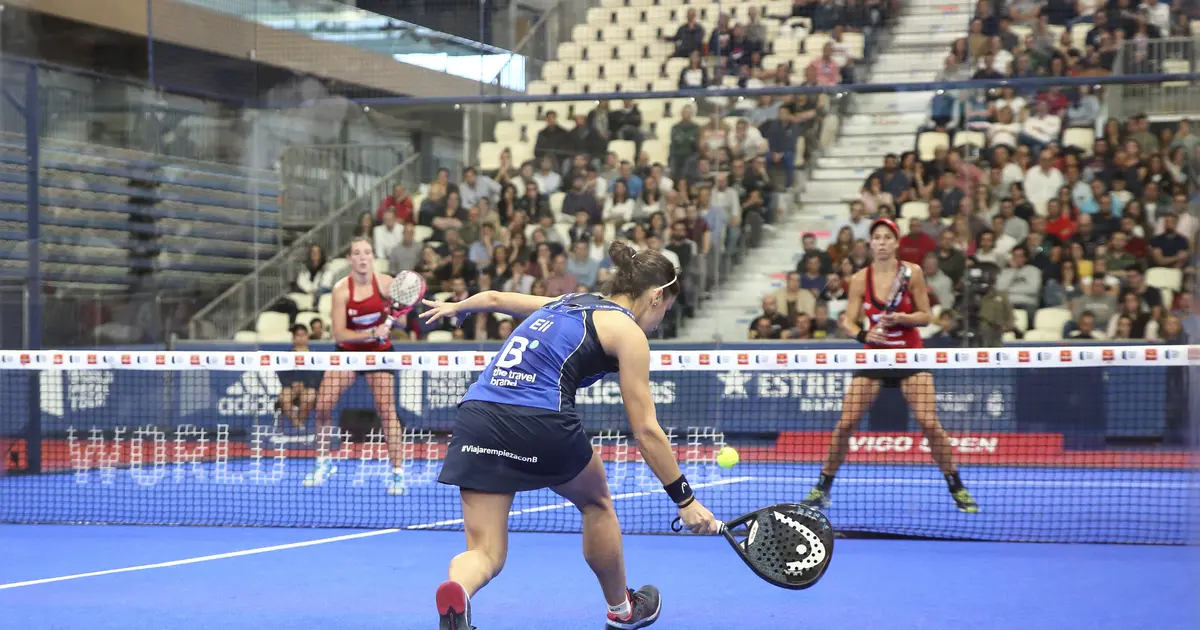
Can the Ball Bounce Twice in Padel?
No — if the ball bounces twice on your side of the court, you lose the point. Learn the one-bounce rule, wall rebounds, and the exceptions every padel.
Padel Fault Rules and Lets
A fault is an invalid serve — two faults lose the point. A let means the serve is replayed with no penalty. Covers every fault type and the let rule.