 PADEL RULES

Padel Tournament Rules — Sets, Tiebreaks & Match Format Explained
6 min read
Padel tournament rules govern everything from how matches are structured to how conduct violations are handled. Whether you are playing in your first club competition or preparing for an FIP-sanctioned event, this guide covers the full set of competition regulations.
For the complete list of in-play rules, see the padel rules list. For the latest FIP rule changes, see Padel Rules 2026.
1. Match Format
Standard padel tournament matches are best of three sets, with each set played to 6 games (first team to 6 with a 2-game lead). If a set reaches 6-6, a tiebreak decides it (first to 7 points with a 2-point lead). If the match reaches one set all, a deciding third set is played — either as a full set or a Super Tiebreak (first to 10 points, 2-point lead), depending on the tournament format agreed in advance.
| Format | Detail |
|---|---|
| Standard match | Best of 3 sets |
| Set win | First to 6 games (2-game lead) |
| Set tiebreak | First to 7 points (lead of 2), played at 6-6 |
| Super Tiebreak | First to 10 points (lead of 2), replaces 3rd set |
| Mini-Set | First to 4 games, tiebreak at 3-3, used in group stages |
Tournament organisers may use a Mini-Set or Pro-Set format for group stages to manage scheduling. The format must be published in the draw sheet before the event. See Match Formats for the full breakdown.
2. The Deuce Format
Since the 2026 FIP update, three deuce formats are official. The format must be agreed and announced before the match begins:
- Advantage — traditional format, two consecutive points required to win a game
- Star Point — a structured sequence of deuce levels (Deuce 1, 2, 3) ending in a single decisive point where the receiving pair chooses the service side
- Golden Point — a single decisive point at the first deuce, with the receiving pair choosing the side
In most FIP-sanctioned tournaments, the format is fixed in advance and applied consistently throughout the draw.
3. Warm-Up
Players are entitled to a 5-minute warm-up before the match begins. Both pairs share the warm-up time equally and alternate feeding balls to each other. Refusing to participate in a reasonable warm-up may be treated as a conduct violation at the umpire’s discretion.
4. Timing Rules
FIP timing rules apply between points, at changeovers, and between sets:
| Interval | Time Limit |
|---|---|
| Between points | 20 seconds (from ball landing out of play) |
| Changeover (after odd games) | 90 seconds |
| Between sets | 120 seconds |
| Medical timeout | 3 minutes (once per injury, per player per match) |
| Toilet break | Permitted at set break (once per match) |
Failure to comply with timing rules is a conduct violation under the progressive penalty system. See Timings for the full FIP regulations.
5. Code of Conduct
Padel uses a progressive penalty system:
- Code Violation 1 (CV1): Warning — verbal warning from the umpire, no points lost
- Code Violation 2 (CV2): Point penalty — the offending pair loses the current point
- Code Violation 3 (CV3): Game penalty — the offending pair loses a game
- Code Violation 4+ / Serious offences: Default — the match is awarded to the opposing pair
Common violations include: audible obscenity, ball abuse, racket abuse, verbal abuse of opponents or officials, time violations (repeated), and unsportsmanlike conduct. Since 2026, intentionally dropping your racket during a point is also a code violation.
Best efforts rule: Players are required to try to win every point. Deliberately losing a point or game is a violation of the best efforts rule and can result in a default.
See Code of Conduct for the full violation list and penalty thresholds.
6. Coaching Rules
- Coaching during points is prohibited — coaches must remain silent when the ball is in play
- Coaches may give instructions during changeovers and set breaks, when players are at the bench
- Players may receive coaching from their designated box only, not from other areas of the arena
- Unauthorised coaching is a conduct violation for the player whose coach is coaching
7. Seeding and Draw
Seeding in FIP-sanctioned tournaments is based on the official FIP World Ranking. In club or regional competitions, the organiser may seed based on:
- Previous tournament results at the same event
- Club ladder or ranking list
- Mutual agreement between team captains
The draw is published at least 24 hours before the event start in FIP-sanctioned events. Top seeds are placed in opposite halves of the draw.
8. Defaults and Walkovers
- Walkover: If a pair does not appear within 15 minutes of the scheduled match time, the match is awarded to the opponents (3-0, 0-0, 0-0 or per tournament rules)
- Retirement during match: A pair that retires during a match loses; the score stands at the point of retirement
- Default: An umpire may default a pair at any point for serious conduct violations, physical abuse, or persistent violations after CV3
9. Equipment Checks
Umpires and tournament referees may inspect rackets and balls before and during a match. If a racket is found to be non-compliant:
- The player must replace it immediately
- If no compliant racket is available, the match may be defaulted
- Balls are provided by the tournament organiser and must meet FIP specifications
See Racket Specifications and Ball Requirements for FIP equipment rules.
10. Umpires and Officials
In FIP Premier Padel and major sanctioned events, matches are presided over by a certified FIP umpire. In club and regional tournaments:
- An on-court umpire may be provided, or players self-umpire
- Service faults and out calls are made by the receiving pair on service; by agreement during rallies
- Disputes are resolved by the tournament referee; their decision is final
- Players must appeal politely — aggressive challenges to calls are conduct violations
Tournament Rules at a Glance
| Rule | Summary |
|---|---|
| Match format | Best of 3 sets (Super Tiebreak option for 3rd set) |
| Warm-up | 5 minutes shared |
| Between points | 20 seconds max |
| Changeover | 90 seconds max |
| Set break | 120 seconds max |
| Medical timeout | 3 minutes (once per injury) |
| Deuce format | Must be agreed before match |
| Coaching | Changeovers only |
| Walkover | 15 minutes late = default |
| Conduct violations | CV1 (warning) → CV2 (point) → CV3 (game) → default |
Related Guides
- Padel Rules List — every FIP rule in one page
- Match Formats — full format guide
- Timings — detailed time limit rules
- Code of Conduct — conduct violations and penalties
- Padel Rules 2026 — 2026 FIP rule changes
Stay in the loop
Get padel rule updates and tournament news — no spam.
More in Tournament Rules

Code of Conduct and Violations
Padel has a structured code of conduct with a three-stage penalty system — warning, warning with point penalty, warning with disqualification.
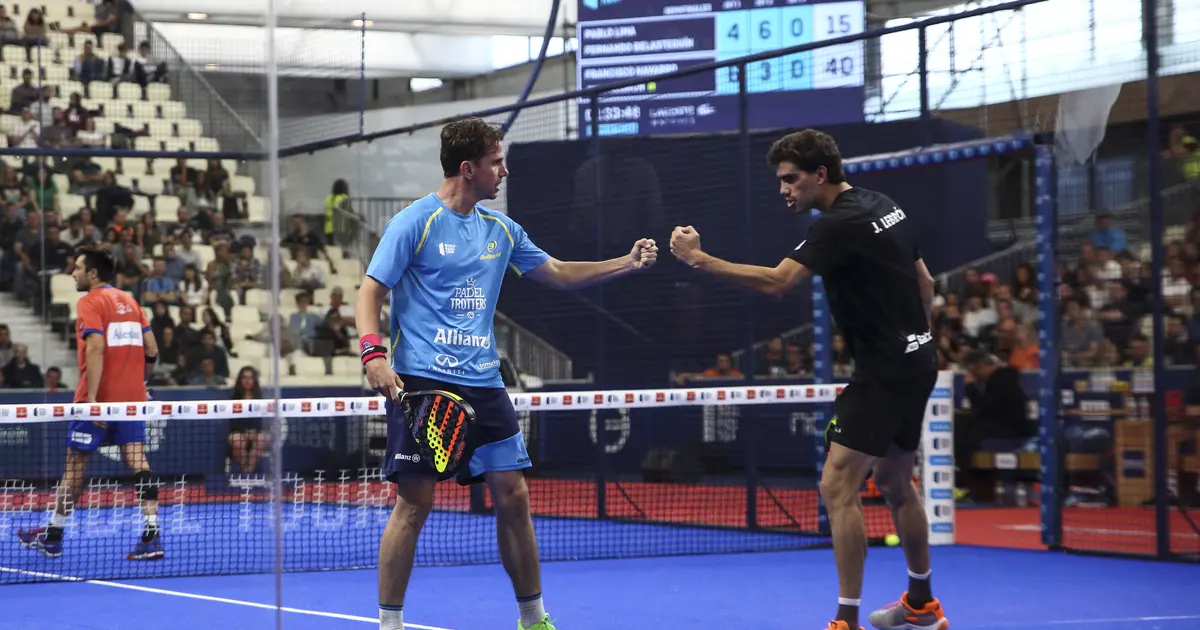
Match Formats
Official padel matches are typically best-of-three sets. Tournaments may use a Golden Point, Super Tiebreak, or Mini-Set format to manage match duration.

Padel Match Timings: Rest Periods, Time-Outs, and Time Violations Explained
FIP rules give you 20 seconds between points, 90 seconds at changeovers, and 120 seconds between sets. Learn every time limit in padel — plus what happens when you exceed them, how suspensions work, and the 2026 warm-up changes.

A1 Padel (APT) Circuit Explained — The Alternative Professional Padel Tour
Complete guide to the A1 Padel circuit (formerly APT Padel Tour) — its origins, event structure, how it differs from Premier Padel, and its role.