 PADEL RULES
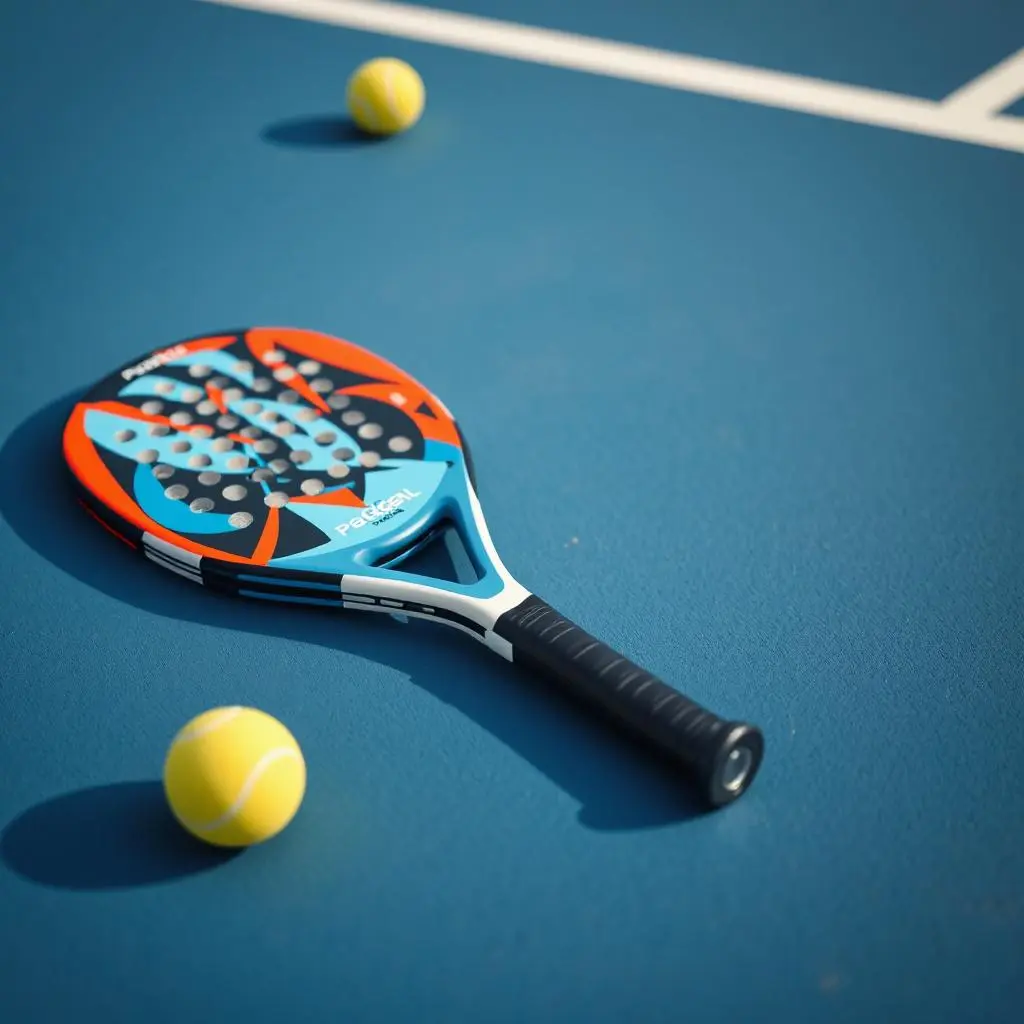
Padel Racket Specifications: Why Size, Weight, and Perforations Matter
7 min read
Padel racket specifications are carefully engineered to balance power, control, and fairness. Unlike tennis, where racket technology has spiraled (oversized heads, extreme string tension), padel’s tight specifications prevent any one player from gaining an unfair technological advantage.
Why Specifications Matter
The Balance
If rackets had no size limits:
- Oversized heads would increase power dramatically (larger sweet spot)
- Longer handles would increase reach and leverage
- Thicker heads would increase stiffness and power
- Lighter construction would increase swing speed
One player with a 50 cm megarat could dominate through racket technology alone, not skill.
The FIP’s specifications level the technological playing field so that skill, strategy, and fitness decide matches, not racket engineering.
Racket Dimensions: The Maximums
Total Length: 45.5 cm
| Component | Maximum |
|---|---|
| Handle | 20 cm |
| Head | 25.5 cm |
| Total | 45.5 cm |
Why 45.5 cm?
- Roughly wrist-to-shoulder distance
- Allows natural reach without becoming unwieldy
- Limits leverage advantage (longer = more power)
- Comparison: tennis rackets are 68-73.7 cm (padel’s court is smaller, so shorter rackets suffice)
Longer rackets would let players:
- Hit winners from baseline without moving forward (unfair advantage)
- Generate excessive power from defensive positions
- Reduce the need for court coverage
Head Width: 26 cm
The racket face width is capped at 26 cm:
Why this size?
- 26 cm = exactly half the court width (10 m)
- Enough to reach across the diagonal serve distance
- Large enough for comfortable hitting (good sweet spot size)
- Small enough that positioning/footwork still matters
Larger heads would:
- Increase sweet spot size (easier hitting)
- Generate more power (larger surface)
- Reduce the importance of precise shot placement
Head Thickness: 38 mm
Maximum thickness is 38 mm (with 2.5% tolerance = up to 38.95 mm):
Why 38 mm?
- Thicker = stiffer = more power and less vibration absorption
- 38 mm is thick enough for rigidity but limits extreme stiffness
- Professional measurements use calipers; 2.5% tolerance accounts for manufacturing variance
The 2.5% tolerance:
- Allows legitimate manufacturing variation
- Prevents rejection of rackets that are 0.1 mm too thick due to production
- Applies only to thickness, not length or width (those are strict)
Handle Dimensions
The handle has specific limits:
| Measurement | Maximum |
|---|---|
| Length | 20 cm |
| Width (at throat/narrowest) | 50 mm |
| Thickness | 50 mm |
Why these limits?
- Handle length (20 cm) prevents extended grip advantage
- Narrow throat creates the “sweet spot concentration” — the narrow part forces precise grip, reducing power from off-center hits
The Hitting Surface: Perforations
The racket head must have a perforated surface (not solid):
Center Area Perforations
- Hole diameter: 9–13 mm
- Shape: cylindrical
- Location: hitting surface center
Why perforations?
- Reduce air resistance (drag) on swings
- Reduce vibration transmitted to the arm
- Reduce ball friction (smoother shots)
- Optimize the balance between power and control
Why 9–13 mm specifically?
- 9 mm: minimum to provide aerodynamic benefit
- 13 mm: maximum before structural compromise (holes weaken the surface)
- This range is the engineering optimum
Edge Area Perforations
- Hole size: up to 20 mm (larger than center)
- Shape: may vary (not strictly cylindrical)
- Location: within 4 cm of the frame edge
Why allow larger edge holes?
- The edge/frame is structural (absorbs impact and supports the hitting surface)
- Larger holes reduce stress on the frame periphery
- Larger edge holes prevent cracking at the frame-head junction
- Flexibility in edge design lets manufacturers strengthen the frame differently
Both-Side Requirement
Both sides of the racket must be flat but can be smooth or rough:
- Smoothness doesn’t affect play (flat surface is the key)
- Rough surfaces don’t provide advantage
- Both sides remain usable throughout the racket’s life
Safety Cord (Wrist Strap)
The racket must have a non-elastic safety cord of maximum 35 cm fixed into the handle. See wrist strap rules for full details and safety context.
Weight (Unregulated)
FIP specifications do NOT include weight limits.
Professional rackets typically weigh:
- 260–320 grams (most common)
- Light rackets (< 300 g): favor control, mobility, arm comfort
- Heavy rackets (300+ g): favor power, stability, momentum
Why no weight limit?
- Heavier rackets are harder to swing (trade-off with power)
- Lighter rackets require more muscle to generate power
- Weight is self-regulating — players choose based on ability
- Some players prefer heavy (seniors); some prefer light (youth)
Professional manufacturers offer a full range, and the FIP lets players choose.
Prohibited Features (Anti-Cheating Rules)
The racket must not carry objects or devices beyond standard construction, specifically:
No Reflective Surfaces
- Reflective coatings could blind opponents
- Reflective logos/graphics are fine (cosmetic); reflective functional surfaces are not
No Sound-Emitting Elements
- Beepers or buzzers that alert to serves/shots
- Devices that make distinctive sounds for coaching signals
No Communication Devices
- Anything that could communicate, warn, or instruct during play
- This explicitly bans smartwatch-integrated rackets or coaching signals via racket
This rule prevents technology-assisted cheating — using devices embedded in rackets to communicate with coaches during play.
Comparison to Tennis Rackets
| Spec | Padel | Tennis |
|---|---|---|
| Max length | 45.5 cm | 73.7 cm |
| Max head width | 26 cm | 34.3 cm |
| Hitting surface | Must be perforated | Can be solid (strings) |
| Weight | Unregulated (260-320 g typical) | Unregulated (300-370 g typical) |
| Technology arms race | Tightly regulated | More permissive (oversized heads, advanced materials) |
Padel specs are stricter than tennis, reflecting the sport’s design philosophy: competition should be decided by skill, not racket technology.
Tournament Racket Inspection
In FIP-sanctioned tournaments:
- Rackets are inspected before play
- Non-compliant rackets are rejected (player cannot compete with them)
- Dimensions and perforations are verified with calipers and templates
- If your racket fails, you must use a different one or withdraw from the tournament
Practical tip: Bring a backup racket to tournaments. If your primary fails inspection (rare, but possible), you’ll still have a legal option.
Historical Context: Why These Specs?
The FIP established these specifications around 2018-2020 as padel professionalized:
- Early padel allowed nearly any racket design
- As prize money increased, manufacturers began pushing limits
- FIP introduced specs to prevent technology arms races
- Specs have remained stable (unlike tennis, which allows ever-larger heads)
This stability protects the sport’s integrity.
Custom and Modified Rackets
Home Modifications
Adding grips, overgrips, or dampeners is fine — see grip and overgrip for details.
Illegal Modifications
- Changing the head structure (e.g., filling holes, adding material to increase thickness)
- Attaching objects to the frame
- Embedding reflective materials
- Any modification that changes the specified dimensions
Custom rackets must be pre-approved by FIP before tournament use. Most homemade modifications fail inspection.
Summary
| Aspect | Spec | Why It Matters |
|---|---|---|
| Length | Max 45.5 cm | Limits reach/leverage advantage |
| Head width | Max 26 cm | Limits sweet spot size |
| Head thickness | Max 38 mm (±2.5%) | Limits stiffness/power |
| Perforations (center) | 9–13 mm diameter | Reduces drag; optimizes feel |
| Perforations (edge) | Up to 20 mm | Strengthens frame |
| Safety cord | Max 35 cm, non-elastic | Prevents flying racket injuries |
| Weight | Unregulated | Players choose based on ability |
| Prohibited devices | No communication tools | Prevents cheating |
For related equipment, see wrist strap rules and grip and overgrip.
Stay in the loop
Get padel rule updates and tournament news — no spam.
More in Padel Equipment
Babolat Padel Rackets 2026 — Best Models & Technology Guide
Explore the full Babolat padel racket range for 2026. Compare the Viper, Counter, and Technical lines — with prices, player endorsements, and our best picks.
Padel Ball Specifications: Why Balls Matter More Than You Think
FIP padel ball specifications control bounce, durability, and consistency. Learn why balls differ from tennis, how altitude affects play, and why tournaments use approved balls.
Best Padel Racket for Beginners 2026 — 4 Affordable Picks Tested
The 4 best padel rackets for beginners in 2026 — affordable, forgiving, and tested. See which round-shape racket suits your first season on court.
Best Padel Rackets 2026 — 10 Expert Picks Tested & Ranked
We tested the top padel rackets of 2026 for every level. See our honest picks from Bullpadel, Head, Babolat & Nox — with pros, cons, and who each racket suits.