 PADEL RULES
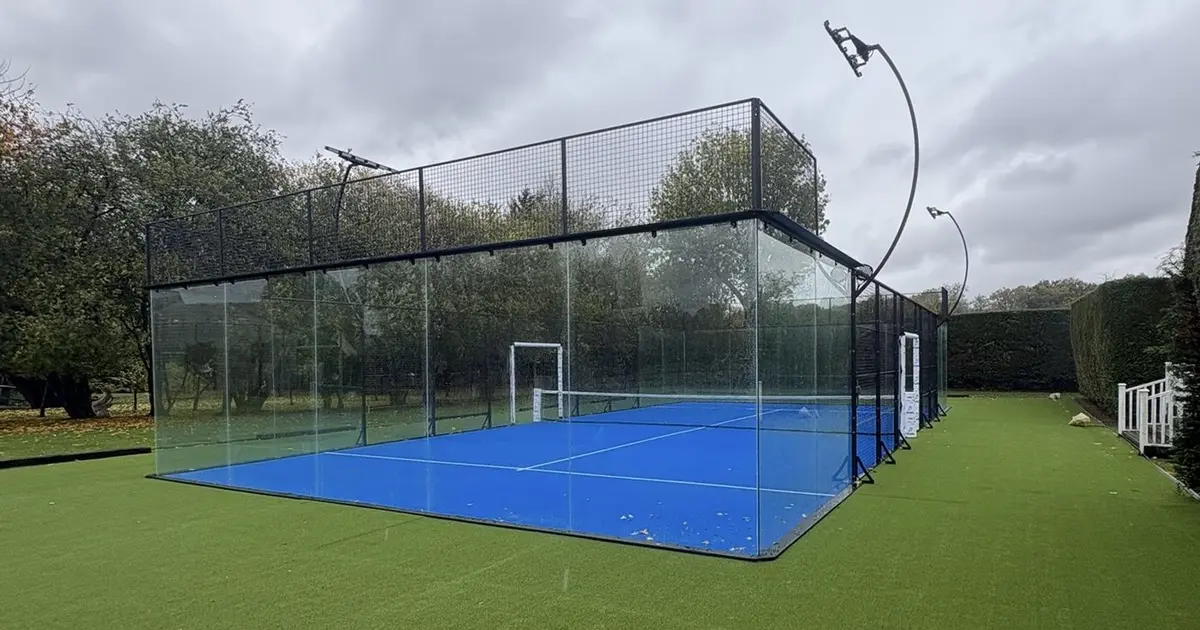
Court Orientation for Padel: Why North-South Matters for Fairness
7 min read
Court orientation might seem like a minor architectural detail, but on outdoor padel courts it directly affects fair play. The difference between facing directly into the sun and having the sun to the side is the difference between being able to see the incoming ball and being effectively blind to fast-moving shots.
The FIP’s north-south recommendation isn’t arbitrary — it’s based on how sun angles affect visibility, and it matters more in some parts of the world than others.
How Sun Position Affects Play
The Problem: Sun in Your Eyes
When a player faces directly into the sun, especially during sunrise or sunset:
- Ball visibility becomes nearly impossible — a bright ball against a bright sky is invisible
- Depth perception breaks down — you can’t judge how far the ball is from your racket
- Reaction time increases — your brain is processing shadows and glare, not ball motion
- Safety risk — players are more likely to be hit by balls they can’t see clearly
This isn’t just discomfort — it’s a significant competitive disadvantage. A player facing the sun might lose 1–2 points per game simply due to visibility issues.
East-West vs North-South Orientation
East-West orientation:
- At sunrise, the East end faces directly into the sun — that team is at a severe disadvantage for their morning service games
- At sunset, the West end faces directly into the sun — evening disadvantage shifts
One team plays with the sun advantage in the morning, the other in the evening. This is unfair for tournament matches scheduled for a single time slot.
North-South orientation:
- The sun is always to the side (east or west), never directly in a player’s field of vision
- Sunrise sun appears on the left or right edge of the court, not in the direct sightline
- Players may squint slightly, but they can see the ball and track it
The difference is substantial. North-south orientation distributes any sun disadvantage equally across both teams by putting them perpendicular to the sun’s path.
Geographic Variability: Why Latitude Matters
The lower the sun is in the sky, the more orientation matters.
At the Equator
- The sun passes nearly overhead
- Orientation is almost irrelevant — sun is high regardless of court direction
- Courts can be oriented for convenience
At 45° Latitude (Minneapolis, Denver, central Europe, southern Australia, Argentina)
- The sun reaches only ~45° above the horizon at noon in winter
- Sun is low from 8 am–4 pm during winter months
- North-south orientation becomes critical — east-west courts will have one end facing the sunrise/sunset for hours
- Courts are used year-round, so winter fairness matters
At 60°+ Latitude (Scandinavia, Scotland, Canada)
- Sun is extremely low, only 15–20° above the horizon even at noon in winter
- Sun barely rises in December
- Padel might be played mostly indoors during winter to avoid darkness/extreme angles
- When outdoor courts are used, north-south orientation is essential
Tropical Latitudes (near Equator: Mexico, Thailand, parts of Australia)
- Sun passes nearly directly overhead year-round
- Orientation has minimal effect on fairness
- Courts are often oriented based on land shape, building layout, or wind direction instead
Practical Application by Latitude
| Latitude Region | Sun Angle | Orientation Importance | Rationale |
|---|---|---|---|
| 0–20° (Equator, Mexico City, Mumbai) | High (above 60°) | Low | Sun is high; orientation barely matters |
| 20–40° (southern USA, Spain, Middle East, Australia) | Medium (30–55°) | Medium | Relevant for early/late play; indifferent for midday |
| 40–50° (northern Europe, Canada, Argentina south) | Low (15–40°) | High | North-south critical for outdoor play |
| 50°+ (Scandinavia, northern Canada) | Very low (5–25°) | Very high | Even midday sun is low; orientation essential |
How to Handle Site Constraints
Not every property fits a north-south orientation. When constraints force an east-west court, clubs use mitigation strategies:
Strategy 1: Schedule Matches Carefully
- Avoid sunrise/sunset slots on courts oriented toward the sun
- Morning matches at west-facing courts, afternoon at east-facing courts
- Midday slots (11 am–3 pm) are less problematic because the sun is higher
Strategy 2: Use the End-Change Rule
The standard changes of sides rule requires players to change ends every two games:
- Team A faces the sun for games 1–2
- Team B faces the sun for games 3–4
- This balances the disadvantage across a full match
For a best-of-three-sets match, each team faces a similar sun disadvantage. The fairness improves, though it’s not perfect.
Strategy 3: Strategic Scheduling for Tournaments
Tournament organizers can schedule semifinals and finals on better-oriented courts, reserving east-west courts for early rounds or practice. Finals have the most at stake, so they should play on the fairest court.
Strategy 4: Install Sun Shades or Strategic Lighting
Some outdoor clubs have installed:
- Retractable shade panels on the sides of east-west courts (reduces glare)
- Additional lighting to reduce reliance on natural light during problematic times
- Windscreens that happen to provide some sun blocking
These are expensive but show commitment to fair play.
Climate and Seasonal Effects
North-south orientation also benefits wind dynamics on outdoor courts:
- Wind channeling is less problematic when courts are perpendicular to prevailing winds
- In areas with consistent east-west winds, north-south courts experience less wind variation across the court width
This is secondary to sun fairness but is a bonus benefit of the standard orientation.
Indoor Courts and Orientation
Indoor courts are unaffected by sun position, so orientation recommendations don’t apply. Clubs design indoor courts based on:
- Building footprint and available space
- Spectator viewing angles
- Camera sight lines for broadcasting
- Equipment and service access
Many indoor facilities orient courts east-west simply because it fits the building’s rectangular footprint better.
Historical Context: Why This Matters
In the early days of padel (1970s Spain), outdoor courts were built with whatever orientation fit the available land. Over time, tournament fairness became a concern, and the FIP standardized the recommendation. Clubs building new facilities now plan for north-south orientation from the start.
Established clubs with east-west courts accept it as a given and manage fairness through careful scheduling and the end-change rule.
Summary
| Aspect | Recommendation | Why |
|---|---|---|
| Ideal orientation | North-south (long axis) | Minimizes direct sun in players’ eyes |
| Mandatory? | No — guideline only | Site constraints sometimes make it impossible |
| Applicable to | Outdoor courts only | Indoor courts are unaffected |
| Fairness mechanism | End changes every 2 games | Balances sun disadvantage across the match |
| Latitude factor | Higher latitudes need it more | Sun is lower in northern/southern regions |
| Mitigation for non-ideal courts | Careful scheduling + end-change rule | Reduces but doesn’t eliminate fairness issues |
For club builders: Plan for north-south orientation at design stage. For existing clubs: Use scheduling and the end-change rule to manage fairness. For players: Expect some sun disadvantage if your club has an east-west court, but the regular match structure is designed to balance it fairly over time.
Stay in the loop
Get padel rule updates and tournament news — no spam.
More in Court Specifications
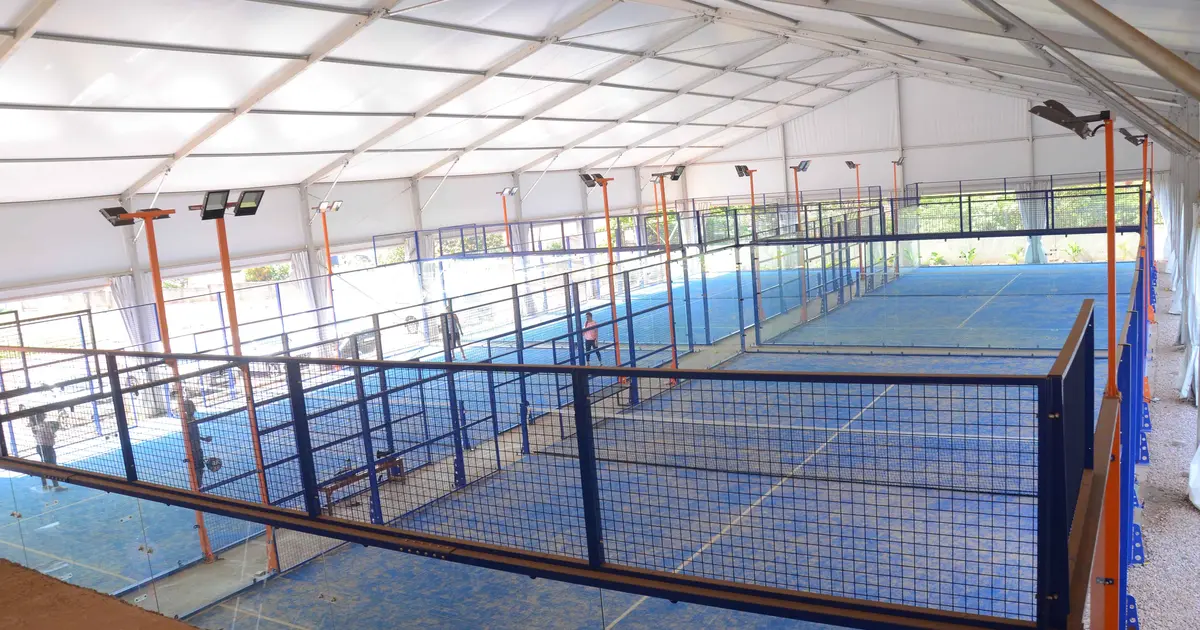
Padel Court Access: Why Gates Matter More Than Just Convenience
FIP rules specify access point placement, dimensions, and safety zones. Learn why side gates enable chase-play, how door design prevents injury, and why out-of-court play requires dual access points.
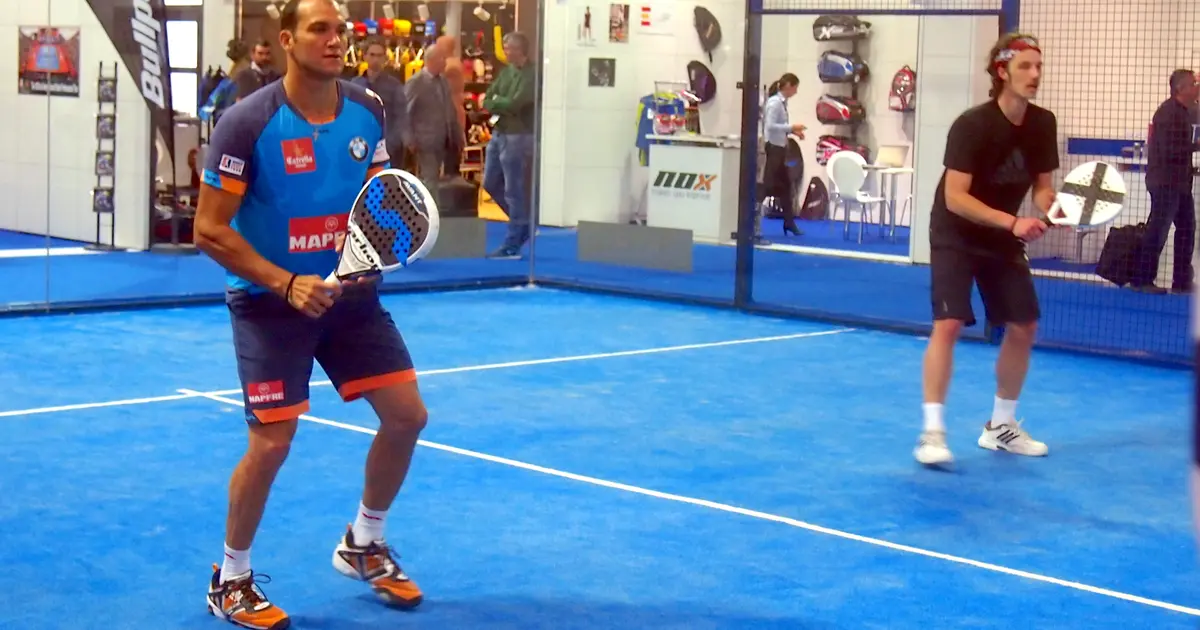
Court Illumination for Padel: Creating Playable & Broadcast-Ready Venues
FIP lighting standards ensure safe, uniform play and broadcast-quality visibility. Learn why light placement matters, how lux levels affect performance, and solutions for common lighting problems.

A1 Padel (APT) Circuit Explained — The Alternative Professional Padel Tour
Complete guide to the A1 Padel circuit (formerly APT Padel Tour) — its origins, event structure, how it differs from Premier Padel, and its role.

Agustín Tapia: The Magician of Padel — Trick Shots & Career Profile
Complete profile of Agustín Tapia — Argentina's creative genius, nicknamed 'The Magician' for his trick shots, incredible touch, and unpredictable.