 PADEL RULES
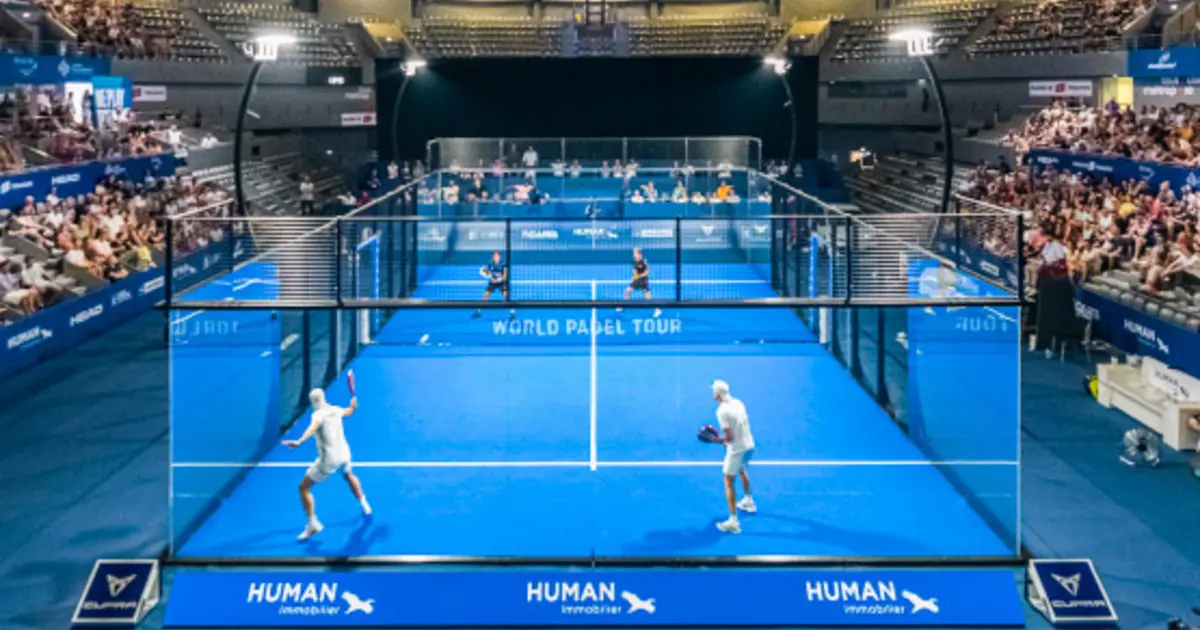
Enrique Corcuera — The Inventor of Padel & His Lasting Legacy
5 min read
Enrique Corcuera is the man who invented padel. In 1969, at his holiday home in Acapulco, Mexico, he built the first padel court — a walled enclosure with a net across the middle — and developed the rules for a new racket sport that would eventually be played by tens of millions of people worldwide. While Corcuera never became famous beyond the padel world, his creation has become one of the fastest-growing sports on the planet.
For the full story of how padel grew from that single court into a global phenomenon, see our detailed history of padel.
Early Life
Enrique Corcuera was born in 1918 in Mexico. He was a businessman with a passion for sports, particularly racket sports. He enjoyed tennis and other games, and was known among his social circle as an active, sociable man who loved competition.
Corcuera owned a holiday home in Acapulco, on Mexico’s Pacific coast. Acapulco was at the time one of the most fashionable resort destinations in the world, frequented by international celebrities, businesspeople, and high-society figures. It was in this setting — relaxed, social, and oriented towards leisure — that the idea for padel was born.
The Invention of Padel (1969)
The creation of padel was, in many ways, an accident of circumstance. Corcuera had a limited outdoor space at his Acapulco home that he wanted to use for a racket sport. The area was too small for a tennis court and was bounded by walls on some sides.
Rather than seeing these constraints as limitations, Corcuera turned them into the defining feature of a new game. He:
- Enclosed the space with walls — partly concrete, partly wire mesh — to contain the ball within the playing area
- Installed a net across the middle, similar to tennis
- Developed rules that incorporated the walls as part of the game: after the ball bounced on the ground, it could be played off the walls, adding a unique tactical dimension
- Adapted the tennis scoring system, keeping the familiar 15-30-40-game-set structure
- Used a smaller court than tennis, suited to the enclosed space and the doubles format
The result was a sport that was immediately enjoyable. It was easier to pick up than tennis because the walls kept the ball in play longer, rallies were extended, and the enclosed court created an intimate, social atmosphere. Corcuera played the game with friends and family, and it quickly became a favourite activity at his home.
Alfonso de Hohenlohe and the Spread to Spain
The pivotal moment in padel’s history came when Alfonso de Hohenlohe visited Corcuera in Acapulco. Hohenlohe was a Spanish-Austrian prince, businessman, and socialite who had established the famous Marbella Club on Spain’s Costa del Sol. He was well-connected in European high society and had a talent for spotting trends.
Hohenlohe played padel on Corcuera’s court and was immediately captivated. He recognised that the sport had enormous potential: it was fun, social, easy to learn, and suited to the Spanish climate and culture. He brought the concept back to Spain and built padel courts at the Marbella Club in the early 1970s.
From Marbella, padel spread rapidly through Spain’s social and sporting clubs. It then crossed the Atlantic to Argentina, where it found an even more enthusiastic reception. By the 1980s and 1990s, padel was a major sport in both Spain and Argentina, and the foundations for its global expansion were in place.
Legacy
Enrique Corcuera passed away in 1999, having lived to see his accidental invention grow into a sport played across multiple continents. By the time of his death:
- Padel was already one of the most popular sports in Spain and Argentina
- Professional circuits had been established
- The sport was beginning to spread to other European and Latin American countries
What Corcuera could not have anticipated is the scale of growth that followed. As of 2026, padel is played by an estimated 25 to 30 million people in over 90 countries. It has professional tours (Premier Padel), international federations (FIP), and a growing presence in countries far from its Mexican and Spanish roots — including Sweden, Italy, the UK, the UAE, and many others.
The core elements of Corcuera’s original game remain intact: the enclosed court, the walls as part of play, the doubles format, the tennis-based scoring. Modern courts are more standardised and use tempered glass instead of concrete walls, but the fundamental experience — the social, tactical, rally-rich game that Corcuera created in his Acapulco backyard — is recognisably the same sport.
Remembering Corcuera
Enrique Corcuera is not a household name, even in the padel world. He did not seek fame or profit from his invention, and he did not live to see padel reach its current global scale. But his contribution to world sport is undeniable: he created something from nothing, driven by a simple desire to play a game in the space available to him.
Every padel court in the world — from professional tournament venues to club courts in suburban Europe — traces its lineage back to that single walled enclosure in Acapulco. Every rally played off the walls, every point won with a bandeja or a smash, exists because Enrique Corcuera looked at a constrained space and saw not a limitation but an opportunity.
For the complete story of how Corcuera’s invention became a global sport, read our history of padel.
Stay in the loop
Get padel rule updates and tournament news — no spam.
More in Player Profiles
Agustín Tapia: The Magician of Padel — Trick Shots & Career Profile
Complete profile of Agustín Tapia — Argentina's creative genius, nicknamed 'The Magician' for his trick shots, incredible touch, and unpredictable.
Alejandro Galán: Career, Playing Style & World #1 Ranking
Complete profile of Ale Galán — the Spanish left-side padel star, former world #1, known for his defensive mastery, lobs, and dominant partnership.
Alejandra Salazar — Career, Titles & Legacy in Women's Padel
Complete career profile of Alejandra Salazar — the Spanish right-side professional with multiple World Championship titles and one of the longest winning careers in women's professional padel.
Álex Ruiz: Tactical Intelligence & Consistent Right-Side Padel Mastery
Profile of Alejandro 'Álex' Ruiz — the Spanish right-side padel player known for tactical intelligence, defensive solidity, and consistent all-round play.